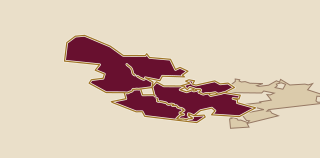
North of the city, the Médoc peninsula follows the estuary towards the Atlantic; Graves lies to the south. Both belong to the Left Bank. The Right Bank includes Saint-Émilion, Pomerol and Fronsac around Libourne. Entre-Deux-Mers sits between the two rivers.
Bordeaux at a glance
Use these growing-area names, cellar steps and label terms when choosing a bottle.
Bordeaux’s main vineyard areas
Bordeaux’s grapes and places
The Médoc and Graves lie on the Left Bank; Saint-Émilion and Pomerol on the Right Bank. Sauternes and Barsac lie farther south, where sweet white wines are made.
Médoc
The long Left Bank peninsula beside the Gironde
Cabernet Sauvignon often leads the red blend on gravelly ground.
Look forMédoc · Haut-Médoc · Pauillac · Margaux
Graves & Pessac-Léognan
South of the city on the Left Bank
Red blends and dry whites made from Sauvignon Blanc and Sémillon.
Look forPessac-Léognan · Graves
Saint-Émilion & Pomerol
East of Bordeaux around Libourne
Merlot is commonly central, supported chiefly by Cabernet Franc.
Look forSaint-Émilion · Pomerol · Fronsac
Sauternes & Barsac
Farther south near the Ciron and Garonne
Sweet wines made mainly from Sémillon and Sauvignon Blanc. Noble rot, a fungus that develops on the grapes in suitable conditions, can concentrate the fruit.
Look forSauternes · Barsac
The rivers separate Bordeaux’s vineyard areas
Bordeaux’s rivers and wines
The full place name on a Bordeaux label helps you identify its wine style even when the blend is not printed on the front.
The rivers
The Gironde estuary and the Garonne and Dordogne rivers separate Bordeaux’s broad vineyard areas.
The Left Bank
Cabernet Sauvignon often leads on the gravelly soils of the Médoc and Graves, with Merlot and Cabernet Franc in the blend.
The Right Bank
Merlot is commonly central around Saint-Émilion, Pomerol and Fronsac, where limestone, clay, gravel and sand vary from place to place.
The white-wine map
Sauvignon Blanc and Sémillon make dry whites in places such as Graves and Pessac-Léognan, and sweet wines farther south in Sauternes and Barsac.
Bordeaux appellations
Bordeaux labels
An appellation identifies the wine’s place of origin and production rules. Read the complete name alongside the producer and vintage, the harvest year.
MédocHaut-MédocPlaceSeparate label excerptsHide explanationRead explanation
Left Bank appellations on the Médoc peninsula, chiefly known for red wine
A starting point for Bordeaux reds led by Cabernet Sauvignon
PauillacPlaceHide explanationRead explanation
An appellation within the Médoc
Usually a red led by Cabernet Sauvignon; the producer and vintage still matter
Saint-Émilion Grand CruPlaceHide explanationRead explanation
An appellation with different rules from Saint-Émilion
Grand Cru Classé refers to Saint-Émilion’s separate estate classification
PomerolPlaceHide explanationRead explanation
A small Right Bank appellation where Merlot usually leads the blend
There is no official château classification
Pessac-LéognanPlaceHide explanationRead explanation
A northern Graves appellation for both red and dry white wine
Check whether the bottle is red or white
SauternesPlaceHide explanationRead explanation
A sweet white appellation led by Sémillon with Sauvignon Blanc
Acidity gives freshness and helps balance the sweetness
Cabernet Sauvignon and Merlot
Grapes and styles
Cabernet Sauvignon often has the largest share of the red blend in the Médoc and Graves. Merlot and Cabernet Franc may join it, along with smaller amounts of other permitted grapes. Médoc, Haut-Médoc, Pauillac and Margaux are some of the place names to look for on these bottles.
On the Right Bank, Merlot commonly leads, particularly in Saint-Émilion, Pomerol and Fronsac. Cabernet Franc is an important partner. Saint-Émilion has neighbouring wine-growing areas, often called satellite appellations, with their own rules; Pomerol covers a much smaller area.
These are broad differences in grape use. The exact blend changes with the estate and vintage, the year the grapes were harvested. Vineyard parcels and ageing methods vary too, so two wines from the same bank can taste quite different.
Dry whites and Sauternes
Background
Dry whites are made under the broad Bordeaux appellation and in Entre-Deux-Mers, Graves and Pessac-Léognan. Sauvignon Blanc commonly brings aroma and freshness, while Sémillon can give the wine more weight and texture. Muscadelle may contribute fragrance. Some bottles are made to enjoy young, while others, especially certain estate wines, can develop over many years.
Farther south, Sauternes and Barsac make sweet wines, usually from Sémillon with Sauvignon Blanc. In suitable autumn conditions, a fungus can develop on the grapes and concentrate them; this is known as noble rot. Harvesting may take several passes because the bunches are ready at different times. Acidity gives the finished wine freshness and helps balance its sweetness and concentration.
Bordeaux wines for drinking young
Everyday bottles
Bordeaux, Bordeaux Supérieur, the Côtes appellations, Fronsac and Castillon Côtes de Bordeaux include reds intended for drinking young. These names cover many producers and prices, so check the drinking advice for the individual bottle. Graves and the less famous parts of the Médoc offer further choices.
For a dry white to open with dinner, look for Bordeaux Blanc or Entre-Deux-Mers. If you enjoy a bottle, keep the producer's name as well as the appellation; both will help when you look for it again.
Bordeaux’s different classifications
What sets it apart
The 1855 Classification covers red estates chiefly in the Médoc, with Haut-Brion from Graves, and sweet-wine estates in Sauternes and Barsac. Graves and Saint-Émilion have their own systems. The Médoc also has the Crus Bourgeois and Crus Artisans, while Pomerol has no formal château classification.
These systems cover different groups of estates. A classification is one piece of information about a bottle alongside its appellation, producer and vintage. For an older wine, storage history matters too.
Appellations and château names
Read the label
An appellation is a defined place of origin with production rules. Its full name tells you which wine you are looking at: Pessac-Léognan may be red or dry white, Sauternes is sweet white, and Entre-Deux-Mers on a white label identifies a dry wine.
The château or producer name identifies who made it. Grand vin usually means the estate's principal wine; a second wine is a separate selection sold under another name. Cru classé refers to an estate included in a particular classification.
Saint-Émilion Grand Cru is an appellation with different rules from Saint-Émilion. Grand Cru Classé identifies an estate in Saint-Émilion's classification. These similar terms describe different things, and neither belongs to the Médoc's 1855 system.
Choosing a red or white Bordeaux
First bottle
For a red to drink young, look for Bordeaux Supérieur, Côtes de Bordeaux or Fronsac and check the producer's drinking advice. For a dry white, try Bordeaux Blanc, Entre-Deux-Mers or Graves. Sauternes and Barsac offer a sweet white option.
To compare the red blends, choose a wine led by Cabernet Sauvignon from the Médoc and a Merlot-led wine from Saint-Émilion or Fronsac. A similar price and harvest year can make the comparison easier, though the vineyards and winemaking will differ too. Notice the fruit, acidity and tannin, the drying grip in your mouth.
6 named areas
Inside the region
Explore the wine-growing areas of Bordeaux.
- 01Bourg & Blaye22 producersBourg & Blaye is Bordeaux's Right Bank estuary country, centred on Merlot-led reds from Côtes de Bourg and Blaye Côtes de Bordeaux.
- 02Entre-Deux-Mers11 producersBetween the Garonne and Dordogne, Entre-Deux-Mers is known mainly for crisp dry whites and broadly priced Bordeaux wines.
- 03Graves & Pessac-Léognan20 producersSouth of Bordeaux, Graves and Pessac-Léognan place structured reds and ageworthy dry whites on the same gravel ground.
- 04Libournais36 producersLibournais brings together Saint-Émilion, Pomerol, Fronsac and their neighbours on Bordeaux’s Merlot-led Right Bank.
- 05Médoc59 producersThe Médoc is Bordeaux’s peninsula between the Atlantic and the Gironde estuary. Cabernet Sauvignon often leads its red blends, especially on the gravel ridges near the estuary. Margaux, Saint-Julien, Pauillac and Saint-Estèphe are four of its eight appellations, each with a defined area and wine-making rules.
- 06Sauternes & Sweet Wines19 producersMorning mist, afternoon sun and noble rot turn Sémillon into Bordeaux's most concentrated sweet wines around Sauternes and Barsac.
Producer profiles
Start with these
Meet 5 producers from across Bordeaux.
- Château Clerc MilonPauillac Grand Cru Classé estate with one vineyard holding, old Cabernet Sauvignon and Carmenere vines, and two named wines.
- Château FigeacSaint-Émilion estate on three gravel knolls, making red wines from Cabernet Franc, Cabernet Sauvignon and Merlot.
- Château Haut-BrionPessac-Léognan château with a Merlot-led 2022 red blend and a white wine named Haut-Brion Blanc.
- Château LagrangeA Cabernet Sauvignon led Saint-Julien Third Growth shaped by higher gravelly slopes, 103 mapped parcels and two distinct estate wines.
- Château SuduirautChâteau Suduiraut is a Premier Cru Classé Sauternes estate in Preignac, founded in 1580.
Browse 152 more
- Château AngélusSaint Émilion château making Merlot and Cabernet Franc wines, from Château Angélus to the younger Tempo d’Angélus.
- Château AusoneSaint-Émilion estate named for Ausonius, with limestone minerality and a Grand Vin raised in new French oak.
- Château BaulacBarsac Château making sweet Sémillon Sauternes with barrel character and a fresh taste.
- Château Beau-Séjour BécotA Saint-Émilion Grand Cru Classé estate on the Saint-Martin de Mazerat limestone plateau, shaped by Merlot-led vineyards and deep cellar history.
- Château Beau-Site Haut-VignobleSaint-Estèphe château with gravel, clay and a 2016 red blend of Cabernet Sauvignon, Merlot and Petit Verdot.
- Château Belair-MonangeChâteau Belair-Monange is a Saint-Émilion estate with medieval origins and vineyard evidence reaching back to the Roman era.
- Château Bellefont-BelcierSaint Émilion château on the Côte Pavie slopes, making a Merlot led red from three Bordeaux grape varieties.
- Château BernadotteSaint-Sauveur Haut-Médoc estate making Cabernet Sauvignon led red wine with French oak ageing and a second label named Le Fournas Bernadotte.
- Chateau BlaignanNorthern Médoc Cru Bourgeois estate with Merlot and Cabernet Sauvignon, two limestone hills, and two named cuvées.
- Chateau Bois CardonValeyrac Médoc red made by Château Le Bourdieu, with oak ageing and soft berry fruit in the 2023 vintage.
- Chateau Brane CantenacMargaux Second Growth on deep Quaternary gravel, with a Cabernet Sauvignon led first wine and Baron de Brane as its second wine.
- Château Calon-SégurA Saint-Estèphe Third Growth with gravel over clay, a Cabernet led Grand Vin, and parcel by parcel fermentation.
- Château CamensacHaut-Médoc Fifth Growth making Cabernet Sauvignon and Merlot reds from hand sorted grapes with oak ageing.
- Château CantemerleA Macau estate in the Haut-Médoc, Château Cantemerle is a 1855 Fifth Growth built around Cabernet Sauvignon from deep gravel, with medium body, freshness and rich, oaky fruit.
- Chateau CarbonnieuxBordeaux château making sustainable red and white wines, including Château Carbonnieux Blanc and La Croix de Carbonnieux.
- Château Certan de MayPomerol estate with one block of vines, deep clay and gravel, and a Merlot led red.
- Château Chasse-SpleenMoulis-en-Médoc château where Garonne gravels meet limestone beneath Cabernet Sauvignon led red Bordeaux.
- Château CouhinsPessac Léognan estate classified exclusively for dry white wine, with red and white wines from gravel, clay and limestone soils.
- Château Croizet-BagesPauillac château on Garonne gravel, with Cabernet Sauvignon led reds and a second wine, La Tourelle de Croizet-Bages.
- Chateau DalemChâteau Dalem is a Saillans estate with vines planted in 1610, a Merlot-led Fronsac red, limestone and clay parcels, and a cellar rebuilt in 2019.
- Château Dasvin-Bel-AirTessandier family Cru Bourgeois red from Haut-Médoc, with barrel ageing and vintage notes from fresh cassis to dark fruit and savoury spice.
- Château de CéronsBordeaux producer with 27 planted hectares, gravel over marine limestone, and red, white, and sweet wines across four label lines.
- Chateau de Cerons, SAS Xavier et Caroline Perromat DomainesChâteau de Cérons makes Graves reds and whites and sweet Cérons from a gravel plateau over marine limestone.
- Château de Doisy-DaëneBarsac Second Growth making dry Bordeaux Blanc, classic Sauternes, and rare L'Extravagant.
- Château de FarguesA Lur Saluces Sauternes estate since 1472, shaped by noble rot, an 80% Sémillon, 20% Sauvignon blend and pronounced acidity.
- Château de FieuzalLéognan Grand Cru Classé estate making red and white Bordeaux from gravel, sand, clay and small white stones.
- Château de la Vieille ChapelleBiodynamic Right Bank Bordeaux estate making indigenous yeast wines from Merlot, Cabernet Franc and Sémillon.
- Chateau de LaugaBRUN family estate cared for across seven generations in Cussac-Fort-Médoc, with Haut-Médoc red wines.
- Chateau de Myrat - Jeanne de PontacChâteau de Myrat is a Barsac estate in the Sauternes appellation, classified as a Deuxième Grand Cru Classé in 1855.
- Château de ParenchèreEastern Bordeaux estate with 60 hectares under vine, clay limestone soils, organic certification, and red, white, and rosé wines.
- Château de ReignacBordeaux Supérieur château in Entre Deux Mers, combining Right Bank and Left Bank terroirs with rich, ripe red wines.
- Château de SalesNorthwest Pomerol château with a two wine range and smooth, refined wines marked by silky tannins.
- Château de SeguinChâteau de Seguin makes Bordeaux Supérieur and Crémant de Bordeaux from Entre Deux Mers vines, with French oak aged red cuvées.
- Chateau des AnnerauxLalande de Pomerol estate with Merlot led wines, organic farming and agroecological work under Benjamin Hessel.
- Château du TertreA Bordeaux estate whose origins trace to the Seigneurie d'Arsac in 1143.
- Château Ducru-BeaucaillouSaint-Julien Second Growth with gravel stones, French oak ageing, and wines from Château Ducru-Beaucaillou to La Croix.
- Château Duhart-MilonHaut-Médoc estate with Cabernet Sauvignon and Merlot, a French oak aged grand vin, and Moulin de Duhart as its second wine.
- Château Durfort-VivensChâteau Durfort-Vivens presents Haut-Médoc wines, including an organically listed Les Parcelles wine box and a 2019 red.
- Château FaizeauMontagne-Saint-Émilion château with Merlot led reds, an old vine Merlot grand vin, and Château Chants de Faizeau as second wine.
- Château FerrièreMargaux Third Growth estate on deep gravel over limestone marl, managed by Claire Villars-Lurton.
- Château Fon du BergerFamily-run Bordeaux estate with Cru Bourgeois Haut-Médoc and Pauillac aged in French oak.
- Château GiscoursA Labarde Third Growth with gravel, sand and limestone soils, a grand vin built for years of ageing and the fruitier La Sirène.
- Château GloriaBordeaux château making Cabernet led red wine under Haut-Médoc and Médoc appellation labels.
- Château Grand Corbin-DespagneA Saint-Émilion château with Merlot led red wine, 53 parcels and French oak élevage.
- Chateau Graves de PezChateau Graves de Pez comes from Bordeaux, France.
- Château GuiraudSauternes estate with Premier Grand Cru Classé status, organic certification, and Sémillon and Sauvignon Blanc wines.
- Château Haut Breton LarigaudièreChâteau Haut Breton Larigaudière is a Bordeaux producer with listed Haut-Médoc red wines, including the Cabernet Sauvignon Le Créateur.
- Château Haut-Bages-LibéralPauillac Fifth Growth with Cabernet Sauvignon and Merlot, organic and biodynamic certified, making a grand vin aged in oak.
- Château Haut-BaillyCru Classé Pessac-Léognan estate on a rise above Léognan, with Cabernet led red Bordeaux aged in oak.
- Château Haut-BergeyPessac-Léognan estate with biodynamic certification, Merlot and Cabernet Sauvignon led reds, and Sauvignon Blanc based whites.
- Château Haut-MouleyreEscoussans estate with Cabernet Sauvignon and Merlot vineyards and a traditional method Sémillon and Merlot Crémant.
- Château Haut-MoulinOrganic Blaye estate producing Merlot led Château Haut-Moulin Vieilles Vignes from the Gironde estuary.
- Château La BridaneSaint-Julien family property with deep gravel, Cabernet Sauvignon led planting, and three Bordeaux labels.
- Château La CabanneMerlot led Pomerol red wine from blue clay soils, aged in French oak.
- Château La ConfessionSaint-Émilion Grand Cru red from Merlot, Cabernet Franc and Cabernet Sauvignon, aged in 100% new French oak.
- Château La Croix Saint-VincentFamily owned Pomerol producer making Château La Croix Saint-Vincent, an organic Merlot and Cabernet Franc second wine.
- Château La CroizilleSaint Émilion Grand Cru Classé château with 4.5 hectares, low yields, drastic selection, and high Cabernet Sauvignon content.
- Château La ForêtChâteau La Forêt produces a 2022 red wine from Lalande de Pomerol, where its vines grow on clay-limestone and gravelly soils.
- Chateau La FreynelleChateau La Freynelle comes from Bordeaux, France.
- Château La Grave à PomerolPomerol estate on the western plateau, planted to Merlot and Cabernet Franc, with a silky red.
- Château La LaguneHistoric Ludon estate with biodynamic farming, gravelly hilltop vines, and a two wine range led by Château La Lagune.
- Château La Mission Haut-BrionChâteau La Mission Haut-Brion is a Talence producer of Graves red wines, known for a style described as bigger and more tannic than Château Haut-Brion.
- Chateau La RameSainte-Croix-du-Mont estate with south-facing Garonne vineyards, fossilized oyster beds, dry white wine and noble rot Tradition.
- Château La Tour BlancheState owned Sauternes First Growth with an agricultural college history and a Sémillon led blend featuring Sauvignon Blanc and Muscadelle.
- Château la Tour de ByNorthern Médoc château making Cabernet Sauvignon led reds from gravel soils, fermented in wood and aged in French oak.
- Château La YotteLoupiac estate founded in 1664, with organic practices, red blends, and Milan 2025 made with carbonic maceration.
- Château LabadieDupuy family château in Mombrier, Côtes de Bourg, with 70 hectares planted to Merlot, Cabernet Franc, Cabernet Sauvignon and Malbec.
- Château Lafite RothschildA Pauillac first growth with a Cabernet Sauvignon-led vineyard, an estate cooperage and two principal wines.
- Château LafleurChâteau Lafleur comes from Bordeaux, France.
- Château LamotheCadillac Côtes de Bordeaux estate with clay and limestone vineyards, underground galleries and Merlot led red wines.
- Château LaroqueSaint-Emilion Grand Cru Classé château with a 61 hectare holding, a Grand Vin, and Les Tours de Laroque as its secondary wine.
- Château Larrivet Haut-BrionLéognan château with gravel and sandy soils, Cabernet led reds, and Sauvignon Blanc and Sémillon whites.
- Château LassègueSaint Émilion château making red Bordeaux from clay, chalk and limestone, with stainless steel fermentation and French oak ageing.
- Château LatourPauillac First Growth with three named wines released when ready to drink.
- Château Léoville Las CasesSaint Julien château with a Cabernet Sauvignon led Grand Vin, deep gravel at the Grand Clos, and a firm style built for long ageing.
- Château Léoville-PoyferréClassified Saint-Julien château with an 80 hectare vineyard, a Cabernet Sauvignon led grand vin and parcel by parcel vinification.
- Château Les Carmes Haut-BrionBordeaux classified growth inside the city, making red wines from Merlot, Cabernet Franc and Cabernet Sauvignon.
- Château Les Ormes De PezA Merlot-led Cru Bourgeois red from Saint-Estèphe, with fresh cherry, black fruit, rounded tannins and lingering freshness.
- Château Les ParuadesA 3.5-hectare Macau en Médoc estate making a Cabernet Sauvignon-led red from clayey palus soil, with rose petals, dark berries, firm tannins and a smooth finish.
- Château LiotsA multigenerational Sauternes estate with Château Liot and Château du Levant 2023.
- Château Lynch-BagesPauillac estate with a concentrated red, Echo de Lynch-Bages and a white of Sauvignon Blanc, Sémillon and Muscadelle.
- Chateau MalescasseHaut-Médoc château with oak-aged red wine, secondary labels and a 2022 blend of Cabernet Sauvignon, Merlot and Petit Verdot.
- Chateau Malescot St ExuperyMargaux Third Growth under Zuger family ownership, with long French oak ageing and a Haut-Médoc red named La Dame de Malescot.
- Château MargauxAn estate in Margaux, Médoc, making Cabernet Sauvignon-led reds and the Sauvignon Blanc white Pavillon Blanc.
- Chateau MarjossePierre Lurton’s 40 hectare Entre-Deux-Mers project, with mature vines and plot specific vinification.
- Château Mauvesin BartonMoulis-en-Médoc estate making Cabernet Sauvignon led red Haut-Médoc in French oak.
- Château Mayne Lalande - Bernard LartigueChâteau Mayne Lalande is a Listrac-Médoc estate founded by Bernard Lartigue, who began developing it in 1975 and made its first vintage in 1982.
- Chateau MélinLibourne estate producing Saint-Émilion Grand Cru, including the Merlot Cuvée ReVinTho aged in French oak.
- Chateau MenotaChateau Menota is listed with a 2022 white wine from Graves, Bordeaux’s historic white-wine appellation.
- Château Monconseil GazinBlaye château with Merlot led reds, environmentally friendly viticulture and French oak ageing.
- Château Mons La GraveyreCambes estate making an organic IGP Atlantique red from Merlot and Cabernet Sauvignon, aged in oak barrels and clay amphoras.
- Château MontroseSaint-Estèphe Second Growth with hillside gravel soils, a dense grand vin, and three estate wines.
- Château Mouton RothschildChâteau Mouton Rothschild is a Pauillac First Growth shaped by deep gravel, Cabernet Sauvignon, old vines, and a contemporary art label tradition.
- Château PalmerMargaux Third Growth with a gravel, sand and clay plateau, a 2022 grand vin, and Alter Ego from dedicated plots.
- Château PedesclauxPauillac Fifth Growth with organic vineyards, Cabernet Sauvignon led plantings, and a gravity fed winery designed to preserve grape aromas.
- Château PeychaudA de Pontac family estate in Ambarès-et-Lagrave making red Bordeaux Supérieur between the Garonne and Dordogne.
- Château PeyrabonHaut Médoc estate on a gravelly ridge near Pauillac, with a separate Pauillac label in La Fleur Peyrabon.
- Château Phelan Segur SceaA Bordeaux château making red Haut-Médoc wine with stainless steel fermentation and French oak élevage.
- Château Phélan-SégurSaint-Estèphe estate founded from two vineyard properties, with a grand vin aged in French oak and built for several decades of cellaring.
- Château Pichon Longueville Comtesse de LalandePauillac Second Growth with gravel over clay, Cabernet Sauvignon led wines, and a gravity fed cellar.
- Château Pichon-Longueville-BaronPauillac Second Growth making Cabernet Sauvignon led reds across vintage bottlings, with Les Tourelles de Longueville as its second wine.
- Château Picque-CaillouBordeaux estate making Graves red and white wines from a 1755 château.
- Chateau Pierrail EarlDemonchaux family Bordeaux estate with red, white and rosé wines, named releases and a related Château Arnaud property.
- Château Pontet CanetChâteau Pontet-Canet is a Pauillac Fifth Growth with certified organic and biodynamic farming, a Cabernet Sauvignon-led 2020 blend, and maturation in new oak, concrete amphora and used barrels.
- Château PotensacNorth Médoc estate in Ordonnac, making classic Bordeaux reds aged in French oak.
- Chateau PougetCantenac estate in the Margaux appellation, with Cabernet Sauvignon, Merlot and Cabernet Franc, certified organic since 2017.
- Château PoujeauxChâteau Poujeaux makes Cabernet led Moulis reds from gravel based vineyards, fermented as whole berries and aged in French oak.
- Château PoujeaxMoulis reds led by Cabernet Sauvignon, with sustainable vineyard work and a named second and third wine.
- Château Prieuré-LichineCantenac Margaux château, classified Quatrième Cru, with Cabernet Sauvignon, Merlot and Petit Verdot wines.
- Chateau Puy-RazacSaint-Émilion family estate with a 7 hectare sandy clay block and red wines from Merlot and Cabernet Franc.
- Château RieussecChâteau Rieussec is a Sauternes estate with 18th-century roots in the Carmes de Langon monks’ property.
- Château Rocheyron SARL.Château Rocheyron is a Saint-Émilion estate co managed by Silvio Denz and Peter Sisseck, with Merlot, Cabernet Franc and concrete vat vinification.
- Chateau Segue Longue MonnierChâteau Ségue Longue Monnier is a Médoc Cru Bourgeois producer whose 2011 and 2012 vintages earned Concours de Bordeaux medals.
- Château Smith Haut LafitteMartillac château with a gravel plateau, certified organic farming, Grand Cru Classé red status, and Cabernet Sauvignon and Sauvignon Blanc flagships.
- Chateau Sociando-MalletSaint-Seurin-de-Cadourne Haut-Médoc estate, bought by Jean Gautreau in 1969, with Merlot led reds and French oak ageing.
- Château Soussans MargauxChâteau Soussans is Château Deyrem Valentin's second wine, a Cabernet Sauvignon and Merlot blend associated with Soussans in Margaux.
- Château TalbotSaint-Julien Château built around Cabernet Sauvignon, French oak ageing and long lived red wine.
- Château TanesseChâteau Tanesse is a Cadillac Côtes de Bordeaux producer acquired by Vignobles Gonfrier in 2004.
- Château TayacCôtes de Bourg estate with south facing vines, barrel aged red cuvées, and a white blend of Sauvignon, Sémillon and Muscadelle.
- Château TayetBordeaux Supérieur reds from Château Tayet, including cuvées linked to older parcels and siliceous soils.
- Château Tour BaladozChâteau Tour Baladoz crafts Saint-Émilion red wines through hand harvesting, mixed-vat fermentation and extended French oak ageing.
- Château Tronquoy LalandeSaint Estèphe estate with Merlot and Cabernet Sauvignon reds, plus a Sémillon and Sauvignon Gris Blanc matured on lees.
- Château Vieux MougnacFounded in 1870 by Félix Milhard, Château Vieux Mougnac remains with the same family and makes Bordeaux Supérieur reds from Merlot and Cabernet varieties, with natural yeast, concrete maturation, and extended château ageing.
- Clos CantenacClos Cantenac presents a 2023 Saint-Émilion Grand Cru red wine noted by several leading critics.
- Domaine de ChevalierLéognan estate with Grand Cru Classé de Graves status in red and white, making Cabernet Sauvignon led reds and Sauvignon Blanc Sémillon whites.
- Établissements Jean-Pierre MoueixBordeaux Right Bank merchant and producer with holdings in Pomerol and Saint-Émilion.
- François MitjavileFrançois Mitjavile built Tertre Roteboeuf around late harvesting, low yields, concrete fermentation, new French oak, and oxidative ageing after beginning his wine career at Château Figeac in 1975.
- Grands Châteaux de France (Château Tour de Naujan)Grands Châteaux de France (Château Tour de Naujan) comes from Bordeaux, France.
- Les Domaines Barons de Rothschild LafiteLes Domaines Barons de Rothschild Lafite is the Bordeaux group built around Château Lafite Rothschild in Pauillac, with Château Anseillan Haut-Médoc and Les Légendes Bordeaux Rouge and Blanc extending the range beyond the First Growth château.
- Les Domaines DelonFour Delon properties across Saint Julien, Pomerol and northern Médoc, from Léoville-Las-Cases to Château Nénin.
- Maison CalvetRhône founded Maison Calvet expanded into Bordeaux and now sources regional wines from more than seven French regions.
- Maison GinestetBordeaux wine merchant founded in 1897, based in Carignan-de-Bordeaux, with an appellation portfolio and sustainable farming partnerships.
- Maison SichelBordeaux family négociant with named château holdings and a Merlot led Château Argadens red.
- Producta VignoblesA Bordeaux cooperative network founded in 1949, linking 2,500 winegrowers to bottles from 50 appellations.
- SCA Cave Louis VallonLouis Vallon pairs sparkling-wine roots dating to 1995 with temperature-controlled, automated Crémant production.
- SCEA du Château de LussacA Merlot-led Lussac-Saint-Émilion estate where clay and clay-limestone soils meet French-oak-aged red with blackberry fruit, fresh acidity and ripe tannin.
- SCEA Terres BordelaisesA Bordeaux portfolio operation behind château labels ranging from dry white Bordeaux and Graves to Sauternes and Bordeaux red.
- SCEA Vignobles BonnangeA Blaye estate using limestone-and-clay parcels for Bordeaux blends, single-variety reds and grape-specific bottlings.
- SCEA Vignobles Cruchon et FilsThe Cruchon family’s Château Les Trois Manoirs is a Médoc red anchored by a 2015 blend of Cabernet Sauvignon, Merlot and three smaller supporting grapes.
- ThunevinSaint-Émilion reds from the Thunevin family, led by Château Valandraud: clay-and-limestone fruit, close vineyard work and long ageing in new French oak.
- Vignoble HermouetChâteau Roc Meynard spans Bordeaux Supérieur, Clairet and two white bottlings under Vignoble Hermouet.
- Vignoble TinonVignoble Tinon bottles Château Grand Peyrot, a 95% Sémillon, 5% Sauvignon Blanc Sainte-Croix-du-Mont.
- Vignobles André LurtonA Bordeaux family group whose Château Bonnet wines sit alongside restored Pessac-Léognan estates, including Château de Rochemorin and Château de Cruzeau.
- Vignobles Bayle-CarreauVignobles Bayle-Carreau brings seven generations of family winemaking to Bordeaux estates near the Gironde estuary.
- VIGNOBLES DAVID BEAULIEUVIGNOBLES DAVID BEAULIEU comes from Bordeaux, France.
- Vignobles DourtheVignobles Dourthe in Bordeaux works with Merlot, Cabernet Sauvignon, Petit Verdot, Sémillon, and Sauvignon Blanc plantings.
- Vignobles Famille André LurtonA family-owned Bordeaux producer since 1897, spanning Sauvignon Blanc-led Château Bonnet whites, Cabernet-Merlot reds and Pessac-Léognan wines from Château La Louvière.
- Vignobles Gabriel & COA Bordeaux Right Bank collective founded in 1904, spanning Merlot-led reds and dry Ugni Blanc–Colombard sparkling wine.
- Vignobles Jean-Pierre EstagerChâteau La Cabanne is the Estager family’s Pomerol estate, producing dark-fruited reds shaped by clay-rich soils and extended French-oak ageing.
- Vignobles Michel BaudetVignobles Michel Baudet is a family-run Bordeaux estate founded in 1894, based in Plassac on Blaye’s limestone escarpment.
- Vignobles ThomasA family-run Listrac-Médoc estate where Petit Verdot-rich Château Reverdi sits beside the Merlot-led, barrel-aged Château l’Ermitage.
- Vins et Vignobles DourtheA Bordeaux house spanning château bottlings, Sauvignon Blanc and concentrated red wines.