Who makes it
Laurent Marti bought Château Picque Caillou in 2026, after the Calvet family had stewarded the estate for 29 years. Isabelle Calvet, granddaughter of Alphonse Denis, was part of that stewardship. Denis's family had owned the property since 1947.
Paulin Calvet joined the estate full time in 2006 after 12 years as an Export Director. The estate makes Château Picque Caillou Grand Vin De Graves as a red wine and Château Picque Caillou Blanc as a white wine.
Where it grows
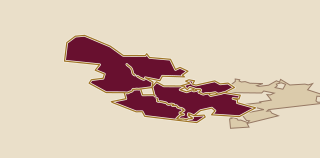
The château stands on the outskirts of Bordeaux, with Günz gravel under the estate. Gravel drains quickly and warms in sunlight, which can help Cabernet Sauvignon ripen and keeps excess water from lingering around the roots.
Graves is the appellation name printed in Château Picque Caillou Grand Vin De Graves, putting the place into the wine's full title.
What they make
Château Picque Caillou Grand Vin De Graves is the red wine in the range, while Château Picque Caillou Blanc is the white. The red combines power and freshness with a sappy profile, typical Cabernet Sauvignon character, well integrated tannins and ageing potential.
The red ages for 12 months in barrel, with 35% new oak. Oak ageing adds flavour and allows gradual oxygen exposure, which can soften tannin. The 2023 white is 60% Sauvignon Blanc and 40% Semillon. Its nose is pure and scented, with meringue, golden berries and a touch of green mango.