
Nolea presents
The World of Wine
A wine school without the snobbery. You don't need to know a thing about wine. Curiosity is plenty.
Choose a five-minute lessonWhat would you like to understand?
Start with a question about taste, a label or dinner. Each lesson takes about five minutes, with an example and a question to try. You can do all three without opening a bottle.
Understand what you tasteTell mouth-watering acidity from the drying grip of tannin. Give each sensation its own words.Open lesson
Two feelings, one sip
Think of biting a tart apple, then sipping strong black tea. The apple makes your mouth water. The tea leaves a drying grip on your gums. In wine, those sensations help you recognise acidity and tannin. A wine can have both.
Try what you've learnt
Take this with you
Ask two questions after a sip: does my mouth water, and do my gums feel dry? Naming the sensations separately gives you a more useful description of the wine.
Try it with a glass Read the full illustrated comparisonMake sense of a labelRead a place name and discover what it tells you about the grape. Start with Barolo.Open lesson
The place can tell you the grape
Barolo names a wine appellation, a defined wine area in Piemonte, Italy. Its grape is Nebbiolo. DOCG is a classification. Read the words together: they do different jobs on the label.
- Barolo
- The appellation
- Nebbiolo
- The grape behind the name
- DOCG
- The classification
Try what you've learnt
Take this with you
A label can name the place instead of the grape. With Barolo, the place name tells you to expect Nebbiolo. Look up an unfamiliar appellation rather than guessing from the lettering.
Read six Piemonte label explanations Get to know NebbioloServe and pair with confidenceGive the whole dish a say in the wine, then use serving temperature to help the glass show its character.Open lesson
Start with the sauce; check the temperature
Match delicate food with delicate wine and richer food with a wine that can carry its weight. Notice sugar, acid, salt and richness. The dominant flavour matters too: a pepper sauce can influence your choice more than the protein underneath.
Try what you've learnt
Take this with you
Before choosing, describe the dish’s weight and strongest flavour. Then check the wine’s serving temperature. If you have food and wine together, taste a little of each and notice what changes.
Find the serving range for your wine Explore pairing the whole dishWith JavaScript enabled, your place is saved on this device. No account needed.
Ready for a longer read? Browse all seven chaptersHave a glass? Put it into words.
Try the sensations from the taste lesson with your own wine. This exercise helps you write a short note about what you notice.
Describe your first sipWith a glass · about 5 min
Smell the wine gently, then take a small sip. Notice an aroma, whether your mouth waters, and whether your gums feel dry. Familiar words are enough.
Explore sensations and wines with illustrated tasting prompts →
A few wine terms and place names can help you understand a bottle. Start with what you notice in the glass, then connect it with the grape and where it grew.
After hundreds of tastings I can tell you the happiest part of this job: watching someone discover they had the palate all along.
A year of weather, in a glass
Wine begins with grapes and the weather they grow in: warm days, cool nights and rain all affect the harvest. Many classic wine regions sit between roughly 30 and 50 degrees of latitude, but productive vineyards also grow beyond those bands.
Cooler growing conditions often help grapes keep their acidity; warmer conditions can bring riper fruit flavours. Grape variety and decisions in the vineyard and cellar help explain the differences between bottles.
Chapter one · What wine actually isLook
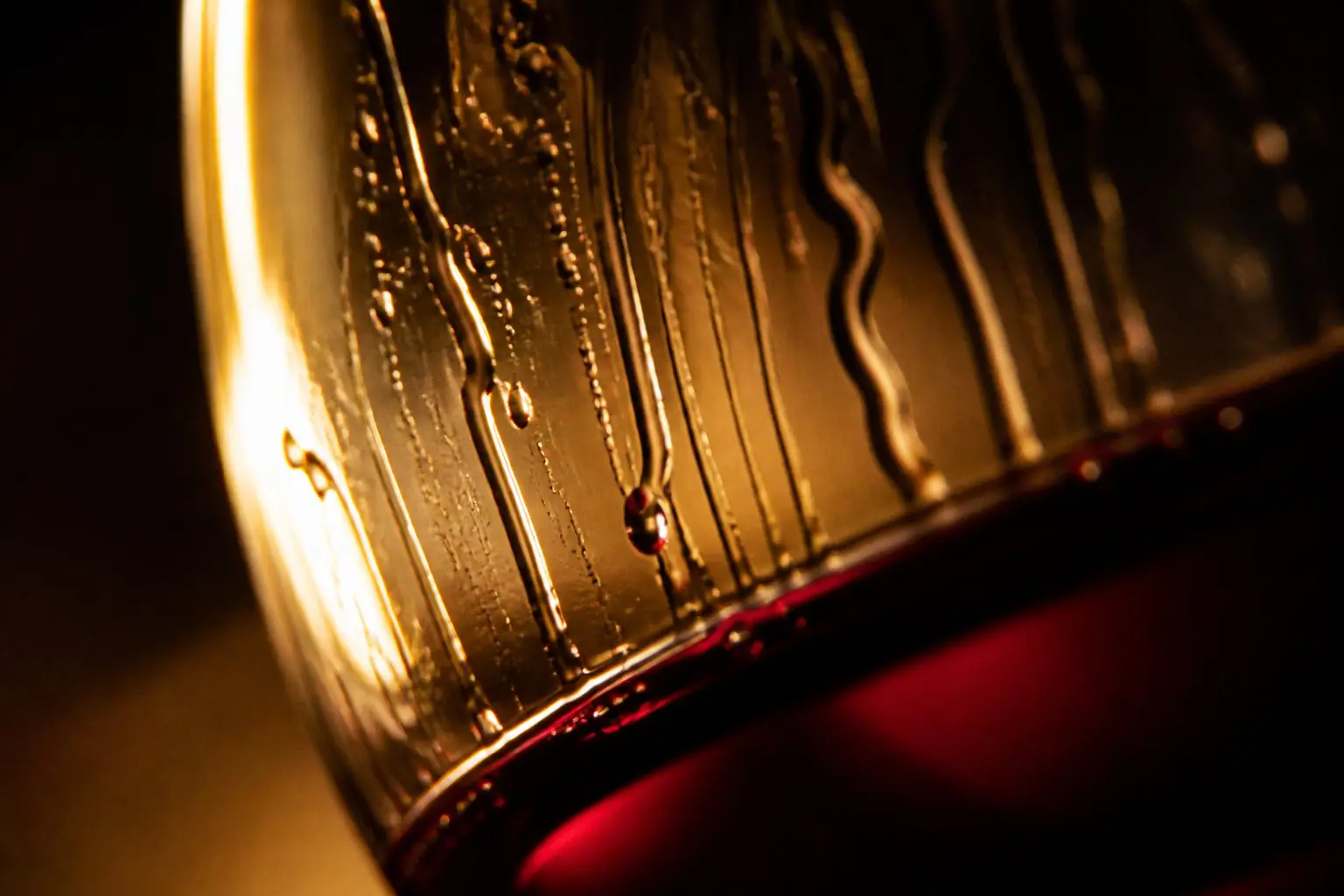
Tilt the glass against something white. Notice the shade and how pale or deep it is. Grape variety, winemaking and age can all affect colour; it cannot tell you the wine’s age or oak use on its own. And those thick “legs” running down the glass? Evaporation and changing surface tension help form them; they cannot measure quality, alcohol or sweetness.
legs = physics, nothing more
Smell
A large share of what you call flavour comes through aroma, so give your nose plenty of attention. Take short, gentle sniffs. Move your nose around the glass; swirling and distance can change which aromas you notice. If the aromas become harder to notice, pause before trying again.
doggy sniffs. really.
Taste
Take a small sip and let it move around your mouth. Sweetness is a taste you can assess across the mouth; compare it with acidity and aroma. Acidity makes you salivate. Tannin dries your gums like over-steeped tea. Follow the first impression, the middle of the sip and the lingering finish.
notice what happens between the first sip and the finish
Conclude
Did it change in the glass? After swallowing, notice which flavours remain and how long they last pleasantly. Then rate it however you like. My own scale runs from “bleh” to “last meal on earth”.
“last meal on earth”
Your mouth already knows
Six traits help you describe what you notice. Your impression may differ from someone else’s, so start with the sensations you can recognise.
Six decisions made your wine
The vineyard, weather and cellar decisions all contribute to what you taste. Follow six important influences:
Climate affects ripening, while water and nutrients shape vine growth. Balanced growth helps fruit ripen; severe water stress can hold it back. Poor soil alone does not make better wine.
Balanced growth supports ripeningCabernet Sauvignon is a crossing of Cabernet Franc and Sauvignon Blanc. Grape variety supplies the starting material; growing conditions and winemaking also affect the result.
Cabernet Sauvignon has two parent grapesYeast converts grape sugar into alcohol and carbon dioxide. Fermentation also produces aromas, and the yeast and conditions can influence how the wine smells.
sugar → alcohol + carbon dioxideBacteria convert sharper malic acid into softer lactic acid. This can soften acidity and bring buttery notes. It is common in reds and a choice that changes the style of many whites.
malic acid → lactic acidNew oak can add vanilla, clove and toasted aromas. Older barrels generally contribute less oak flavour, while both can allow gradual oxygen exchange.
Barrel age changes the oak influenceAroma, colour and texture can change as wine ages, through reactions involving its many components. Much wine is made for relatively early drinking, while some bottles are intended to develop longer.
Some wines develop; many are ready to drinkNine styles. Most of the shelf, explained.
These nine styles can help you place a bottle. Compare their colours, then choose a glass to see familiar examples.
Sparkling
Champagne, Cava, Prosecco, Lambrusco
Some labels lead with place.
Others with the grape.
Chablis names a place; Chardonnay names a grape. Labels can show either or both. Alsace wines can name the grape too, so this is a habit to recognise, not a border between Europe and the rest of the world.
The Old World
Often led by place- ChablisisChardonnay
- White SancerreisSauvignon Blanc
- Red BurgundyisPinot Noir
- BaroloisNebbiolo
- Red Riojaoften leads withTempranillo
- Chiantileads withSangiovese
The New World
Often led by grapeMany bottles put the grape name on the front, alongside the place it was grown. Argentina grows Malbec in high-elevation vineyards. New Zealand is particularly known for Sauvignon Blanc. And some Chilean vines long thought to be Merlot turned out to be Carmenère.
Compare the same grape from different regions, then look at growing conditions and winemaking to explore the differences.
read the place alongside the producer and vintageChoose wine for the whole dish
Match the weight of the dish, mind the acid and the tannin, and pair to the sauce rather than the meat. These six pairings are useful starting points:
Choose a chapter
- IWhat wine actually is
- IIHow to taste
- IIIThe six traits
- IVHow wine is made
- VThe style map
- VIThe world atlas
- VIILiving with wine
Three references, always open
“Wine should be fun.”
Try the four steps
Look, smell, taste, conclude. Start with the tasting chapter and a glass of wine.
Taste with Nolea