Who makes it
Around thirty concrete vats let Château Haut-Bailly monitor each batch separately during fermentation. Temperature control and gentle pumping over preserve fruit and extract silky tannins.
Vines have been cultivated on the property since circa 1461, and the modern vineyard began in 1530. Château Haut-Bailly is a Cru Classé estate in the Pessac-Léognan appellation of Bordeaux, with Cabernet Sauvignon, Merlot and Cabernet Franc in its red wine.
Where it grows
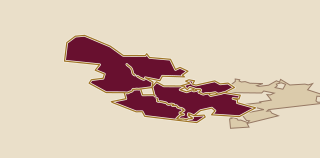
Château Haut-Bailly sits on a gentle rise overlooking Léognan. The village is the physical reference on the horizon, while Pessac-Léognan supplies the current appellation for the wines.
Gravel, sand, clay and limestone cover the gentle slopes, whose drainage moves water through the ground. The vineyard combines several soil conditions within one property.
What they make
The red wine is built from 65% Cabernet Sauvignon, 25% Merlot and 10% Cabernet Franc. Cabernet Sauvignon forms the majority, Merlot rounds the blend with softer fruit, and Cabernet Franc adds perfume.
The wines age for eighteen months in oak barrels, many of them new. Oak allows gradual oxygen exposure and can add spice while tannins soften. In good vintages, the wines need 10 to 15 years before approachability, with peak maturity between 15 and 40 years after the vintage.