Who makes it
Château de Cérons is a Bordeaux estate working across red, white, and sweet wines. Its grape compositions are separated by style, with distinct paths for white, red, and sweet bottles. The estate maintains sustainable viticulture practices across its planted vineyard. The range carries the name Château de Cérons alongside Château Calvimont, La Quille, and Coucher de Soleil.
Where it grows
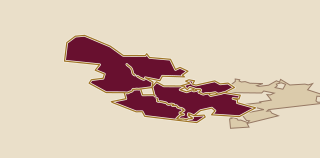
The Ciron River creates an autumn microclimate that allows Botrytis cinerea to develop in the vineyard. Botrytis cinerea, often called noble rot, reduces water in ripe grapes and concentrates sugar and flavour, supporting sweet wine production. Grand Enclos Graves Rouge places Graves directly in the name of a red wine from the estate.
What they make
The estate's four label lines are Château de Cérons, Château Calvimont, La Quille, and Coucher de Soleil. White wines use 50% Sémillon, 40% Sauvignon Blanc, and 10% Sauvignon Gris. Red wines use 55% Cabernet Sauvignon and 45% Merlot. Sweet wines use 95% Sémillon and 5% Muscadelle. Minerality runs through the range, with clearly focused aromas.
Grand Enclos Graves Rouge opens with ripe fruit aromas lightly veiled by smoke, graphite, and cold ash. Smoke, graphite, and cold ash recall the pine forests bordering the Graves appellation.