At A Glance
François Mitjavile is the Bordeaux producer behind Tertre Roteboeuf, a six-hectare vineyard in southeastern Saint-Émilion planted to 80% Merlot and 20% Cabernet Franc. Late harvesting, low yields, temperature-controlled concrete fermentation, 18 months in 100% new French oak, and oxidative ageing define the estate's red wine. Tertre Roteboeuf remains deliberately unclassified, despite qualifying for Premier Cru status.
The Producer
Mitjavile began his winemaking career at Château Figeac in 1975, apprenticed under Thierry Manoncourt, and carried that training into his own estate. For the inaugural vintage in 1977, he renamed the property Tertre Roteboeuf. The change turned a property name into a bottle name, with the vineyard, the blend, and his cellar decisions gathered under one label.
His work is built around ripe grapes and low yields. Merlot supplies 80% of the planting, while Cabernet Franc makes up the remaining 20%, including vines that can approach 50 years of age. The wine carries the imprint of a small hillside vineyard and a producer who prefers to let ripeness develop in the vineyard before shaping the wine in the cellar.
Place
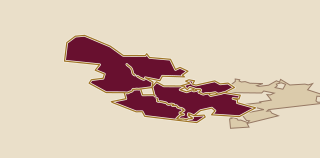
Tertre Roteboeuf sits in southeastern Saint-Émilion, where a hillside vineyard places limestone, clay, and drainage beneath mature Merlot and Cabernet Franc. The location guides the bottle toward a ripe, concentrated Bordeaux style, while the Cabernet Franc share adds a second grape to the estate's central red blend.
The label name Tertre Roteboeuf refers to the estate Mitjavile renamed in 1977. It is the named wine at the centre of the range, with place, grape varieties, and cellar method closely tied together.
Soil And Site
The vineyard occupies a hillside slope with limestone and clay-based soils in one large block. Natural drainage helps the vines carry a late harvest without leaving the grapes in stagnant ground. Forty-year average vine age adds maturity to the planting, while the older Cabernet Franc vines bring a distinct part of the blend from parcels with deeper history.
The site therefore enters the wine through ripeness and concentration, but also through the mixed planting. Merlot is the majority grape. Cabernet Franc remains large enough to shape the estate's character rather than appearing as a minor seasoning.
Story
Mitjavile's path moved from his family's haulage business and law studies in Paris to Château Figeac, then to his own renamed estate. That change in work became a change in wine. At Tertre Roteboeuf, late picking and low yields became guiding decisions, followed by concrete fermentation, new oak, and oxidative ageing.
The estate also took a deliberate position outside Bordeaux's formal hierarchy. Mitjavile has consistently rejected classification for Tertre Roteboeuf, even though the wine qualifies for Premier Cru status. The bottle therefore asks to be understood through its vineyard, blend, and production choices, with no classification line carrying the explanation.
Vineyards And Cellar
Mitjavile starts with late harvesting, allowing the grapes to reach full ripeness and develop more concentrated flavours. Low yields reduce the amount of fruit carried by each vine, concentrating the harvest before it reaches the cellar.
The grapes ferment in temperature-controlled concrete tanks. Concrete provides a stable vessel while temperature control keeps fermentation within a managed range. The wine then spends 18 months in 100% new French oak, placing oak firmly beside the ripe fruit of the late harvest.
Mitjavile uses oxidative ageing rather than reductive ageing. The wines reach a stable stage of development by the time they are bottled, so the cellar method is part of the bottle's shape, not a hidden technical detail.
Wines
Tertre Roteboeuf is the principal documented wine, a red blend led by Merlot with 20% Cabernet Franc. Its range position is clear: this is the estate where the hillside vineyard, mature vines, late picking, concrete fermentation, new oak, and oxidative ageing appear together. The wine's material vocabulary is ripe fruit, concentration, acidity, tannin, and oak, with each element tied to a grape or cellar decision.
Roc de Cambes belongs to the wider Mitjavile estate group and adds another named Bordeaux wine to the family story.
Domaine de l'Aurage is managed by Louis Mitjavile and extends the family connection across Bordeaux. It belongs in the wider picture, while Tertre Roteboeuf remains the bottle with the fullest supported detail on vineyard composition and cellar work.
In The Glass
From Tertre Roteboeuf, ripe fruit rises first, reflecting late harvesting and the 80% Merlot planting. The aroma then meets the darker register of new French oak, which has held the wine for 18 months.
On the palate, concentrated fruit gives weight, acidity keeps the wine moving, and tannin provides grip around the middle and finish. Cabernet Franc adds a second line beneath the Merlot, while oxidative ageing brings the wine to bottling in a stable stage of development. The finish leaves fruit, oak, and tannin in sequence, with the vineyard's limestone and clay expressed through the wine's firm, dry close.
Roc de Cambes should be approached as a separate Mitjavile wine, with its own grape balance and site expression. The family name connects the bottles, but the detailed taste account belongs first to Tertre Roteboeuf.
A Bottle To Understand It
Start with Tertre Roteboeuf. It is the estate's named wine from southeastern Saint-Émilion, built from 80% Merlot and 20% Cabernet Franc grown on limestone and clay. Late harvesting brings ripe, concentrated fruit; concrete fermentation keeps the cellar vessel neutral and controlled; 18 months in new French oak adds a marked oak frame; oxidative ageing brings the wine to a stable stage before bottling.
In the glass, look for ripe fruit carried by acidity, held by tannin, and surrounded by oak. This bottle gathers the estate's place, blend, harvest choice, and ageing method into one red wine, giving the name Tertre Roteboeuf a physical taste and texture.
Anecdote
François Mitjavile began in his family's haulage company, then went to Paris to study law. Neither path became his wine career. In 1975, he knocked on the door of Château Figeac, where Thierry Manoncourt admitted him and gave him his first winemaking role. Two years later, when Mitjavile made the inaugural vintage of his own winery, he changed the property name from Le Terte to Le Tertre Roteboeuf. The new name followed the wine into the cellar and onto the label, while the vineyard settled around 80% Merlot and 20% Cabernet Franc on a hillside in southeastern Saint-Émilion.
Final Word
Tertre Roteboeuf is a Bordeaux estate where the label name, hillside vineyard, Merlot and Cabernet Franc blend, late harvest, new oak, and oxidative ageing remain visible in the bottle. Mitjavile has consistently rejected classification for Tertre Roteboeuf, even though the wine qualifies for Premier Cru status. Look first for Tertre Roteboeuf, then read the wider Mitjavile range as a family of named estates with different levels of documented detail.
Sources
- www.thewinecellarinsider.com/bordeaux-wine-producer-profiles/bordeaux/st-emilion/tertre-roteboeuf
- winesdirect.ie/blogs/news/francois-mitjavile-the-iconic-winemaker-who-transformed-bordeaux
- www.decanterchina.com/en/columns/demeis-view-wine-communication-from-a-chinese-winemaker/meet-francois-mitjavile-the-rebel-of-winemakers
- schiller-wine.blogspot.com/2013/12/francois-mitjavile-winemaker-of-year.html
- www.the-buyer.net/tasting/wine/louis-mitjavile-domaine-de-l-aurage
- angrywinemerchant.com/products/chateau-tertre-roteboeuf-2022
- www.bbr.com/producer-3520-chateau-le-tertre-roteboeuf
- www.farrvintners.com/wine.php?wine=60735