Who makes it
Pierre Lurton began at Château Marjosse as a renter in 1990 and acquired the property piece by piece, reaching full ownership in 2013. He developed it as a personal project while serving as Director of Château Cheval Blanc and d'Yquem for LVMH.
The vineyard covers 40 hectares, with vines ranging from 25 to 75 years old. Jean-Marc Domme has served as technical director since 2017. The estate combines mature plantings with separate treatment of vineyard plots in the cellar.
Where it grows
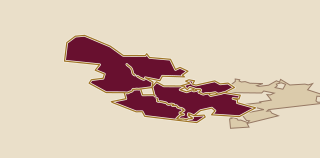
Marjosse is in Entre-Deux-Mers, where Pierre Lurton developed the estate as a personal project. Its 40 hectare vineyard includes vines across a wide age range, bringing younger and older plantings into the same estate.
Plot specific vinification keeps batches from separate parcels apart during fermentation. The place therefore reaches the cellar through individual lots as well as through the broader estate address.
What they make
Château Marjosse's wines divide into selected batches and remaining wine. Harvested grapes undergo chilled maceration for 4 to 5 days before fermentation, followed by plot specific vinification.
Selected batches undergo malolactic fermentation in 400 litre barrels without new oak. Malolactic fermentation changes sharper malic acid into softer lactic acid. The remaining wine ages on fine lees in temperature controlled concrete vats, where lees ageing can add savoury texture and roundness.