Who makes it
The cellar programme centres on concrete tanks and time. Château Vieux Mougnac makes red Bordeaux Supérieur from Merlot and Cabernet varieties, with standard wines spending two winters in concrete before three further years in bottle at the château. Premium cuvées follow another path, moving from concrete into seven to ten new French oak barrels for ten months.
That split is visible in the glass. The standard wines lean toward fruit, spice, settled tannin, and bottle development. The premium wines carry an added oak register, including subtle vanilla and roasted cocoa. The estate's five generations of organic cultivation with biodynamic principles provide the long-running vineyard thread behind both styles.
Where it grows
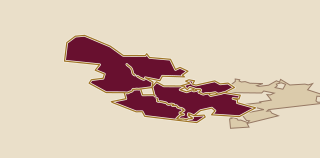
Bordeaux is the regional setting, while Bordeaux Supérieur is the appellation on the red wines. The appellation connects the bottles to a permitted Merlot and Cabernet blend and requires at least twelve months of ageing in oak barrels. Château Vieux Mougnac also describes standard reds spending two winters in concrete, while premium cuvées move from concrete to new French oak. The label therefore carries both a regional appellation and a cellar programme with two distinct paths.
The vineyard story begins with five generations of organic cultivation guided by biodynamic principles. The estate's red wines are presented through Bordeaux Supérieur and Merlot and Cabernet varieties, not through a named parcel or classified vineyard. Farming sets the starting point, while fermentation and ageing determine how the fruit arrives as colour, tannin, spice, and texture.
How it is made
The cellar
Red fermentation uses natural yeast, followed by three to four weeks of maceration. During that period, colour, tannin, and aromas are drawn from the grapes, building the dark appearance and firm fruit profile found in the red wines. Press wine is incorporated for its tannin and ageing capacity, adding material that can support longer bottle development.
Standard reds spend two winters in concrete tanks, then remain in château cellars for three more years after bottling. Racking during this extended ageing follows lunar cycles. Premium cuvées spend one year in concrete before ten months in seven to ten new French oak barrels, where vanilla and roasted-cocoa aromas join the wine's fruit and tannin.
What they make
The range divides into standard Bordeaux Supérieur reds and premium cuvées. The 2015 Bordeaux Supérieur is dense, with morello cherry, spice, ripe tannins, and a long finish. It shows the youthful, concentrated side of the range, where dark fruit and tannin still carry the palate.
The 2008 Bordeaux Supérieur moves into a more developed register. Its palate is silky, with candied fruit and spice that persists after the sip. The change from the 2015 is one of texture and bottle maturity, not a change of appellation or grape family.
Wines to try
First bottle
The 2015 Bordeaux Supérieur is the right first bottle. It is a red Merlot and Cabernet blend from the estate's standard range, dense with morello cherry, spice, ripe tannins, and a long finish. Its fruit is generous, but the tannin keeps the wine grounded and gives the finish length.