At A Glance
- Region
- Bordeaux
- Appellation
- Pessac-Léognan
- Location
- Bordeaux city limits
- Main grapes
- Merlot, Cabernet Franc, Cabernet Sauvignon
- Signature wine
- Château Les Carmes Haut-Brion
- Defining feature
- Whole bunch fermentation and ageing in new French oak, foudres and amphora
The Producer
Guillaume Pouthier gives each grape a separate fermentation vessel. Cabernet Franc is vinified in wood, Cabernet Sauvignon in concrete vats, and Merlot in stainless steel vats. Stéphane Derenoncourt serves as consultant oenologist.
Whole bunches remain part of the fermentation method, bringing stems into the vat before fermentation and maceration. The estate's wines combine a Bordeaux grape blend with varied vessels from fermentation through ageing.
Place
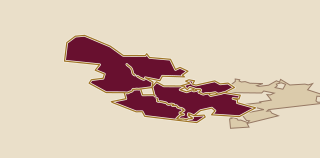
Bordeaux city limits bring an urban microclimate to this Pessac-Léognan estate. Temperatures are 2 to 3 °C higher here, and harvest begins 1 to 2 weeks before properties outside Bordeaux.
Wines
The range has two named bottlings. Château Les Carmes Haut-Brion is the grand vin, produced at approximately 1,800 cases or 160 hL annually. Le Clos des Carmes is the second wine, with production of 200 cases or 18 hL.
The current grape composition of the grand vin is 41% Merlot, 39% Cabernet Franc and 20% Cabernet Sauvignon. Recent top vintages age in 70% new French oak, 19% foudres and 11% amphora.
In The Glass
Whole bunches leave stems among the grapes during fermentation. Stems can bring perfume, spice and tannin, while the method brings freshness, flavour and aroma. New French oak can add toast and spice; foudres and amphora give the ageing profile less overt oak flavour.
Recent vintages have a cashmere texture, with a soft, flowing palate. Cabernet Franc commonly brings perfume and spice to a Bordeaux blend, Cabernet Sauvignon adds tannin, and Merlot brings a rounder middle palate.
A Bottle To Understand It
Choose Château Les Carmes Haut-Brion, the grand vin. It is the estate's primary red, while Le Clos des Carmes is the second wine. The bottle carries the château name and Pessac-Léognan on the label, placing the estate's principal bottling in its classified growth category.
Final Word
Jean de Pontac donated land holding a water mill and vineyards to the Carmelite order. The Carmelites tended the property from 1584 until the French Revolution.
Sources
1. https://www.pessac-leognan.com/en/nos-chateaux/chateau-les-carmes-haut-brion/ 2. https://www.thewinecellarinsider.com/bordeaux-wine-producer-profiles/bordeaux/graves-pessac/carmes-haut-brion/ 3. https://en.wikipedia.org/wiki/Ch%C3%A2teauLesCarmesHaut-Brion 4. https://greatbordeauxwines.com/chateau-profiles/pessac-leognan/les-carmes-haut-brion