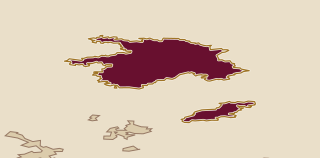
Champagne brings several separated growing areas together under one appellation, the defined origin and production rules behind the name on the bottle. Montagne de Reims takes in the wooded hill between Reims and the Marne. The Vallée de la Marne follows the river west from Épernay, while the Côte des Blancs runs south of the town. The Côte des Bar lies farther south in the Aube.
Reserve wines, kept back from earlier harvests, can be blended with the current harvest too. The blend may therefore contain wines of different ages as well as origins.
Champagne at a glance
Use these growing-area names, cellar steps and label terms when choosing a bottle.
Champagne’s main growing areas
Champagne’s growing areas
The villages below belong to four of Champagne’s growing areas. A bottle may blend grapes from several areas.
Montagne de Reims
The wooded hill between Reims and the Marne
Pinot Noir grows across much of the area, alongside Chardonnay and Meunier. The grape mix and the direction the slopes face change around the hill.
Look forVerzenay · Ambonnay · Bouzy · Villers-Marmery
Vallée de la Marne
Vineyards following the river west from Épernay
Meunier has a prominent role, alongside Pinot Noir and Chardonnay.
Look forAÿ · Mareuil-sur-Aÿ · Cumières · the western valley
Côte des Blancs
The chalk escarpment running south of Épernay
Chardonnay is the main grape, used in blends and blanc de blancs, white Champagne made from white grapes.
Look forCramant · Avize · Oger · Le Mesnil-sur-Oger
Côte des Bar
The southern vineyards of the Aube
Pinot Noir is the main grape in these vineyards well south of Reims and the Marne.
Look forBar-sur-Seine · Bar-sur-Aube · Les Riceys
A second fermentation creates Champagne’s bubbles
Champagne in the cellar
The main stages of making Champagne, from still base wines to the finished bottle.
Base wines and blending
The producer makes still base wines and may blend wines from different grapes, villages and harvests. Reserve wines come from earlier years.
Second fermentation
Yeast and sugar are added before the bottle is sealed. Fermentation creates carbon dioxide, which remains dissolved in the wine.
Time on the lees
The wine matures on its lees, the spent yeast cells left after fermentation. This can add texture and flavours associated with bread, biscuit or pastry.
Disgorgement and dosage
Disgorgement removes the sediment. The producer may then add wine and sugar before corking; this addition, called dosage, helps determine finished sweetness.
Grapes, harvests and sweetness on the label
Champagne labels
A year identifies the harvest; other terms describe the grapes, sweetness or producer category.
HarvestNo vintage shown · No harvest year to readHide explanationRead explanation
Generally a non-vintage wine that may combine more than one harvest
Often a good introduction to a producer’s regular style
VintageMillésiméHarvestSeparate label excerptsHide explanationRead explanation
Champagne from one declared harvest year
It matures for longer before release
Blanc de BlancsGrape colourHide explanationRead explanation
White Champagne made from white grapes, most commonly Chardonnay
Read village or vineyard details separately
Blanc de NoirsGrape colourHide explanationRead explanation
White Champagne made from dark grapes, chiefly Pinot Noir and Meunier
Read the origin details to see where the grapes grew
BrutExtra BrutBrut NatureSweetnessSeparate label excerptsHide explanationRead explanation
Sweetness categories defined by the sugar in the finished wine
Dosage contributes to that sugar level; acidity also affects how dry the wine feels
NMRMCMProducer categorySeparate label excerptsHide explanationRead explanation
Négociant-manipulant, récoltant-manipulant and coopérative de manipulation
These codes identify the producer category behind the bottle
Grapes and villages
Grapes and styles
Chardonnay is the main grape of the Côte des Blancs, while Pinot Noir is prominent in Montagne de Reims and the Côte des Bar. Meunier has a substantial role in the Vallée de la Marne. These are broad patterns; producers may use more than one grape in a blend, and Champagne also has vineyards in the Côte de Sézanne and smaller outlying areas.
Grand cru and premier cru refer to villages in Champagne's historic classification system. In Bourgogne, those words can classify individual vineyards. A named parcel in Champagne gives you a more specific location without creating another appellation rank.
Fermentation and time on the lees
Background
Champagne rests on its lees, the spent yeast cells left in the bottle after fermentation. Time on the lees can add texture and flavours associated with bread, biscuit or pastry. The wines must meet minimum maturation periods, and many producers keep them longer. This helps explain why wines from the same grapes can taste different.
Before release, the bottles are gradually turned until the sediment collects near the cap. Disgorgement removes it. The producer may then add wine and sugar, known as dosage, before corking. This addition helps determine the finished sweetness.
Non-vintage, vintage and grape-based styles
Everyday bottles
A producer's regular non-vintage brut is usually the simplest bottle to start with. It is sold without a declared harvest year and may combine wines from several harvests. Brut describes a dry sweetness category.
Vintage Champagne comes from a single declared year and must mature for longer before release. Producers do not all make it every year. Blanc de blancs is white Champagne made from white grapes, most commonly Chardonnay. Blanc de noirs is white Champagne from dark grapes, chiefly Pinot Noir and Meunier. Rosé can be made by blending red and white wine or by brief contact with the grape skins.
Houses, growers and cooperatives
What sets it apart
Large houses often work across many villages and keep substantial reserves of older wine. Grower-producers may concentrate on vineyards they farm, though their size and approach vary. Cooperatives can sell their own wines or provide winemaking services and base wines for members and other producers.
A small code on the label identifies the producer category. NM means négociant-manipulant, a producer that can buy grapes or wine to make Champagne. RM means récoltant-manipulant, a grower making Champagne from their own harvest. CM means coopérative de manipulation, a winemaking cooperative. Producers within each category still make different choices about grapes, blending and cellar time.
Extra dry is sweeter than brut
Read the label
Champagne’s sweetness names can catch you out. Extra dry is sweeter than brut, despite sounding drier. Extra brut has a lower sugar limit than brut, while brut nature, pas dosé and dosage zéro identify the driest category. Sec, demi-sec and doux describe progressively sweeter wines. These categories refer to the sugar in the finished wine, not simply the amount added at dosage.
A cuvée is an individual wine in a producer’s range, so note its name as well as the producer. Look for any year, grape description or village. Two wines in the same sweetness category can feel different: acidity gives the wine freshness, while ripeness and time on the lees also affect the balance. A disgorgement date records when the sediment was removed; the vintage records the harvest year.
Choosing a first Champagne
First bottle
For a dry Champagne, choose a producer's non-vintage brut. If you want white Champagne made mainly from Chardonnay, look for blanc de blancs; blanc de noirs is made from dark grapes. Rosé offers another choice.
If you want to compare two wines, try the regular brut beside another cuvée from the same producer. Check the grapes, harvests and ageing information, since the wines may differ in several ways.
5 named areas
Inside the region
Explore the wine-growing areas of Champagne.
- 01Aube — Côte des Bar40 producersThe Aube is Champagne's southernmost sub-region, with Pinot Noir at the centre of the Côte des Bar. Urville, Courteron, Buxières-sur-Arce and Les Riceys are among its key places.
- 02Côte de Sézanne15 producersSouth of the Côte des Blancs, the Côte de Sézanne grows mainly Chardonnay. Its blanc de blancs, white Champagne made from white grapes, tends to be softer and rounder than wines from villages farther north.
- 03Côte des Blancs67 producersCôte des Blancs is Champagne's best-known Chardonnay corridor, a chalky run of villages extending south from Épernay.
- 04Montagne de Reims101 producersMontagne de Reims is the wooded hill between Reims and the Marne valley. Pinot Noir grows on many of its slopes, from Verzenay to Ambonnay and Bouzy. Chardonnay has a stronger presence in Villers-Marmery and Trépail, so check the village name alongside the grape.
- 05Vallée de la Marne39 producersVallée de la Marne follows the river west from Épernay, with Meunier prominent in the cooler valley and Pinot Noir important around Aÿ.
Producer profiles
Start with these
Meet 5 producers from across Champagne.
- BollingerChampagne house with reserve wine blending, extended lees ageing, and vintage cuvées from R.D. and La Grande Année.
- Charles HeidsieckReims Champagne house with Gallo Roman crayères and the Chardonnay cuvée Blanc des Millénaires.
- Louis RoedererIndependent Champagne house in Reims with biodynamic vineyard farming, Collection wines and Cristal.
- Pol RogerFamily-run Champagne house in Épernay, with multi-cru blends, vintage wines and Cuvée Sir Winston Churchill.
- TaittingerA Reims Champagne house with 288 hectares of vines, selected grower partners and bottles matured 18 metres underground in Saint-Nicaise chalk cellars.
Browse 220 more
- Alexandre BonnetAlexandre Bonnet makes Pinot Noir focused wines in Les Riceys, with Blanc de Noirs, Blanc de Blancs and a macerated rosé.
- Alfred GratienChampagne house founded in Épernay in 1864, vinifying every cuvée in 228-litre oak barrels, with no malolactic fermentation and first-pressing juice throughout.
- André JacquartVertus Champagne house with Premier Cru and Grand Cru holdings, oak fermentation, long lees ageing and low dosage.
- AyalaAyala is a Champagne house focused on Chardonnay, cru by cru cellar work, and a Brut Nature cuvée with zero dosage.
- Beaumont des CrayèresMardeuil cooperative focused on Meunier Champagne, with single variety Fleur Blanche and Fleur de Meunier cuvées.
- Belle MaisonBelle Maison presents Champagne wines including a Blanc de Blancs shaped by Chardonnay grown on limestone, flint, and buhrstones terroir.
- Billecart-SalmonChampagne house under family ownership in Mareuil-sur-Aÿ, with Brut Rosé and Cuvée Nicolas François in its range.
- Caillez-LemaireChampagne estate in Damery with 45 vineyard plots, Meunier, Chardonnay and Pinot Noir, and cuvées separated by composition and cellar ageing.
- Champagne A. BoatasFamily estate in Avize with Chardonnay vineyards and a Grand Cru range spanning Blanc de Blancs, Grande Réserve and Rosé.
- Champagne A. Francinet & FilsGrand Cru Champagne grower with Pinot Noir Cuvée Exception wines from Verzenay, Verzy and Villers-Marmery.
- Champagne A. MargaineChampagne A.
- Champagne A&C TOULLECA&C Toullec is a Champagne house with parcel by parcel vinification, Assemblage Brut from Pinot Noir and Chardonnay, and Chardonnay Les Hautes Varennes.
- Champagne Alain GUILLAUMETrépail Champagne house with more than 8 hectares, a perpetual Chardonnay cuvée, and HVE certification.
- Champagne Alain MercierPassy-sur-Marne Champagne with Chardonnay, Meunier and Pinot Noir, including BLCK Blanc de Noirs and Novatio.
- Champagne Alexandre BonnetLes Riceys house focused on Pinot Noir, making wines under Champagne, Coteaux Champenois and Rosé des Riceys.
- Champagne André ClouetGrand Cru Champagne house rooted in Bouzy and Ambonnay, with Pinot Noir led cuvées and the rare Un Jour de 1911.
- Champagne Arthur MarcFleury-la-Rivière Champagne producer using first press must and no malolactic fermentation in its current wines.
- Champagne AutréauChampagne house in Champillon with four terroirs and a Pinot Noir and Pinot Meunier Blanc de Noirs.
- Champagne Baron DauvergneChampagne Baron Dauvergne makes Pinot Noir-led Champagne from Bouzy Grand Cru, including the 100% Pinot Noir Fine Fleur Blanc de Noirs, Tour Eiffel Brut with Chardonnay, and the lees-aged Les Notre Dames.
- Champagne Benoit BeaufortSixth generation Ambonnay Champagne producer using the Récoltant Coopérateur model, with Grand Cru cuvées including Pinot Noir and Chardonnay.
- Champagne Benoit MichelMonthelon Champagne house with a vintage Chardonnay cuvée and grass cover in the vineyards.
- Champagne Benoit MunierChampagne producer with parcels in Grand Cru communes and separate vinification by parcel.
- Champagne Bérêche et FilsChampagne grower led by Raphaël and Vincent Bérêche, with estate parcels, wild fermentation and a Brut Réserve of Chardonnay, Pinot Noir and Pinot Meunier.
- Champagne Bertrand-DelespierreChamery grower house in the Montagne de Reims, making Champagne exclusively from estate grown fruit.
- Champagne BonnetChampagne Bonnet carries a multi-generational winegrowing tradition, crafting organically grown Champagne shaped by extended cellar ageing.
- Champagne Bonnet-LeconteFamily Champagne estate in Troissy-Bouquigny making cuvées led by Pinot Meunier, including Cuvée Spéciale Brut and Rosé Brut.
- Champagne Borel-LucasÉtoges grower house making Chardonnay and Meunier Champagne across Blanc de Blancs and La Réserve.
- Champagne BrimoncourtAÿ Champagne house making refreshing aperitif wines from Chardonnay, Pinot Noir and Meunier sourced across Champagne.
- Champagne Brisson-LahayeChampagne Brisson-Lahaye presents Blanc de Noirs Champagne with lively acidity, creamy texture, and aromas spanning ripe red fruit, almond, and brioche.
- Champagne Bruno PaillardChampagne house founded by Bruno Paillard, making Extra Brut wines with a Perpetual Reserve and disgorgement dates on every bottle.
- Champagne Bruno RoulotIndependent family grower in La Chapelle-Monthodon, with Pinot Meunier as the larger vineyard planting and cuvées including Brut Tradition and Vintage 2004.
- Champagne C.H. PiconnetChampagne C.H.
- Champagne Canard DuchêneLudes Champagne house, first Grande Maison to produce an organic Champagne, with P.
- Champagne CattierChampagne Cattier operates 33 hectares in Chigny-les-Roses and makes Premier Cru sparkling wines, including a zero dosage Brut Nature.
- Champagne Cazals ClaudeSmall family Récoltant-Manipulant estate in Champagne, producing about 5,500 cases annually, with Chardonnay-led wines built for aromatic depth and long ageing.
- Champagne Chanoine FréresChampagne house with Épernay origins and a Reims base, making nonvintage Brut, 2014 Vintage and Tsarine.
- Champagne ChapuyOger house focused on Chardonnay, with Brut Tradition and Grand Cru Blanc de Blancs wines from the Côte des Blancs.
- Champagne Charles ClémentChampagne Charles Clément makes Brut Tradition by traditional method, with lees ageing and a collective approach to land care.
- Champagne Charles MignonÉpernay family house with Chouilly vines, an organic Brut, and a Grand Cru cuvée balancing Pinot fruit with Chardonnay.
- Champagne ChavostChavost is a Chavot-Courcourt cooperative making Brut Nature Champagne from Chardonnay and Pinot Meunier through spontaneous fermentation.
- Champagne Christophe PitoisChampagne Christophe Pitois makes Blanc de Blancs Grand Cru Brut Nature from Le Mesnil-sur-Oger, including Les Chétillons.
- Champagne Claude CazalsA small family RM Champagne house with Côte des Blancs parcels and Clos Cazals, a walled Chardonnay Grand Cru vineyard in Oger.
- Champagne CoizyTrépail Champagne house making its own cuvées, including mixed grape Eunomia and pure Chardonnay Cuvée des Sacres.
- CHAMPAGNE COLETTE BONNETOrganic Champagne from 2.24 hectares in Éguilly-sous-Bois and Noé-les-Mallets, with Pinot Noir, Chardonnay and rare Pinot Blanc.
- Champagne ColletAÿ cooperative owned by winegrowers, with a 100% Pinot Noir Grand Cru and Art Déco Brut.
- Champagne CoucheBuxeuil Champagne estate with biodynamic farming, Pinot Noir and select Chardonnay parcels, indigenous yeasts, and Élégance and Chloé cuvées.
- Champagne Couvreur-PrakRilly-la-Montagne grower Champagne with manual harvests, three traditional grapes and the vintage Brut Prospérité 2012.
- Champagne de BarfontarcBaroville cooperative with 54 member families, 130 hectares across eight Côte des Bar villages, and Pinot Noir led Champagne.
- Champagne de LozeyCelles-sur-Ource Champagne house focused on Pinot Noir, Chardonnay, reserve wines and distinctive cuvées.
- Champagne de VenogeÉpernay Champagne house with Pinot Noir led Cordon Bleu, the Princes range, and a private library of approximately 20,000 vintage bottles.
- Champagne DemièreIndependent three generation Champagne house in Fleury-la-Rivière, making fresh, lively wines from Meunier, Pinot Noir and Chardonnay.
- Champagne Denis FrézierMonthelon Champagne producer with vineyards across six villages and a Meunier led Trois Crus Brut blend.
- Champagne DeutzChampagne Deutz is an Aÿ house founded in 1838, with 45 hectares of vineyard and a range spanning three grape Brut, rosé, vintage, Blanc de Blancs and named cuvées.
- Champagne DevauxBar-sur-Seine Champagne cooperative using first press wines, oak foudre reserve wines and extended bottle maturation.
- Champagne Didier MichelCuis grower producer making Chardonnay led Champagne from Premier Cru and Grand Cru village fruit.
- Champagne Diebolt-ValloisFamily Champagne house in Cramant and Cuis, with parcel separated vinification, low dosage, and Fleur de Passion from old Cramant vines.
- Champagne Domaine La BorderieCôtes des Bar Champagne around Bar-sur-Seine, with fruit driven wines, a brut, a rosé and a blanc de blancs.
- Champagne Domaine MéaLouvois grower Champagne from Pinot Noir and Chardonnay, including Pinot Noir led L'Assemblage and zero dosage Sig'nature.
- Champagne DosnonCôte des Bar Champagne from Chardonnay, Pinot Noir and Meunier, fermented in old Burgundian barrels, aged at least 20 months and finished with low or no dosage.
- Champagne DougeCôte des Bar house working Pinot Noir led vineyards plot by plot on Kimmeridgian marl.
- Champagne Dourdon VieillardReuil Champagne house with clay limestone parcels, chalk cut cellars, and Meunier led cuvées.
- Champagne DoyardVindey grower Champagne centred on Bernard Doyard Brut Réserve, a Chardonnay Blanc de Blancs from limestone terroirs.
- Champagne Driant-ValentinGrauves grower Champagne with Chardonnay, Pinot Noir and Pinot Meunier, low dosage cuvées, and mature Millésime Brut.
- Champagne DumanginFifth-generation grower-producer Champagne from Chigny-les-Roses in the Montagne de Reims, with Premier Cru fruit, enamel fermentation tanks and hand-riddled cuvées.
- Champagne Dumangin J. FilsChigny-les-Roses Champagne house with near even plantings of three grapes, hand riddling, and oak aged Ratafia Champenois.
- Champagne DuménilFifth generation Champagne grower farming 8 hectares of Premier Cru vines across three Montagne de Reims villages.
- Champagne Élodie D.Écueil house led by five generations of women, farming Pinot Noir biodynamically and making long lees aged Champagne.
- CHAMPAGNE EMILE HAMM ET FILSFamily owned Champagne house founded in 1910 in Aÿ, with Brut, Réserve, Extra Brut and specialty wines.
- Champagne Emile LeclèreMardeuil grower house with 13 hectares, Meunier led vineyards, own label Champagne and Ratafia Champenois.
- Champagne EsterlinÉpernay cooperative Champagne with Meunier, Chardonnay and Pinot Noir, no malolactic fermentation, and extended bottle ageing.
- Champagne Etienne CalsacAn Avize Champagne producer centred on Chardonnay, heritage varieties and mineral driven cuvées including L'Échappée Belle.
- Champagne Fernand LemaireHautvillers Premier Cru house with 6 hectares, three Champagne grapes, and Tradition Brut and Rosé cuvées.
- Champagne FleuryCourteron Champagne producer with biodynamic viticulture and Fleury Blanc de Noirs Brut.
- Champagne FliniauxAÿ Grand Cru family house making Pinot Noir and Chardonnay cuvées, including the hand disgorged Cuvée des Signataires.
- Champagne FluteauGyé-sur-Seine Champagne house working estate grown Pinot Noir and Chardonnay, with Symbiose aged for years on lees.
- Champagne Forget-BrimontLudes Champagne house with Pinot Noir vineyards, Premier Cru blends, and vintage wines aged more than ten years before release.
- Champagne Forget-CheminLudes Champagne house with a multi-village vineyard, stainless steel fermentation and a 2019 Special Club cuvée.
- Champagne G.H Martel & Champagne Charles de CazanoveTwo Reims Champagne houses under Rapeneau family ownership, with fresh mineral G.H.
- Champagne G.H. MartelReims-based Champagne house founded in 1869, with roots in Avenay-Val-d'Or, 58 hectares across 64 villages, and four generations of Rapeneau family ownership.
- Champagne G.H. Martel & CieReims Champagne house with a family vineyard across 64 villages and a Victoire collection drawn mainly from Premier Cru sites.
- Champagne Gabriel- Pagin - FilsIndependent family winegrower founded in 1946 in Avenay Val d'Or, making Premier Cru Champagne from 9 hectares across Premier Cru and Grand Cru locations.
- Champagne Gaidoz-ForgetChampagne Gaidoz-Forget is a Champagne producer whose vineyard composition is led by Pinot Meunier, complemented by Pinot Noir and Chardonnay.
- CHAMPAGNE GAUTHEROTGrower Champagne from Celles-sur-Ource, with family vineyard plots, Pinot Noir led Brut Nature Zéro and vintage Blanc de Blancs.
- Champagne Godmé SabineA 5.5-hectare family Champagne estate in Verzenay, with eight cuvées spanning single-variety wines and blends from Grand Cru and Premier Cru villages.
- Champagne GossetChampagne Gosset began in Aÿ in 1584.
- Champagne Goutorbe-BouillotDamery Champagne house with 9 hectares, three grape varieties, and cuvées including Reflets de Rivière and Noir Coteaux.
- Champagne Griffon-TrichetFourth-generation Champagne house with certified parcels, fresh cuvées, and Grande Réserve from Pinot Noir, Pinot Meunier and Chardonnay.
- Champagne GuldkulaChampagne brand built on sourced cuvées, with Richard Juhlin as curator and a Meunier led Brut Réserve.
- Champagne Guy CharlemagneFive-generation Le Mesnil-sur-Oger grower-producer making Chardonnay-led Grand Cru Blanc de Blancs from approximately 12 hectares across 29 plots.
- Champagne Guy MeaLouvois Champagne domaine making Pinot Noir and Chardonnay cuvées from separately harvested and vinified plots.
- Champagne Guy MichelPierry grower house extending cellar time for old and very old vintages, with 1996 Guy Michel Paris Folies as its named bottle.
- Champagne Guy Michel & FilsPierry grower Champagne house known for Meunier led vineyards and late released old vintages.
- Champagne HebrartVallée de la Marne grower house with sustainable viticulture, Pinot Noir and Chardonnay, and Premier Cru to Aÿ Grand Cru wines.
- Champagne Hélène BeaugrandMontgueux grower Champagne from chalk, clay and flint, with old vines and cuvées moving toward Brut Nature.
- Champagne Henri Maillart & FilsChamery family house making three grape Champagne, Chardonnay led Brut Sélection and a pure Chardonnay Blanc de Blancs.
- Champagne HenriotFamily owned Champagne house founded in 1808, known for Brut Souverain and Pinot Noir and Chardonnay cuvées.
- Champagne Herbert BeaufortBouzy family house with Grand Cru Champagne and still red Pinot Noir, made from hand harvested fruit.
- Champagne Hervé DuboisAvize Champagne house with Chardonnay led cuvées, fresh mineral wines, and selective malolactic fermentation that preserves acidity.
- Champagne Hervieux-DumezSacy grower Champagne house with a Special Club cuvée, stainless steel vinification and approximately three years on lees.
- Champagne Hugues GodméFamily Champagne estate based in Verzenay, farming 7.5 hectares of Grand Cru and Premier Cru vines across four Montagne de Reims villages, with organic and biodynamic viticulture since 2006.
- Champagne J-M GremilletBalnot-sur-Laignes Champagne house making fresh Pinot Noir led cuvées with extended ageing and an Ariane launch connection.
- Champagne J. Pérard Père & FilsAmbonnay Champagne house with chalk vineyards, Pinot Noir led cuvées, reserve wines and Chardonnay based wines.
- Champagne J.CharpentierFamily owned producer in Villers-sous-Châtillon, with Pinot Meunier led sparkling wines and a rosé cuvée.
- Champagne J.M. Gobillard & FilsFamily Champagne house from Hautvillers, producing Blanc de Blancs and Privilège des Moines alongside over 1.6 million bottles a year.
- Champagne J.M. LabruyèreChampagne J.M.
- Champagne Jarry HeritageBéthon producer in Champagne's Sézannais region, making Alliance from Chardonnay, Pinot Noir and Pinot Meunier.
- Champagne Jean Plener FilsBouzy Champagne estate led by seventh generation Maud Plener, with Pinot Noir and Chardonnay Grand Cru cuvées aged on lees.
- Champagne Jean-Francois LaunayA three generation family Champagne house in the Marne Valley, working traditional and forgotten grape varieties from vineyard to bottle.
- Champagne Jean-Noël HatonDamery Champagne house with 60 hectares of vineyards, 45 owned, and cuvées given time for aromas and effervescence to mature.
- Champagne Jean-Philippe BosserHautvillers family Champagne house with Meunier, Chardonnay and Pinot Noir cuvées, Premier Cru bottles, vintage Champagne and Ratafia.
- Champagne JeangoutFourth-generation family Champagne from Rilly-la-Montagne, founded in 1928, with clay-limestone vineyards, HVE certification since 2015, and organic conversion begun in 2019.
- Champagne JM TissierFour-generation Champagne house in Chavot-Courcourt, with vineyards in several Champagne areas and the Ancestrale cuvée.
- Champagne José Michel & FilsMoussy Champagne house with artisanal vine growing and winemaking, and a Pinot Meunier and Chardonnay Brut.
- Champagne Joseph PerrierChâlons house founded in 1825, with Gallo Roman cellars, classified village sourcing, Chardonnay and parcel based Blanc de Noirs.
- Champagne Juillet LallementVerzy maison farming slightly more than four hectares across two Grand Cru villages, with Pinot Noir as its largest planting.
- Champagne Julien PrelatCelles-sur-Ource Champagne producer making separate Chardonnay, Pinot Meunier and Pinot Noir cuvées.
- Champagne Lafalise-FroissartVerzenay family house with Grand Cru Champagne, biodynamic farming and Pinot Noir led cuvées.
- Champagne LamiableTours-sur-Marne family Champagne house with Grand Cru holdings, long lees ageing, and cuvées from Pinot Noir and Chardonnay.
- Champagne LansonReims Champagne house known for Grand Cru Chardonnay and a fresh style shaped by fermentation without malolactic fermentation.
- Champagne Larnaudie-HiraultTrois-Puits Premier Cru grower Champagne built from Pinot Noir, Pinot Meunier and Chardonnay.
- Champagne Laurent-PerrierTours-sur-Marne Champagne house with a Pinot Noir Cuvée Rosé made by extended skin maceration.
- Champagne Le MesnilLe Mesnil-sur-Oger cooperative making Grand Cru Champagne, with a Chardonnay Prestige cuvée and long lees ageing.
- Champagne LegretTalus Saint Prix Champagne producer with 4.76 hectares and Millésime Brut Nature wines from 2000 and 2008.
- Champagne Léguillette-RomelotCharly-sur-Marne Champagne house working Pinot Meunier and heritage varieties, including Pinot Blanc, Petit Meslier and Arbanne.
- Champagne LemaireHautvillers grower house working Chardonnay, Pinot Noir and Pinot Meunier in Brut, Blanc de Blancs, rosé and demi sec cuvées.
- Champagne Locret-LachaudFamily Champagne house in Hautvillers at Le Point du Jour, making Champagne since 1920, with a three-cuvée range led by an equal blend of Chardonnay, Pinot Noir and Pinot Meunier.
- Champagne Louis de ChatetChampagne Louis de Chatet draws its name from the oldest vineyard parcel and the French kings whose Champagne accompanied their meals.
- Champagne MandoisPierry Champagne house with family roots from 1735, three traditional grapes, organic vineyards, and oak aged, low dosage wines.
- Champagne Marc HébrartChampagne Marc Hébrart puts Mareuil-sur-Aÿ terroir before Pinot Noir and Chardonnay, with Grand Cru vineyard sites in six locations.
- Champagne Marc HennequièreIndependent Côte des Bar Champagne grower making Pinot Noir led Brut, 100% Pinot Noir and Brut Nature cuvées.
- Champagne Marie CopinetIndependent Champagne from Marie-Laure Copinet and Alexandre, shaped by wild fermentation, long lees ageing, low dosage and Pinot-led cuvées.
- CHAMPAGNE MARIZY Père&FilsVallée de la Marne Champagne house founded in 1953, making Chardonnay led Grande Réserve and Pinot Noir and Meunier rosé.
- Champagne MathelinCerseuil family Champagne estate with nine generations of vine growing, three main Champagne grapes, manual harvest and estate vinification.
- Champagne Michel DecotteMailly-Champagne family maison with 3.6 hectares, Pinot Noir led vines, HVE and VDC certification, and 3 to 7 years on lees.
- Champagne Michel FagotRilly-la-Montagne independent grower Champagne with biodynamic vineyards, several crus and a Chardonnay, Pinot Noir and Meunier Brut Tradition.
- Champagne Michel FurdynaCelles-sur-Ource Champagne house with 11 cuvées, a 40-year unchanged Brut Réserve, and oak-vinified 100% Pinot Blanc La Romane.
- Champagne Michel MailliardVertus Champagne house focused on mostly Chardonnay, first press juice, blocked malolactic fermentation and long lees ageing.
- Champagne Michel RocourtLe Mesnil-sur-Oger house making Blanc de Blancs from Premier Cru and Grand Cru locations, led by Florence Grzeszczak.
- Champagne Michel TurgyChampagne Michel Turgy was founded in 1881 in Le Mesnil-sur-Oger, where 100% Chardonnay Blanc de Blancs comes from 15 acres of pure chalk Grand Cru vineyard and moves from reserve blended Brut to undosed vintage Champagne.
- Champagne Nicolas FeuillatteChouilly cooperative Champagne with Organic Extra Brut, Premier Cru wines and Palmes d'Or prestige cuvées.
- Champagne Nicolas Van BelleChampagne Nicolas Van Belle brings a generational winemaking tradition to Merrey-sur-Arce in France’s Champagne region.
- Champagne Noël Leblond- LenoirBuxeuil Champagne house with a Pinot Noir and Chardonnay Brut Rosé and a pure Pinot Blanc cuvée.
- Champagne Olivier HerbertAn artisanal Champagne house working Premier Cru parcels around Rilly-la-Montagne through manual work and close vineyard contact.
- Champagne Olivier MarteauxMarne Valley grower bottler with Meunier led Champagne, in house pressing, and cuvées including Brut Réserve and Terre d'Origine.
- Champagne Pascal AgrapartChampagne Pascal Agrapart farms organically, works Vénus by horse and hand, and makes Grand Cru Brut Nature and Extra Brut cuvées.
- Champagne Pascal RedonTrépail grower Champagne house making Chardonnay and Pinot Noir cuvées through traditional pressing and cellar ageing.
- Champagne Patis-PailleMarne Valley Champagne producer with Rosé de Saignée, Brut Tradition, Cuvée Origo, and PATIS PLURIEL wines.
- Champagne Paul LaunoisIndependent Le Mesnil-sur-Oger house making Chardonnay Champagne with full malolactic fermentation and a Single Barrel Project.
- Champagne Paul LebrunCramant house devoted exclusively to Blanc-de-Blancs Champagne, with vineyards across the Côte des Blancs and Côte de Sézanne.
- Champagne Perrier-JouëtÉpernay Champagne house known for floral wines, from Grand Brut to Belle Époque Brut and Rosé.
- Champagne Pertois-MorisetFamily run Champagne house with Grand Cru Chardonnay, Coteaux Sézannais Pinot Noir, and a Special Club bottling.
- Champagne Petit ClergeotChampagne vigneron working plot by plot with organic farming, livestock, and changing cellar vessels.
- Champagne Petitjean-PienneA six-generation Champagne estate in Cramant, Petitjean-Pienne farms approximately 5 hectares across three Grand Cru communes and builds its range around Chardonnay and Blanc de Blancs.
- Champagne Philippe FourrierBaroville family maison founded in 1847, with 25 hectares, rare Pinot Blanc, Blanc de Noirs and Rosé de Saignée.
- Champagne Picart-ThioutAvenay Val d'Or grower-manipulant making Champagne from its own harvest, plus oak-aged Ratafia Champenois.
- Champagne Pierre Brigandat & FilsChannes Champagne house farming 8.22 hectares, with enamel lined steel fermentation and sur latte ageing from three to seven years.
- Champagne Pierre Gimonnet & FilsCôte des Blancs Champagne house with Chardonnay led wines, historic Cramant parcels, and Premier Cru and Grand Cru bottles.
- Champagne Pierre MignonLe Breuil Champagne house with vineyards principally planted to Pinot Meunier, solera reserves and Clos des Graviers.
- Champagne Pierre MoncuitLe Mesnil-sur-Oger Champagne house centred on Chardonnay Blanc de Blancs and single vintage wines without reserve wine.
- Champagne Piot-SévillanoVincelles Champagne house with Meunier led blends, Brut Rosé, and single varietal Pinot Noir, Meunier, and Chardonnay cuvées.
- Champagne Prévoteau-PerrierFamily Champagne grower in Damery, vinifying grapes from 30 hectares, including 22 hectares wholly owned, with Christophe and Mathis making and blending the cuvées.
- Champagne Rémi LeroyIndependent Aube Champagne label from family vineyards, shaped by Rémi Leroy’s oenology training, organic farming methods and native fermentation.
- Champagne Rémy Massin & FilsFifth generation grower Champagne house in Ville-sur-Arce, with Pinot Noir led wines from Kimmeridgian limestone and clay.
- Champagne Robert AllaitFive-generation Champagne family producer in Villers-sous-Châtillon, making blend-led cuvées from a Marne Valley address.
- Champagne Robert DumontChampagne Robert Dumont comes from Champagne, France.
- Champagne Rochet-BocartChampagne Rochet-Bocart is based in Vaudemange, with vineyards planted 80% to Chardonnay and 20% to Pinot Noir.
- Champagne Roger ManceauxFourth generation Champagne house in Rilly-La-Montagne, blending Premier Cru and Grand Cru sites with reserve wines.
- Champagne Saint-RéolAmbonnay cooperative Champagne making Grand Cru Brut in a temperature regulated stainless steel cellar.
- Champagne SalmonChaumuzy Champagne house focused on Meunier, with plot by plot vinification and the Special Club cuvée.
- Champagne SalonLe Mesnil-sur-Oger house making vintage 100% Chardonnay Blanc de Blancs from 19 plots, with blocked malolactic fermentation.
- Champagne SangerAvize cooperative Champagne house combining a school cellar with wines from 42 crus, including Voyage 360 and Terroir Natal.
- Champagne Sendron DestouchesLe Breuil grower Champagne producer with a fruit-driven Cuvée Rosé Brut.
- Champagne Serge PierlotFour-generation Ambonnay grower-producer working four hectares, with seven cuvées from Grand Cru grapes and a 25-year Extra-Brut house style.
- Champagne SoutiranAmbonnay Champagne house using Pinot Noir, Chardonnay, perpetual reserve blending, and wood and stainless steel cellar work.
- Champagne Stéphane CoquilletteChouilly grower Champagne with organic vineyard work, low dosage and a fresher, drier style.
- Champagne ThiénotChampagne house with 30 hectares, classified holdings, and an aromatic clarity led production philosophy.
- Champagne Tribaut SchloesserRomery Champagne house combining Brunet Valley soils, oak aged reserve wine and cuvées from Pinot Meunier, Pinot Noir and Chardonnay.
- Champagne Tsarine L.I.DChampagne Tsarine, a Maison Chanoine Frères brand from the Reims region, makes Brut, Rosé, Extra Brut and Blanc de Blancs Grand Cru.
- Champagne Vignon Père & FilsChampagne Vignon Père & Fils farms Grand Cru terroirs in Verzenay and Verzy and ages cuvées mainly in barrels with natural yeasts.
- Champagne Vincent JoudartFèrebrianges grower Champagne with Brut Réserve, Special Club and Blanc de Noirs cuvées from three grapes.
- Champagne Waris HubertAvize Champagne producer with Lilyale Grand Cru Blanc de Blancs, separate village vinification and extended lees ageing.
- Champagne Yvonne Seier ChristensenChampagne Yvonne Seier Christensen works from Le Mesnil-sur-Oger and Avize, with Skagen Brut and Rosé Extra Brut.
- Chassenay d'ArceA Ville-sur-Arce cooperative of 130 winemaking families, with Pinot Noir dominant in its vineyards and Cuvée Apolline demi-sec.
- DelamotteChampagne house making Brut, Grand Cru Chardonnay Blanc de Blancs and lightly smoky Rosé.
- DeutzChampagne house based in Aÿ, with Deutz Brut Classic and the vintage Amour de Deutz cuvée.
- Dom PérignonPrestige vintage Champagne named for Dom Pierre Pérignon, with white, rosé and P2 releases after extended lees ageing.
- Domaine A. BergèreGrower Champagne in Épernay, with family vineyards in Fèrebrianges and parcel cuvées from three terroir zones.
- Domaine La BorderieCôte des Bar domaine making fruit driven Champagne from Pinot Noir, Chardonnay and Pinot Blanc, including Trois Contrées Brut.
- DrappierUrville Champagne house focused on Pinot Noir, low dosage cuvées, and rare heritage grape varieties.
- Egly-OurietEgly-Ouriet is a family grower in Ambonnay, Champagne, known for old Pinot Noir vines and long cellar ageing.
- G.H. MummReims Champagne house behind Cordon Rouge, a three grape sparkling blend with Pinot Noir as its emblematic grape.
- Gaston ChiquetGaston Chiquet is a Dizy grower-producer Champagne house, continuing a family winery founded in 1919.
- GossetGosset is a Champagne house founded by Pierre Gosset in Aÿ in 1584 and now based in Épernay, with Grande Réserve Brut, Grand Blanc de Blancs, Grand Rosé and Celebris in its range.
- Hatt et SönerHatt et Söner focuses on Chardonnay-based Blanc de Blancs from Grand Cru and Premier Cru Champagne parcels.
- Joly-ChampagneJoly-Champagne is a Troissy récoltant-manipulant in the Vallée de la Marne, with Meunier-led vineyards and a range from Chardonnay-led Cuvée Spéciale Brut to 100% Meunier vintage and parcel wines.
- KrugReims Champagne house founded by Joseph Krug in 1843, known for Grande Cuvée's long-aged blend of wines from many vintages.
- La Maison Guerlet-DeguerneChamery Champagne house with a 10 hectare organic vineyard and cuvées built from Chardonnay, Pinot Noir and Meunier.
- LansonA Reims Champagne house with 57 hectares of vineyard, a fresh house style, and two distinct Création cuvées: Le Black's pear, citrus, pastry and brioche, and Le Rosé's strawberry, redcurrant and pomelo.
- Launois Père et FilsLe Mesnil-sur-Oger grower with Grand Cru Côte des Blancs vineyards, family production and oak matured Dorine Blanc de Blancs.
- Les Vignobles ChampenoisLes Vignobles Champenois comes from Champagne, France.
- Maison BurtinÉpernay Champagne house with Brut, Extra Brut, Rosé and Blanc de Blancs, made without malolactic fermentation.
- Maison HenriotChampagne house built around mostly Grand and Premier Cru sourcing, Chardonnay and Pinot Noir cuvées, and named founding crus.
- Matthieu Godmé-Guillaume ChampagneA small Verzenay domaine making Chardonnay-led Champagne from three Montagne de Reims villages, with dry, saline V.V.V. at its centre.
- Moët & ChandonÉpernay Champagne house founded in 1743, assembling Brut, rosé and vintage wines from vineyards across five Champagne sectors.
- Palmer & CoReims Champagne house with an Avize origin and cuvées divided by reserve wine use and grape composition.
- Perrier-JouëtAn Épernay Champagne house founded in 1811, known here through Belle Époque 2016: Chardonnay-led, floral and citrus-driven, with creamy mousse and savoury length.
- PhilipponnatMareuil-sur-Aÿ Champagne centred on ripe Pinot Noir, chalky acidity and long lees ageing.
- Pierre PétersSix generation grower producer in Le Mesnil-sur-Oger, making estate grown Grand Cru Blanc de Blancs Champagne from Chardonnay.
- Piper-HeidsieckA Reims Champagne house whose Pinot Noir-led Cuvée Brut brings fruit from more than 100 crus into a crisp, creamy multi-vintage blend.
- PommeryA Reims Champagne house shaped by Louise Pommery’s early move toward lower-sugar sparkling wine and the chalk galleries beneath Saint-Nicaise.
- Roland ChampionA Chouilly grower Champagne house whose chalk-grown Chardonnay anchors a range that also draws on Meunier and Pinot Noir from the Marne Valley.
- RuinartA Reims Champagne house founded in 1729, with Dom Ruinart 2013 aged at least nine years on lees.
- Sadi Malot ChampagneFive-generation grower Champagne from Chardonnay-led Villers-Marmery, with organic vineyard work and a perpetual reserve maintained since 1982.
- SAS Champagne MandoisTwo multi-year Origine blends sit beside a Chardonnay-only 2021 Blanc de Blancs sourced from seven Champagne villages.
- SCEV Champagne Paul SugotAn Avize family estate, dating to 1901, making Grand Cru Blanc de Blancs Champagne from Chardonnay, including old-vine bottlings with long lees ageing.
- Sourdet-DiotA Marne Valley Champagne grower showing Meunier in two forms: dry blanc de noirs and saignée rosé.
- Union ChampagneA Champagne cooperative union whose De Saint-Gall wines bring Chardonnay and Pinot Noir from classified communes together in Avize.
- Veuve ClicquotA Reims Champagne house founded in 1772, known for Pinot Noir-led blends and Madame Clicquot’s riddling table.
- Veuve Fourny et FilsA Vertus grower led by Emmanuel and Charles Fourny, pairing tank-and-oak élevage with extended lees ageing and little or no dosage.
- Vranken-Pommery MonopoleVranken-Pommery Monopole has its headquarters at 5 Place General Gouraud in Reims, Champagne, France.