NoleaWorld of Wine

Mareuil-sur-Aÿ · Champagne · France

Producer profile

Philipponnat

Mareuil-sur-Aÿ Champagne centred on ripe Pinot Noir, chalky acidity and long lees ageing.

Place
Mareuil-sur-Aÿ · Champagne · France
Known for
Pinot Noir-led Champagne shaped by Mareuil-sur-Aÿ chalk, reserve blending and the steep Clos des Goisses vineyard.
Wine context
Chardonnay · Pinot Noir
Editorial basis
World of Wine editorial profile · 11 sources

World of Wine editorial profile · Source list ↓

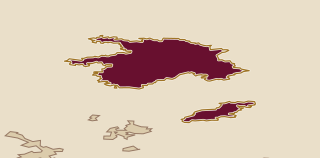
Atlas locationMareuil-sur-Aÿ · Champagne · France49.04° N · 4.04° E

At A Glance

The Producer

Philipponnat is a Champagne house in Mareuil-sur-Aÿ whose wines centre on Pinot Noir from the southern slopes of the Grande Vallée de la Marne. The family dates its establishment in Champagne to 1522; Auguste and Pierre Philipponnat created the modern company in 1910 and acquired the Château de Mareuil cellars. That long local footing now appears in bottles at several scales: a multi-vintage reserve blend, Grand Cru cuvées and a vintage wine from one enclosed vineyard.

The house has developed 20 hectares of Premier and Grand Cru vineyards and also works with partner growers. Pinot Noir supplies ripe fruit, body and savoury depth; Chardonnay brings citrus and lift. The result is Champagne built less around a light, simple aperitif style than around fruit weight, chalky acidity and food-ready structure.

Place

Mareuil-sur-Aÿ sits beside the Marne canal, where Philipponnat works with Pinot Noir from the southern slopes of the Grande Vallée de la Marne. In Champagne, a village or vineyard name is not merely an address on a label: exposure and ground influence how fully grapes ripen, while the finished wine still needs enough acidity to carry its mousse and finish.

Clos des Goisses makes that relationship especially visible. Its south-facing slope catches exceptional sunlight, bringing ripe Pinot Noir fruit, while its chalky ground keeps the palate firm and dry. A bottle from this one site therefore reads differently from Réserve Perpétuelle Brut, which builds its character by combining several harvests and vineyards.

Soil And Site

Clos des Goisses rises at 35 to 45 degrees above the canal. Across almost six hectares, its 14 plots sit on shallow, eroded chalk, with a wall dating from 1887 enclosing the vineyard. The steep incline requires hand work in places, while the exposed chalk limits the easy accumulation of softness in the fruit.

That physical contrast—sun on the slope, chalk under the roots—helps explain the wine’s shape. Ripeness can bring body and fruit, but the chalk keeps acidity and mineral grip present through the finish. The site is not a separate style imposed on the house; it is the source of Clos des Goisses, its single-vineyard vintage Champagne.

Story

The Philipponnat family traces its Champagne presence to 1522, but the present business began in 1910 with Auguste and Pierre Philipponnat and the cellars of Château de Mareuil. The house later developed Premier and Grand Cru vineyards around its Mareuil base, giving Pinot Noir from the Marne valley a recurring role in its wines.

In 1935, Pierre Philipponnat acquired Clos des Goisses and made a Champagne from that one cru rather than folding its fruit into a village blend. The decision established a different path within the range: alongside blended wines that use reserve stocks for continuity, the estate could make a vintage bottle whose fruit, chalk and exposure came from one walled slope.

Vineyards And Cellar

In the vineyards, Philipponnat uses organic fertilisers, cover crops, mechanical weeding and biocontrol measures; its facilities and winemaking procedures are organically certified. On Clos des Goisses, steep ground also brings hand work. These choices keep vineyard management tied to the condition of the soil and fruit rather than treating every plot alike.

In the cellar, the house selects the first press, or cuvée, for its wines. Reserve wines and selected cuvées see wood, while malolactic fermentation is allowed for some wines and withheld for others. The choice changes the palate: malolactic fermentation can soften acidity, while its absence retains a firmer citrus line. Long ageing on lees then adds texture and breadth beneath the mousse.

Wines

Réserve Perpétuelle Brut is the house’s multi-vintage wine. Its current blend is 66% Pinot Noir, 32% Chardonnay and 2% Pinot Meunier, with 56% reserve wines from earlier harvests raised under wood. Three years on lees bring mousse and length, while the reserve element adds vinosity and mature fruit rather than presenting a single year’s weather.

Cuvée 1522 Extra-Brut 2019 moves to Grand Cru fruit, with 77% Pinot Noir and 23% Chardonnay. Pinot Noir comes from Le Léon in Aÿ, Mailly and Verzy; Chardonnay comes from Mesnil-sur-Oger. Twenty percent is vinified under wood and 43% avoids malolactic fermentation, so ample body meets dry acidity after eight years on lees.

Clos des Goisses is the vintage, single-vineyard wine: in 2015, 78% Pinot Noir and 22% Chardonnay from the walled slope, aged for nine years and released as Extra-Brut. La Rémissonne and Le Léon take the range further into named 2015 parcels, where grape balance, ripeness and texture change with the site.

In The Glass

Across the range, look first for ripe Pinot Noir fruit, then for the chalk-driven acidity that keeps the palate dry and moving. Réserve Perpétuelle Brut has fruit, vinosity and fine mousse, with older reserve wine adding weight through the middle. Its three years on lees extend the finish without turning the wine into a vintage statement.

Cuvée 1522 is drier and more ample, with Pinot Noir body, Chardonnay lift, lees-derived texture and a measured oak contribution. Clos des Goisses takes the combination further: ripe fruit fills the palate, while chalk brings mineral grip and acidity after the mousse has settled. In each case, the structure comes from the relationship between fruit source, cellar treatment and time on lees.

A Bottle To Understand It

Choose Cuvée 1522 Extra-Brut 2019. It combines Grand Cru Pinot Noir from Aÿ, Mailly and Verzy with Chardonnay from Mesnil-sur-Oger, then spends eight years on lees. Twenty percent wood vinification adds texture, while 43% of the blend avoiding malolactic fermentation keeps its acidity brisk. The wine is dry and ample, with fruit, spice, savoury lees character and a long finish. It shows the house beyond the single vineyard while keeping the Pinot Noir-and-chalk character in clear view.

Anecdote

In 1935, Pierre Philipponnat looked at Clos des Goisses, the steep south-facing vineyard above the Marne canal. The site had been nearly abandoned after phylloxera, the First World War and the economic crisis of the 1930s. Fellow merchants advised him to continue blending rather than buy such difficult ground. Pierre acquired it anyway. The vineyard covered almost six hectares, divided into 14 plots on slopes reaching 45 degrees, and its enclosing wall had stood there since 1887. He used its grapes for a wine from one cru rather than a blend of villages. Philipponnat describes that bottle as Champagne’s first mono-cru.

Final Word

Philipponnat is most useful to approach through its different scales of Champagne: reserve blending in Réserve Perpétuelle, Grand Cru composition in Cuvée 1522, and one steep chalk slope in Clos des Goisses. The bottles carry Pinot Noir fruit, dry acidity, lees texture and enough body for the table.

Sources

Keep following the thread

Where to go next

placeRead the Champagne guideSee Philipponnat in the wider setting of Champagne.mapFind Philipponnat on the mapKeep the producer, its region and nearby places together.learningUnderstand Pinot NoirRead the quick library guide to Pinot Noir, which is listed with this producer.