At A Glance
- Field
- Detail
- Region
- Champagne
- Appellation
- Grand Cru and Premier Cru vineyards
- Main grapes
- Pinot Noir and Chardonnay
- Signature wines
- Cuvée 045, Cuvée 276 and Cuvée Rosé
- Defining feature
- Organic certification, biodynamic farming and horse plowing
The Producer
The Lafalise family has grown grapes in Verzenay since 1885. Paul Froissart represents the sixth generation of the family in viticulture, working a five hectare estate divided into 40 individual plots across chalk, silt and clay.
The house makes Champagne from Grand Cru and Premier Cru vineyards, with each small parcel contributing to a range of numbered cuvées. Organic certification and biodynamic farming guide the vineyard work, while horse plowing is used for soil regeneration and aeration.
Place
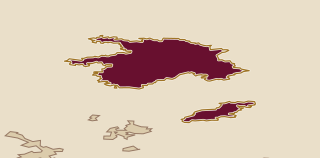
The vineyards include Grand Cru holdings in Verzenay and Verzy, together with a small Premier Cru plot in Dizy. Grand Cru and Premier Cru are Champagne vineyard classifications that appear on the label alongside the place name. The range therefore draws on two Grand Cru villages and one Premier Cru site.
Wines
Cuvée 045 Grand Cru Extra Brut is made from 85% Pinot Noir and 15% Chardonnay from Verzenay, with 16% reserve wine. The cuvée comes from Les Rochelles, where clay lies over hard chalk.
Cuvée 276 Brut Nature Grand Cru is 100% Pinot Noir from a single plot, with 16% reserve wine. It comes from Les Longues Raies on Graveluches soil, a mixture of limestone and clay, and produces 1,600 bottles annually. Brut Nature means zero dosage, with no sugar added after disgorgement.
The range also includes Cuvée Rosé Grand Cru. All cuvées age for eight months in barrel on their lees, followed by 24 months in bottle on their lees before disgorging. Lees ageing keeps the wine in contact with spent yeast cells, a method that can add creaminess and soften the feel of the bubbles.
In The Glass
Cuvée 045 shows the power and elegance of Pinot Noir. Cuvée 276 moves into a more mineral and fresh register. In sparkling wine, minerality can register as a firm, stony impression, while freshness comes through as lively acidity.
The two wines offer different readings of Pinot Noir. One joins the grape's force with Chardonnay, while the other leaves Pinot Noir alone with a single plot and zero dosage. Extended lees ageing can add a rounder texture beneath both styles.
A Bottle To Understand It
Choose Cuvée 045 Grand Cru Extra Brut. It combines Pinot Noir and Chardonnay in one Verzenay Champagne, with Pinot Noir remaining the dominant variety. The bottle gives the clearest view of how the house uses two grapes together before moving to the single plot and zero dosage of Cuvée 276.
Final Word
Lafalise-Froissart began by supplying grapes to other Champagne houses and later bottled Champagne under its own name. Its range now places Pinot Noir, Grand Cru parcels and extended lees ageing at the centre of the house style.