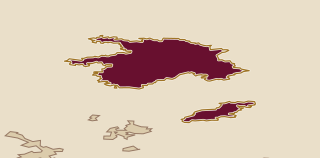
The Vallée de la Marne follows the river west from Épernay towards Château-Thierry, with vineyards on slopes above both banks and in smaller side valleys. Meunier is the grape most closely associated with the area, especially as the valley becomes cooler and more exposed to spring frost. It buds later than Pinot Noir and Chardonnay, which can make it a practical choice in those sites.
The grape mix changes towards the east. Around Aÿ, Dizy, Cumières and Mareuil-sur-Aÿ, Pinot Noir has a major presence, and Chardonnay appears throughout the valley. A bottle described simply as Marne Valley Champagne could therefore be Meunier-led, Pinot-led or a blend of all three.
The grape balance shifts along the river
What changes here
Aÿ and Mareuil-sur-Aÿ lie close to Épernay and are important Pinot Noir sources. Dizy and Cumières add varied slopes nearby. Farther west, the valley narrows and turns, side valleys branch away from the Marne, and Meunier becomes increasingly prominent. Producers based in one village may own parcels along a surprisingly long stretch of river. Read the origin of the grapes as well as the producer’s address.
Soils include chalk, marl, clay and sand in different proportions. Exposure changes wherever the river bends. This variety is one reason Meunier cannot be treated as a single soft, fruity style. Site, vine age and winemaking can produce anything from an open wine used in a non-vintage blend, sold without a declared harvest year, to a firmer Champagne bottled from one vineyard parcel and intended to age.
Origin often sits behind the cuvée name
Names to know
Champagne remains the appellation, the defined origin and its production rules. A cuvée is an individual wine in a producer’s range. Aÿ and Tours-sur-Marne are Grand Cru villages, while Mareuil-sur-Aÿ, Dizy, Cumières and several others are Premier Cru. Many western villages carry neither term, yet can produce compelling wine. The classification is therefore a limited guide to this long, varied valley.
Look for the producer's base, listed grapes, parcel names and base vintage. NM identifies a négociant-manipulant, a producer that can buy grapes or wine to make Champagne; RM identifies a récoltant-manipulant, a grower making Champagne from their own harvest. Both can make wines rooted in the valley or blends drawn from across Champagne.
Give Meunier its own comparison
First bottle
Start with a Meunier-led Champagne whose origin is clearly stated, then compare it with a Pinot Noir-led wine from Aÿ or Mareuil-sur-Aÿ. The pair changes both the grape and its origin within the valley. A third bottle using all three grapes can show how the components fit together.
Use a wine glass and check any dosage or disgorgement information. Disgorgement removes the yeast sediment; dosage is the addition of wine and sugar before final corking, helping determine sweetness. Some Meunier wines can age well, so check the producer's advice for the particular bottle.
Continue through the region
Elsewhere in Champagne
- Aube — Côte des Bar40 producersThe Aube is Champagne's southernmost sub-region, with Pinot Noir at the centre of the Côte des Bar. Urville, Courteron, Buxières-sur-Arce and Les Riceys are among its key places.
- Côte de Sézanne15 producersSouth of the Côte des Blancs, the Côte de Sézanne grows mainly Chardonnay. Its blanc de blancs, white Champagne made from white grapes, tends to be softer and rounder than wines from villages farther north.
- Côte des Blancs67 producersCôte des Blancs is Champagne's best-known Chardonnay corridor, a chalky run of villages extending south from Épernay.
- Montagne de Reims101 producersMontagne de Reims is the wooded hill between Reims and the Marne valley. Pinot Noir grows on many of its slopes, from Verzenay to Ambonnay and Bouzy. Chardonnay has a stronger presence in Villers-Marmery and Trépail, so check the village name alongside the grape.
Producers in Vallée de la Marne
Start with these
- BollingerChampagne house with reserve wine blending, extended lees ageing, and vintage cuvées from R.D. and La Grande Année.
- Billecart-SalmonChampagne house under family ownership in Mareuil-sur-Aÿ, with Brut Rosé and Cuvée Nicolas François in its range.
- Gaston ChiquetGaston Chiquet is a Dizy grower-producer Champagne house, continuing a family winery founded in 1919.
- PhilipponnatMareuil-sur-Aÿ Champagne centred on ripe Pinot Noir, chalky acidity and long lees ageing.
- DeutzChampagne house based in Aÿ, with Deutz Brut Classic and the vintage Amour de Deutz cuvée.
Browse 29 more
- AyalaAyala is a Champagne house focused on Chardonnay, cru by cru cellar work, and a Brut Nature cuvée with zero dosage.
- Caillez-LemaireChampagne estate in Damery with 45 vineyard plots, Meunier, Chardonnay and Pinot Noir, and cuvées separated by composition and cellar ageing.
- Champagne Alain MercierPassy-sur-Marne Champagne with Chardonnay, Meunier and Pinot Noir, including BLCK Blanc de Noirs and Novatio.
- Champagne Arthur MarcFleury-la-Rivière Champagne producer using first press must and no malolactic fermentation in its current wines.
- Champagne Bonnet-LeconteFamily Champagne estate in Troissy-Bouquigny making cuvées led by Pinot Meunier, including Cuvée Spéciale Brut and Rosé Brut.
- Champagne Bruno RoulotIndependent family grower in La Chapelle-Monthodon, with Pinot Meunier as the larger vineyard planting and cuvées including Brut Tradition and Vintage 2004.
- Champagne DemièreIndependent three generation Champagne house in Fleury-la-Rivière, making fresh, lively wines from Meunier, Pinot Noir and Chardonnay.
- Champagne Dourdon VieillardReuil Champagne house with clay limestone parcels, chalk cut cellars, and Meunier led cuvées.
- Champagne Goutorbe-BouillotDamery Champagne house with 9 hectares, three grape varieties, and cuvées including Reflets de Rivière and Noir Coteaux.
- Champagne Griffon-TrichetFourth-generation Champagne house with certified parcels, fresh cuvées, and Grande Réserve from Pinot Noir, Pinot Meunier and Chardonnay.
- Champagne J.CharpentierFamily owned producer in Villers-sous-Châtillon, with Pinot Meunier led sparkling wines and a rosé cuvée.
- Champagne Jean-Francois LaunayA three generation family Champagne house in the Marne Valley, working traditional and forgotten grape varieties from vineyard to bottle.
- Champagne Jean-Noël HatonDamery Champagne house with 60 hectares of vineyards, 45 owned, and cuvées given time for aromas and effervescence to mature.
- Champagne LemaireHautvillers grower house working Chardonnay, Pinot Noir and Pinot Meunier in Brut, Blanc de Blancs, rosé and demi sec cuvées.
- Champagne MathelinCerseuil family Champagne estate with nine generations of vine growing, three main Champagne grapes, manual harvest and estate vinification.
- Champagne Patis-PailleMarne Valley Champagne producer with Rosé de Saignée, Brut Tradition, Cuvée Origo, and PATIS PLURIEL wines.
- Champagne Pierre MignonLe Breuil Champagne house with vineyards principally planted to Pinot Meunier, solera reserves and Clos des Graviers.
- Champagne Piot-SévillanoVincelles Champagne house with Meunier led blends, Brut Rosé, and single varietal Pinot Noir, Meunier, and Chardonnay cuvées.
- Champagne Prévoteau-PerrierFamily Champagne grower in Damery, vinifying grapes from 30 hectares, including 22 hectares wholly owned, with Christophe and Mathis making and blending the cuvées.
- Champagne Robert AllaitFive-generation Champagne family producer in Villers-sous-Châtillon, making blend-led cuvées from a Marne Valley address.
- Champagne SalmonChaumuzy Champagne house focused on Meunier, with plot by plot vinification and the Special Club cuvée.
- Champagne Sendron DestouchesLe Breuil grower Champagne producer with a fruit-driven Cuvée Rosé Brut.
- Champagne Tribaut SchloesserRomery Champagne house combining Brunet Valley soils, oak aged reserve wine and cuvées from Pinot Meunier, Pinot Noir and Chardonnay.
- GossetGosset is a Champagne house founded by Pierre Gosset in Aÿ in 1584 and now based in Épernay, with Grande Réserve Brut, Grand Blanc de Blancs, Grand Rosé and Celebris in its range.
- Joly-ChampagneJoly-Champagne is a Troissy récoltant-manipulant in the Vallée de la Marne, with Meunier-led vineyards and a range from Chardonnay-led Cuvée Spéciale Brut to 100% Meunier vintage and parcel wines.
- Moët & ChandonÉpernay Champagne house founded in 1743, assembling Brut, rosé and vintage wines from vineyards across five Champagne sectors.
- Perrier-JouëtAn Épernay Champagne house founded in 1811, known here through Belle Époque 2016: Chardonnay-led, floral and citrus-driven, with creamy mousse and savoury length.
- Pol RogerFamily-run Champagne house in Épernay, with multi-cru blends, vintage wines and Cuvée Sir Winston Churchill.
- Sourdet-DiotA Marne Valley Champagne grower showing Meunier in two forms: dry blanc de noirs and saignée rosé.