Who makes it
Patrick Manceaux farms the family vineyards around Rilly-La-Montagne, while Agnès and Patrick Manceaux operate the house today. Champagne Roger Manceaux is a fourth generation family producer with holdings in Premier Cru and Grand Cru villages.
The wines are composed from different vineyard sites, grape varieties and reserve wines. Reserve wines are older base wines held back from earlier harvests, used in Champagne to add continuity and depth to non vintage cuvées. The house describes its style as balanced, with fine character.
Where it grows
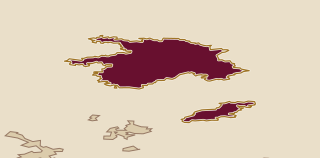
Rilly-La-Montagne lies in the Montagne de Reims, and the vineyards extend across Premier Cru and Grand Cru villages in and around the village. Premier Cru and Grand Cru are Champagne vineyard classifications, so the range brings together different levels of vineyard status within one family house.
The wines also draw on the wider material of those holdings. Vineyard sites, grape varieties and reserve wines are composed together in the cuvées, linking the village base to a broader Champagne range.
What they make
The range includes Grand Cru Extra Brut, a sparkling Champagne whose Extra Brut designation indicates low dosage. Dosage is the small addition of wine and sugar made after disgorgement, and a low dosage leaves the finished wine dry.
The house also works with reserve wines. In Champagne, reserve wines broaden a non vintage cuvée by adding base wines from earlier harvests, while vintage wines come from one stated year. This gives the range two clear forms of expression, blended continuity and dated release.