NoleaWorld of Wine

Champagne · France

Producer profile

Champagne Dosnon

Côte des Bar Champagne from Chardonnay, Pinot Noir and Meunier, fermented in old Burgundian barrels, aged at least 20 months and finished with low or no dosage.

Place
Champagne · France
Known for
Barrel-fermented Côte des Bar Champagne with single-grape cuvées, low-dosage blends, a Brut Nature and a red wine based rosé.
Wine context
Chardonnay · Pinot Noir
Editorial basis
World of Wine editorial profile · 4 sources

World of Wine editorial profile · Source list ↓

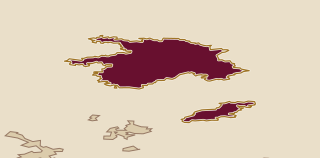
Atlas locationChampagne · France48.03° N · 4.29° E

At A Glance

Champagne Dosnon is based in Avirey-Lingey in the Côte des Bar, where Davy Dosnon works with Chardonnay, Pinot Noir and Meunier. The house ferments its wines in old Burgundian barrels, ages them for at least 20 months, and usually uses around 5 grams of dosage or none at all. The range moves from single grape wines to blends, Brut Nature and a red wine based rosé.

The Producer

Champagne Dosnon began with Davy Dosnon, who studied viticulture in Dijon and worked in Burgundy wine houses before returning to Lingey. His Champagne is made in the Côte des Bar, a southern part of the Champagne region, with Chardonnay and Pinot Noir at the centre of the range and Meunier appearing in the rosé. Former Puligny-Montrachet barrels are part of the house's working vocabulary, but the bottles remain wines of Avirey-Lingey, shaped by local fruit, limestone and long cellar ageing.

Dosnon owns two hectares and rents the remainder of the vineyards used by the house. That land base supports a range built around separate grape expressions and blends, allowing the red grape, the white grape and their combinations to be read in different bottles.

Place

Avirey-Lingey lies in the Côte des Bar, where Champagne's appellation meets the Aube's warmer southern setting. The place matters on the label because Côte des Bar identifies the southern source of the grapes within Champagne, while the bottle style still depends on whether Chardonnay, Pinot Noir or Meunier carries the wine.

Pinot Noir supplies much of the range's breadth, while Chardonnay brings a firmer mineral and linear register in Récolte Blanche. The Côte des Bar setting lets Dosnon work with both qualities, keeping acidity present while allowing the wines to carry ripe fruit and a broader palate.

Soil And Site

The vineyards sit on clay over Kimmeridgian and Portlandian limestone, a geological pattern resembling Chablis. Limestone forms the physical background to the reported mineral character of Récolte Blanche and the mineral line of Récolte Rosé, while clay supports the fruit weight found across the Côte des Bar range.

The plots are grassed to promote microbial life in the soil. Dosnon scratches and ploughs the ground for aeration, adds no chemical fertilisers, and harvests by hand. Récolte Blanche carries that care into the cellar through manual pressing before fermentation in oak.

Story

The estate grew from a modest land base, with two hectares owned by Davy Dosnon and the rest rented. Nicolas Laugerotte later joined as commercial manager and business partner, adding a second person to the operation and a route for the wines beyond the vineyard and cellar.

The house developed around a practical link between farming, Burgundy experience and Champagne production. Its range keeps Chardonnay and Pinot Noir distinct in single grape cuvées, then combines them in blends and a Brut Nature. The choice to ferment in Burgundian barrels also carries that link into every vintage, while the source of the fruit remains the Côte des Bar.

Vineyards And Cellar

Hand harvesting controls the movement of fruit from vine to press, and Récolte Blanche is manually pressed before fermentation. Dosnon ferments its wines in Burgundian wooden barrels of 228, 500 or 600 litres, mainly former Puligny-Montrachet barrels. The barrels are at least five years old, so they provide space for fermentation and maturation without adding tannin or an overt wood taste.

Cellar time begins at 20 months and can extend to 10 years, depending on the vintage. That span allows the wines to leave the cellar with different levels of bottle development. Dosage stays very low, usually around 5 grams or absent, so the finish remains dry and the palate is shaped by fruit, acidity, limestone and ageing.

Wines

Récolte Blanche is a Blanc de Blancs made from 100 percent Chardonnay from vines around 25 years old. It uses 20 percent new oak and 80 percent used Puligny-Montrachet barrels, ages for more than two years, and receives about 5 grams of dosage. Its known profile is mineral and linear.

Récolte Noire is 100 percent Pinot Noir, fermented in oak and aged for at least two years in bottle, with dosage around 5 grams. It isolates the house's red grape in a single variety wine. Récolte Brute takes Pinot Noir into a blend, with 70 percent Pinot Noir and 30 percent Chardonnay from Kimmeridgian soils. It is muscular, receives 5 grams of dosage, and ages for at least three years before disgorgement.

Alliae Brut Nature combines roughly equal parts Chardonnay and Pinot Noir. It uses Puligny-Montrachet barriques, including about 10 percent new wood, and spends more than 50 months sur latte. The confirmed profile is creamy, firm and marked by lees complexity. Récolte Rosé uses 95 percent Pinot Noir and 5 percent Meunier from red wine, with barrique maturation, two years in bottle and 5 grams per litre of dosage.

In The Glass

Récolte Blanche opens with a mineral impression, then moves in a focused, linear line across the palate. Chardonnay and the limestone ground account for the firm shape, while the used barrels allow the wine to gain breadth without a wood taste. The finish is dry because the dosage stays low.

Récolte Brute arrives with more weight. Pinot Noir supplies its muscular breadth, Chardonnay keeps the blend lifted, and Kimmeridgian soils sit behind the mineral edge. After three years of bottle ageing, the wine carries a longer, drier finish than a young, fruit-led Champagne.

Alliae begins with a creamy texture, then tightens through a firm palate. More than 50 months sur latte brings lees complexity, while the blend of Chardonnay and Pinot Noir holds the wine between softness and firmness. Récolte Rosé moves through redcurrant, elderberry and blackcurrant before grapefruit and a mineral line remain on the finish. Red wine, barrel maturation and bottle age carry the fruit into a more layered pink Champagne.

A Bottle To Understand It

Récolte Blanche is the first bottle to open. It is 100 percent Chardonnay from vines around 25 years old, hand harvested, manually pressed and fermented in a defined mix of new and used oak. More than two years of ageing and around 5 grams of dosage leave the wine dry, mineral and linear, with the limestone setting clear beneath the fruit. It brings together Dosnon's Côte des Bar address, its Burgundy-influenced cellar work and its preference for a clean finish in one glass.

Anecdote

After studying viticulture in Dijon and working in Burgundy wine houses, Davy Dosnon returned to the village of Lingey. He came back to a family vineyard project that he rebuilt around two hectares of owned vines and additional rented land. The operation then acquired a second partner when Nicolas Laugerotte joined as commercial manager. Together they formed the working partnership behind Champagne Dosnon, with Davy bringing the vineyard and cellar project forward and Nicolas taking responsibility for the commercial side. The house now bottles wines from Avirey-Lingey across Chardonnay, Pinot Noir and Meunier, with fermentation in old Burgundian barrels and long cellar ageing.

Final Word

Dosnon offers Côte des Bar Champagne with a clear link between ground, grape and cellar. Limestone and clay sit beneath Chardonnay, Pinot Noir and Meunier; old Burgundian barrels shape fermentation without overt wood taste; long ageing and low dosage keep the wines dry. Récolte Blanche is the most direct starting point, while the rest of the range shows how the same house moves from single grape wines to blends, Brut Nature and rosé.

Sources

Keep following the thread

Where to go next

placeRead the Champagne guideSee Champagne Dosnon in the wider setting of Champagne.mapFind Champagne Dosnon on the mapKeep the producer, its region and nearby places together.learningUnderstand ChampagneRead the quick library guide to Champagne, which is listed with this producer.