NoleaWorld of Wine

Champagne · France

Producer profile

Champagne Paul Lebrun

Cramant house devoted exclusively to Blanc-de-Blancs Champagne, with vineyards across the Côte des Blancs and Côte de Sézanne.

Place
Champagne · France
Known for
Blanc-de-Blancs Champagne from Cramant
Editorial basis
World of Wine editorial profile · 6 sources

World of Wine editorial profile · Source list ↓

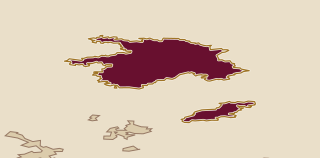
Atlas locationChampagne · France48.99° N · 3.99° E

At A Glance

Field
Detail
Region
Champagne, Côte des Blancs
Village
Cramant
Style
Blanc-de-Blancs Champagne
Vineyard holdings
16.5 hectares across Côte des Blancs and Côte de Sézanne
Village classifications
3 Grand Cru and 2 Premier Cru villages
Named wines
L'Irremplaçable, Aline La Nature, Jules, Henri

The Producer

At 65 rue Nestor Gaunel in Cramant, Champagne Paul Lebrun is a family Champagne house devoted exclusively to Blanc-de-Blancs Champagne. The Vignier-Lebrun lineage has kept ownership unbroken across 6 generations. Its portfolio moves through Brut, Brut Nature, Extra Brut and prestige cuvée bottlings, all within the Blanc-de-Blancs category.

Place

Cramant is the house's home village in the Côte des Blancs. The vineyard holdings also extend into the Côte de Sézanne, bringing two Champagne areas into the range. Grand Cru and Premier Cru identify village classifications in Champagne, so these terms describe the status of the source villages rather than a separate grape or cellar method.

Story

In 1902, Henri Lebrun established his own Champagne house and named it after his son Paul. The house then passed through the Vignier-Lebrun lineage, with ownership remaining unbroken across 6 generations. The founding name still belongs to a family operation built around Blanc-de-Blancs Champagne.

Vineyards And Cellar

All vineyard work is carried out without pesticides or herbicides, and the house has held HVE Level 3 certification since 2018. HVE, or Haute Valeur Environnementale, is a French environmental certification tied here to the stated vineyard practice.

Most base wines ferment in stainless steel tanks, undergo malolactic fermentation and spend several months ageing in tank. Stainless steel is a neutral vessel, while malolactic fermentation softens acidity and tank ageing keeps the base wine in a stable environment. The cellar was completely redesigned in 2017/2018.

Wines

The current portfolio includes L'Irremplaçable Blanc-de-Blancs Brut, Aline La Nature Blanc-de-Blancs Brut Nature, Jules Blanc-de-Blancs Extra Brut 2013 and Henri, the prestige cuvée. Brut, Brut Nature and Extra Brut refer to dosage levels, while prestige cuvée identifies Henri's position within the named range.

L'Irremplaçable is the house's Brut bottling. Aline La Nature is a Brut Nature with 4 years on lees and zero dosage. Jules is an Extra Brut aged on lees, with 70% of the wine vinified in stainless steel and 30% aged in oak barrels. The cuvées therefore move through different dosage levels and cellar treatments while remaining within the house's Blanc-de-Blancs focus.

In The Glass

Across the range, lees ageing brings creamy pastry tones and toasted notes, while the bubbles range from lively to finely textured. The palates move from fresh and zippy acidity to broader freshness, with chalk sensation adding brightness. Finishes can be crisp and saline, with lemon zest or a slight bitter edge, and Henri carries a long, distinctive persistence.

A Bottle To Understand It

Choose L'Irremplaçable Blanc-de-Blancs Brut as the first bottle. It is vinified in stainless steel, aged on lees for 3 years and disgorged with a traditional Brut dosage of 8 g/L. Stainless steel keeps the base wine in a neutral vessel, while lees ageing can build creaminess and toasted notes. The nose brings almond, fresh apple, peach and citrus, followed by a fresh, zesty palate with citrus bite and a saline hint on the finish.

Anecdote

Jules 2013 was made through two cellar paths. 70% of the wine was vinified in stainless steel tanks, while 30% went into oak barrels, an unusual choice within this Blanc-de-Blancs range. The cuvée then spent 9 years on lees before its Extra Brut dosage of 5 g/L. The bottle's long ageing and partial oak treatment place a separate cellar decision inside a house otherwise defined by Blanc-de-Blancs Champagne.

Final Word

Champagne Paul Lebrun combines Cramant roots, family ownership across 6 generations, HVE vineyard practice and a range of Blanc-de-Blancs wines shaped by lees ageing, dosage and cellar treatment.

Sources

Keep following the thread

Where to go next

placeRead the Champagne guideSee Champagne Paul Lebrun in the wider setting of Champagne.mapFind Champagne Paul Lebrun on the mapKeep the producer, its region and nearby places together.learningUnderstand ChampagneRead the quick library guide to Champagne, which is listed with this producer.