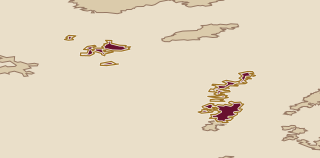
The vineyards form several separate growing areas. Chablis lies apart to the north. The Côte d'Or contains the Côte de Nuits and Côte de Beaune; south of it lie the Côte Chalonnaise and Mâconnais.
A red Volnay and a white Meursault, for example, come from neighbouring parts of the Côte de Beaune and use different grapes. Reading the full place name helps you tell them apart.
Bourgogne at a glance
Use these growing-area names, cellar steps and label terms when choosing a bottle.
Four wine-growing areas in Bourgogne
Bourgogne’s growing areas
These areas run from Chablis in the north to the Côte Chalonnaise. The Mâconnais lies farther south.
Chablis
A northern outpost separated from the Côte d'Or
White wines made from Chardonnay, labelled Petit Chablis, Chablis, Chablis Premier Cru or Chablis Grand Cru.
Look forPetit Chablis · Chablis · Premier Cru · Grand Cru
Côte de Nuits
The northern half of the Côte d'Or
Pinot Noir reds are the best-known wines from these villages.
Look forGevrey-Chambertin · Chambolle-Musigny · Vosne-Romanée
Côte de Beaune
From Corton south through the Côte d'Or
Important red and white appellations sit close together, so colour and full place name both matter.
Look forBeaune · Pommard · Meursault · Puligny-Montrachet
Côte Chalonnaise
The limestone hills south of the Côte d'Or
Pinot Noir reds and Chardonnay whites from village appellations including Mercurey, Givry, Rully and Montagny.
Look forMercurey · Givry · Rully · Montagny
Regional, village and vineyard appellations
Bourgogne’s appellations
These categories describe the wine’s geographic origin. A producer may make wines in several categories.
Regional appellation
Bourgogne Rouge, Bourgogne Blanc and other regional names can draw on a broad area or a defined regional denomination.
Village appellation
A name such as Gevrey-Chambertin or Meursault narrows the origin to one or more communes.
Premier Cru
The village name is followed by Premier Cru and may also name a particular climat within that village.
Grand Cru
The vineyard name normally stands as the appellation, as Chambertin does, without the village taking the lead.
Bourgogne label terms
Bourgogne labels
An appellation often identifies the grape as well as the place. These terms explain where the wine comes from and who bottled it.
Bourgogne RougeBourgogne BlancPlaceSeparate label excerptsHide explanationRead explanation
A regional red or white appellation
Usually Pinot Noir for red and Chardonnay for white
Gevrey-ChambertinPlaceHide explanationRead explanation
A village appellation in the Côte de Nuits
Do not confuse the village name with the separate Chambertin Grand Cru
Premier CruPlace hierarchyHide explanationRead explanation
A classified site within a village appellation
A climat name may follow the village and Premier Cru wording
Grand CruPlace hierarchyHide explanationRead explanation
A vineyard appellation at the top of the regional hierarchy
It classifies the site rather than making the producer a grand cru estate
ClimatLieu-ditPlaceSeparate label excerptsHide explanationRead explanation
A climat is a defined vineyard area; a lieu-dit is a named place
A lieu-dit does not automatically have Premier Cru or Grand Cru status
Mis en bouteille au domaineProducer wordingHide explanationRead explanation
The wine was bottled by the estate
A négociant may instead work with purchased grapes or wine
From Chablis to the Mâconnais
Grapes and styles
Chablis makes white wine from Chardonnay. Its labels have their own hierarchy, from Petit Chablis and Chablis to Chablis Premier Cru and Chablis Grand Cru.
In the Côte d'Or, the Côte de Nuits is especially associated with Pinot Noir reds. Gevrey-Chambertin, Chambolle-Musigny and Vosne-Romanée are among its village names. The Côte de Beaune makes both red and white wines, with village names including Beaune, Pommard, Volnay, Meursault and Puligny-Montrachet.
Pinot Noir and Chardonnay continue south into the Côte Chalonnaise, through appellations such as Mercurey, Givry, Rully and Montagny. The Mâconnais includes regional Mâcon wines and Chardonnay-based village appellations such as Pouilly-Fuissé. Aligoté whites, wines containing Gamay and sparkling Crémant de Bourgogne add to the region's range.
Regional, village, premier cru and grand cru
Background
Bourgogne's appellations classify places of origin. A regional wine can draw grapes from a broad area, while a village appellation narrows the origin to one or more communes. Premier cru usually follows a village name and may be followed by the name of a particular climat, a defined vineyard. Grand cru wines normally use the vineyard name as the main appellation.
A domaine, or wine estate, may own or farm parcels in several appellations. It can therefore make regional, village and vineyard wines within the same range. The producer, harvest year and storage conditions affect the wine at every level.
Regional wines and other village choices
Everyday bottles
Regional Bourgogne Rouge and Bourgogne Blanc are introductions to Pinot Noir and Chardonnay. Bourgogne Aligoté is a white wine made from a different grape, Aligoté. Crémant de Bourgogne is sparkling wine. More specific regional names, including the Hautes-Côtes, tell you more about the origin without being village appellations.
When famous Côte d'Or names are expensive, look in the Côte Chalonnaise or Mâconnais. Rully, Mercurey, Givry, Montagny, Saint-Véran and Mâcon followed by a village name offer other choices. For a Chablis to drink regularly, look at Petit Chablis or Chablis.
Why a vineyard name appears on several producers’ wines
What sets it apart
A climat is a precisely defined vineyard area with a recognised name and history. It may be divided among several owners, so different producers can bottle wines with the same vineyard name. A lieu-dit is also a named place, but it does not automatically have premier cru or grand cru status.
One domaine may farm and bottle a small parcel under its own name. A merchant house, called a négociant, may work with purchased grapes or wine. Some businesses do both. The label's vineyard name tells you where the grapes grew; you need the producer's name to identify who made that particular wine.
Gevrey-Chambertin and Chambertin
Read the label
Gevrey-Chambertin is a village appellation. Gevrey-Chambertin Premier Cru identifies a different category within it, and a vineyard name may follow. Chambertin by itself is a separate grand cru appellation. Reading the complete name avoids confusing the village with the vineyard.
The grape may be absent from the front label because the appellation rules identify it. Red village wines in the Côte d'Or are generally Pinot Noir; the whites are generally Chardonnay. Mis en bouteille au domaine means the wine was bottled by the estate.
A first Pinot Noir or Chardonnay
First bottle
For a red, try regional Bourgogne Rouge to get to know Pinot Noir. For a white, Bourgogne Blanc or Chablis introduces Chardonnay. You can also look for a village wine in the Côte Chalonnaise or Mâconnais.
If you want to compare bottles, two producers' wines from the same village show how their approaches differ within the same appellation. Keep the harvest years and bottle condition similar where possible.
5 named areas
Inside the region
Explore the wine-growing areas of Bourgogne.
- 01Chablis37 producersChablis is Bourgogne's cool northern Chardonnay country, with four appellation levels arranged around the Serein valley.
- 02Côte Chalonnaise9 producersSouth of the Côte d'Or, the Côte Chalonnaise includes the wine villages of Mercurey, Givry, Rully, Montagny and Bouzeron. Its grapes include Pinot Noir, Chardonnay and Aligoté.
- 03Côte de Beaune66 producersCôte de Beaune continues Bourgogne's central slope south, bringing major Chardonnay villages and important Pinot Noir appellations into one compact area.
- 04Côte de Nuits36 producersCôte de Nuits is Bourgogne's compact northern slope, where Pinot Noir and a close chain of villages account for most of the region's red Grands Crus.
- 05Mâconnais47 producersThe Mâconnais is southern Bourgogne's Chardonnay area, centred on Mâcon, Pouilly-Fuissé and Saint-Véran.
Producer profiles
Start with these
Meet 5 producers from across Bourgogne.
- Albert BichotBurgundy négociant house in Beaune with Domaine Long-Depaquit and the Chablis Grand Cru monopole Moutonne.
- Maison Joseph DrouhinMaison Joseph Drouhin is a Burgundy producer founded in Beaune in 1880, managing 93 hectares across Grand Cru and Premier Cru appellations with vineyard holdings in Chablis and an operation in Oregon's Willamette Valley.
- Maison Louis JadotMaison Louis Jadot spans Burgundy and Beaujolais, from village wines to Grand Cru, with the Cadus cooperage.
- Maison Louis LatourBurgundy family producer with Côte de Beaune roots, 120 acres of vineyards, and a Meursault premier cru Chardonnay.
- Domaine FaiveleyNuits-Saint-Georges domaine with Bourgogne Chardonnay, Gevrey-Chambertin Vieilles Vignes and Clos de Vougeot Grand Cru.
Browse 177 more
- Bonfils-GoichotBonfils-Goichot comes from Bourgogne, France.
- Bouchard Aîné & FilsBeaune house focused on Pinot Noir and Chardonnay, with Bourgogne red and white wines, Chablis, and historic Pavillon Bouchard cellars.
- Bouchard Père & FilsBeaune house with Château de Beaune cellars, named Côte de Beaune parcels, and Grand Cru holdings.
- Cellier du Château de la ChaumeCorgoloin négociant with white wines spanning Bourgogne Chardonnay, Petit Chablis and Chablis.
- Chartron et TrébuchetBurgundy négociant founded in Puligny-Montrachet, now based in Meursault, with Bourgogne and Côte de Beaune wines.
- Chateau de BuffaventPierres Dorées Beaujolais estate with a Vieilles Vignes red from sixty-year-old vines, aged ten months in barrel.
- Château de ChamireyMercurey château with Pinot Noir and Chardonnay, estate bottled since 1934, with village and Premier Cru wines in red and white.
- Château de JacquesChâteau de Jacques is a Beaujolais producer shaped by a 1924 foundation and a later commitment to non-carbonic winemaking.
- chateau de LavernetteBurgundy property making Beaujolais-Leynes red wine and Chardonnay Beaujolais Blanc from sandy pink granite.
- Château de PierreuxChâteau de Pierreux is a 110-hectare estate focused on red Brouilly made from 100% Gamay, with mature plots, mixed shallow soils and a gradual conversion to trellised vines since 2009.
- Château du Moulin-à-VentMoulin-à-Vent Gamay from named terroirs, with Champ de Cour's dark fruit and muscular build.
- Château FuisséFuissé domaine working more than 100 plots, from Pouilly-Fuissé and Saint-Véran to Gamay Juliénas and Chardonnay Crémant.
- Chateau Grange CochardMorgon estate in Beaujolais, making Gamay reds from 9.5 hectares with hand harvesting and organic certification since 2023.
- Clos de TartMorey-Saint-Denis Pinot Noir from Burgundy's largest Grand Cru monopole, farmed biodynamically and aged in oak.
- Coche-DuryCoche Dury is a Meursault domaine founded by Léon Coche in the 1920s, farming approximately 9 hectares across 15 appellations.
- Domaine Alain GautheronSix-generation Chablis family domaine in Fleys, now led by Cyril Gautheron across 25 hectares of Chardonnay in Petit Chablis, Chablis and Chablis Premier Cru.
- Domaine Alice et Olivier De MoorCourgis domaine making Chablis, Saint-Bris and Bourgogne wines from Chardonnay, Aligoté, Sauvignon Blanc and Sauvignon Gris.
- Domaine AnitaChénas domaine launched by former cyclist Anita Neveu, making the red Gamay Chénas Cuvée P'tit Co Les Brureaux.
- Domaine Anne GrosVosne-Romanée domaine with hand harvested Burgundy wines, indigenous yeast fermentation, and a Minervois partnership behind La Ciaude.
- Domaine Antoine et Laurent RobinA Chablis domaine that began with 70 ares of Premier Cru Vaillons in 1990 and now bottles a focused range from Petit Chablis to Grand Cru Blanchot.
- Domaine Antonin GuyonDomaine Antonin Guyon crafts Burgundy wines across more than 15 appellations, rooted in a 54-acre south-facing Meuilley vineyard consolidated in 1970.
- Domaine Arnaud EnteDomaine Arnaud Ente is a four-hectare Meursault domaine founded in 1992, producing about 1,200 cases a year.
- Domaine BarraudVergisson domaine making mineral Chardonnay from limestone parcels, from Mâcon Villages to Premier Cru Pouilly Fuissé.
- Domaine Baudouin MilletDomaine Baudouin Millet is a Bourgogne Chardonnay estate that grew from a cereal farm in Tonnerre into an approximately 16 hectare range of Petit Chablis, Chablis, Chablis 1er Cru Vaucoupin, and Bourgogne Chardonnay.
- Domaine BellevilleRully domaine working parcel by parcel across Burgundy, from Gevrey-Chambertin Pinot Noir to Rully Premier Cru Chardonnay.
- Domaine Benoit CantinIndependent Irancy domaine known for La Grande Côte, a vineyard specific red aged in oak.
- Domaine Bertrand BacheletDomaine Bertrand Bachelet farms Burgundy vineyards from Maranges to Pommard, including Gevrey-Chambertin Les Seuvrées.
- Domaine Billaud-SimonDomaine Billaud-Simon makes Chardonnay-led Chablis with a light, crystalline, iodized style, pairing crisp mineral character with a clear contrast between unoaked standard Chablis and the rounder, oak-touched Tête d'Or.
- Domaine Bonneau du MartrayBurgundy domaine devoted exclusively to Grand Cru vineyards, with Corton Charlemagne whites and Corton Grand Cru red and white wines.
- Domaine Boyer-MartenotMeursault domaine bottling vineyard plots separately, with hand harvest, indigenous yeast fermentation, cement eggs, and oak casks.
- Domaine Bruno ClairMarsannay-la-Côte domaine with 24 hectares, Bonnes-Mares Grand Cru and Chambolle-Musigny Les Charmes.
- Domaine Chandon de BriaillesFamily domaine across Savigny-lès-Beaune, Pernand-Vergelesses and Aloxe-Corton, with Pinot Noir and Chardonnay in Îles-des-Vergelesses.
- Domaine Chanson Pere et FilsBurgundy négociant and domaine producer with Premier Cru holdings, a historic Bastion cellar, and Pinot Noir from Mercurey and Beaune.
- Domaine Chavy-ChouetMeursault domaine with five village holdings and Bourgogne Aligoté Les Maréchaux aged on lees in stainless steel.
- Domaine Chevrot et FilsDomaine Chevrot et Fils is a Burgundy producer whose wines receive SO2 treatment only at bottling.
- Domaine CheyssonDomaine Cheysson farms 26 hectares on the steep granite hillsides of Chiroubles, where hand-harvested Gamay ages in a preserved 17th-century cellar.
- Domaine Christian Bellang & FilsMeursault family domaine making Chardonnay whites and Pinot Noir reds across four Bourgogne villages.
- Domaine Christophe CamuChablis family domaine spanning all four appellation tiers, from 100% Chardonnay Chablis to Grand Cru Les Clos.
- Domaine Clotilde DavenneA Chablis domaine with natural viticulture, hand harvesting, stainless steel vinification, and wines from Saint Bris to Irancy.
- Domaine Comte Georges de VogüéChambolle-Musigny domaine with 7.2 hectares of Musigny, a Les Petits-Musigny monopoly, and red and white Musigny wines.
- Domaine Comtes Georges de VogueDomaine Comtes Georges de Vogüé is a family-owned Burgundy estate centred on Musigny Grand Cru, with Pinot Noir-led reds, the full Petits Musigny subsection, and rare Musigny Blanc from Chardonnay.
- Domaine Comtesse de ChériseyBlagny domaine farming 9 hectares by hand, with La Genelotte settled and aged in 228 litre oak.
- Domaine Confuron-GindreFamily Côte de Nuits domaine spanning six generations, with Vosne-Romanée village wine, premier cru parcels and natural preventive vineyard work.
- Domaine CordierFuissé domaine making Chardonnay white wines from several Mâconnais villages and appellations.
- Domaine Daniel BoulandDaniel Bouland farms old vines in Morgon, Chiroubles and Côte de Brouilly, with wines capable of long ageing.
- Domaine de Fa A&M GraillotGraillot brothers making organic Beaujolais from Fleurie and Saint Amour, with whole cluster fermentation in concrete.
- Domaine de Héritieres Louis JadotTwo Côte de Beaune reds, pairing Corton-Pougets Grand Cru with Pernand-Vergelesses Premier Cru.
- Domaine De La MotteA three-generation Michaut family domaine in Beine, making Chablis with old-vine depth, mineral freshness and a rounded palate.
- Domaine de la VougeraieFounded in 1999 by Jean-Charles Boisset, Domaine de la Vougeraie brings together 37 hectares across 29 Burgundy appellations, split between the Côte de Nuits and Côte de Beaune and farmed biodynamically across the estate since 2011.
- Domaine de Oliveira LecestreChablis domaine with Lutte Raisonnée farming, an all stainless steel cellar, and Premier Cru Fourchaume.
- Domaine de ThulonLantignié domaine on granite, working Gamay from fruity Beaujolais Nouveau to mineral Régnié and Chiroubles.
- Domaine des MalandesFamily-owned Chablis estate with roots in a frost-marked 1949 Fourchaume harvest, now farming 29 hectares across Petit Chablis, Chablis and Premier Cru sites.
- Domaine des MarransFleurie domaine making old vine Gamay reds and Beaujolais Blanc Chardonnay through whole cluster fermentation.
- Domaine des Terres DoréesCharnay domaine making Gamay with Burgundian vinification, indigenous yeasts, and granite and limestone vineyard settings.
- Domaine Didier DesvignesVillié-Morgon domaine making organic Beaujolais wines across Morgon, Brouilly, Fleurie and other appellations.
- Domaine Drouhin-LarozeGevrey Chambertin family domaine with village, Premier Cru and Grand Cru red wines.
- Domaine du Château de la PiroletteSaint-Amour domaine with Gamay wines, varied soils, and parcel cuvées including La Poulette.
- Domaine du Château de MeursaultMeursault domaine with Côte de Beaune holdings, estate grown fruit, organic farming and Chardonnay wines from Clos du Château.
- Domaine du Château du Val de MercyBurgundy domaine with Chablis and Auxerrois whites, Côte de Beaune reds, and wineries in Chitry-le-Fort and Pommard.
- Domaine du Clos St. LouisA family-run Fixin estate founded in 1918, centred on Pinot Noir from the Clos Entre Deux Velles monopole.
- Domaine du Petit PéroutVillié-Morgon domaine growing Gamay Noir, Chardonnay and Syrah, with Morgon wines from named parcels.
- Domaine du Val LamartinienFamily owned Prissé domaine making Chardonnay Mâconnais wines from clay and limestone, with Bourgogne Rouge and Crémant de Bourgogne.
- Domaine DubostDomaine Dubost is a Lantignié producer shaped by short carbonic maceration, softer demi-muid maturation, and a strongly communal local wine culture.
- Domaine DujacDomaine Dujac pairs Morey-Saint-Denis and Puligny-Montrachet Premier Cru whites, including Chardonnay from clay and limestone.
- Domaine Etienne SauzetPuligny-Montrachet domaine making Chardonnay whites including Montrachet, with oak fermentation and lees ageing.
- Domaine Famille PaquetMâconnais wines from Domaine Famille Paquet, with Saint Véran En Crèches and plot by plot natural farming.
- Domaine Fernand & Laurent PillotChassagne-Montrachet domaine farming 14.8 hectares across 50 parcels, with hand-sorted fruit and white wines aged sur lie in barriques.
- Domaine FichetIgé family domaine making Mâconnais wines including Chardonnay Château London, with old vines and fine lees work.
- Domaine Fontaine-GagnardChassagne-Montrachet domaine with 22 appellations, indigenous yeast fermentation, French oak ageing, and Criots-Bâtard-Montrachet.
- Domaine FournillonDomaine Fournillon comes from Bourgogne, France.
- Domaine François MikulskiMeursault domaine working Chardonnay, Aligoté and Pinot Noir in still Burgundy and Crémant de Bourgogne.
- Domaine Frantz ChagnoleauPierreclos domaine farming organic Mâconnais vineyards across Mâcon, Saint Véran, Viré Clessé and Pouilly Fuissé.
- Domaine Génot-BoulangerDomaine Génot-Boulanger is a Meursault estate farming 22 hectares across 30 Burgundy appellations, with 80 percent white wine, organic certification from 2018, and reds from Volnay, Pommard, Beaune and Corton.
- Domaine Georges JoillotPommard domaine with manual harvesting, Pinot Noir and Chardonnay, and Beaune 1er Cru Popille.
- Domaine Guy Amiot et FilsChassagne-Montrachet domaine with named Chardonnay parcels, old vine Aligoté and traditional method Crémant.
- Domaine GuyonBurgundy domaine making red and white wines with whole bunch fermentation and minimal sulfur intervention.
- Domaine Hubert LamySaint-Aubin domaine with 80% Chardonnay, high density planting, and Premier Cru Derrière Chez Edouard.
- Domaine J A FerretDomaine J A Ferret makes Chardonnay Pouilly-Fuissé shaped by four generations of women winemakers and house parcel classifications.
- Domaine Jacques-Frédéric MugnierChambolle-Musigny domaine using reasoned farming and a destemmed, ambient yeast cellar for Musigny Grand Cru.
- Domaine Jaeger DefaixRully domaine making Chardonnay whites and Pinot Noir reds, including Premier Cru Cloux, Préaux, Rabourcé and Clos du Chapître.
- Domaine Jaques PrieurBurgundy domaine with Côte de Beaune and Côte de Nuits vineyards, nine grand cru appellations, and Puligny Les Combettes.
- Domaine Jean FeryDomaine Jean Fery is an Echevronne Burgundy estate with 32 hectares of certified organic vineyards and wines from 25 appellations across the Côte de Nuits and Côte de Beaune.
- Domaine Jean GrivotVosne-Romanée domaine with 15 hectares, estate bottling history, and holdings in Clos de Vougeot, Échézeaux, and Richebourg.
- Domaine Jean-Christophe PerraudLa Roche-Vineuse domaine making Chardonnay focused Mâconnais whites, with Pinot Noir and Gamay reds.
- Domaine Jean-Marc BurgaudDomaine Jean-Marc Burgaud makes Gamay in Beaujolais, with Morgon Côte du Py at the heart of a range shaped by whole-berry maceration, short tank ageing and separate cuvées.
- Domaine Jean-Noël GagnardDomaine Jean-Noël Gagnard makes Chassagne-Montrachet wines with ambient yeast, barrel fermentation, lees ageing, and a perfumed red Cuvée L'Estimée.
- Domaine Jean-Paul & Benoît DroinChablis domaine making Chardonnay village and Premier Cru wines with terroir tailored vinification.
- Domaine Jean-Pierre & Alexandre EllevinChichée domaine making dry Chardonnay across Petit Chablis, Chablis and Premier Cru.
- Domaine JoubertDomaine Joubert comes from Bourgogne, France.
- Domaine Jules DesjourneysDomaine Jules Desjourneys farms Gamay in Fleurie and Moulin-à-Vent, with biodynamic viticulture and concrete and glass ageing.
- Domaine La Famille KDomaine La Famille K in Morancé, Beaujolais, with Le Père Rouge 2018 and Chardonnay based Le Père Blanc 2018.
- Domaine La SoufrandiereMâcon domaine of the Bret brothers, making named site Chardonnay with organic and biodynamic farming.
- Domaine Lamy-PillotChassagne-Montrachet domaine with mostly organic farming, hefty Pinot Noir reds, and a sharecropped Le Montrachet holding.
- Domaine LarocheDomaine Laroche is a Chablis estate working with Chardonnay across 90 hectares, from precise Chablis Saint-Martin to Grand Cru wines and the limited La Réserve de l’Obédience.
- Domaine LeflaivePuligny Montrachet domaine with Chardonnay grand crus and Esprit Leflaive red and white Burgundy from grower partnerships.
- Domaine Louis JadotBurgundy house with 528 acres, Côte de Nuits Grand Crus, bought in grapes, and Résonance vineyards in Oregon.
- Domaine Louis Michel & FilsChablis Chardonnay from a 25 hectare estate with eight Premier Cru vineyards and stainless steel vinification.
- Domaine Louis MoreauDomaine Louis Moreau makes Chardonnay wines from Petit Chablis through Chablis Grand Cru, including Premier Cru Les Fourneaux.
- Domaine Louis-Claude DesvignesMorgon domaine farming three named parcels through organic viticulture, parcel vinification and concrete vat ageing on fine lees.
- Domaine Michel GrosDomaine Michel Gros makes Vosne-Romanée red wines, including Clos des Réas, a walled site harvested two or three days earlier than the village.
- Domaine Michel Prunier et FilleA Bourgogne family domaine spanning six named communes and making red wines from Auxey-Duresses.
- Domaine Nathalie & Gilles FèvreChablis domaine with Chardonnay on Kimmeridgian limestone, ranging from Petit Chablis to Grand Cru Les Preuses.
- Domaine Nathalie RichezDomaine Nathalie Richez is a Chagny domaine founded in 2011 after Nathalie Richez retrained in Beaune, making hand-harvested Burgundy reds that move from tender Pinot fruit to darker, smoky Santenay.
- Domaine Olivier MorinChitry-le-Fort domaine pairing Bourgogne Pinot Noir with sparkling Crémant de Bourgogne and solera style ageing.
- Domaine ParentDomaine Parent presents red and white Burgundy wines, including Pommard, Monthelie, Beaune Premier Cru and Corton Grand Cru bottlings.
- Domaine Passy le ClouDomaine Passy le Clou makes Chablis in Beine from scattered plots, with stainless steel ageing and bottles from Petit Chablis to Beauroy.
- Domaine Pattes LoupThomas Pico established Domaine Pattes Loup in Courgis in 2005.
- Domaine Paul CHAVYPuligny-Montrachet domaine with Premier Cru holdings and a Paul Chavy négoce range.
- Domaine Paul Janin & FilsBeaujolais domaine with Moulin-à-Vent Gamay, named parcel cuvées and estate bottling introduced in 1952.
- Domaine Perrot-MinotCôte de Nuits domaine farming five villages, with red wines from village appellations to Grand Crus.
- Domaine Pierre DamoyGevrey-Chambertin domaine centred on grand crus, old vines and Chambertin Clos de Bèze, with partial destemming and long vatting.
- Domaine PinsonChablis domaine farmed since 1640, with organic vineyards and wines from Premier Cru Mont de Milieu to Grand Cru Les Clos.
- Domaine R. Dubois et FilsPremeaux-Prissey domaine with Pinot Noir reds, a Chardonnay white, 21 appellations and organic certification from 2023.
- Domaine Rémi JobardMeursault and Puligny domaine using slow pressing, older foudre and minimal cellar intervention.
- Domaine Robert ChevillonDomaine Robert Chevillon is a Burgundy producer known for hearty, characterful wines with a documented capacity to stand the test of time.
- Domaine Robert Groffier Père et FilsBurgundy domaine with indigenous yeast fermentation, whole clusters and Chambolle-Musigny Premier Cru Les Amoureuses.
- Domaine Roger LassaratVergisson domaine founded by Roger Lassarat in 1969, led by his son, with Racines marked by white flowers and citrusy minerality.
- Domaine RoulotMeursault domaine making still Chardonnay and Pinot Noir from village wines, named parcels and premier crus.
- Domaine RouxSaint-Aubin domaine with 70 hectares across Burgundy, over 100 red and white cuvées, organic parcels and amphora experiments.
- Domaine Sandrine HenriotThree hectare Régnié Durette domaine, biodynamically managed since 2010, with Les Charmes, Régnié Lachat 2024 and Morgon 2019.
- Domaine ServinChablis domaine making Chardonnay from appellation wines to Grand Cru Bougros, with oak and stainless steel vinification.
- Domaine Sylvain Cathiard et FilsFamily domaine in Vosne-Romanée, farming about five hectares of Pinot Noir across Burgundy appellations from generic Burgundy to Premier Cru and Grand Cru wines.
- Domaine Sylvain PatailleMarsannay domaine farming 15 hectares of Aligoté, Chardonnay and Pinot Noir biodynamically, with separate lieu dit bottlings.
- Domaine Taupenot-MermeFamily domaine across Côte de Nuits and Côte de Beaune, with organic viticulture, grand cru parcels and tailored French oak ageing.
- Domaine TernynckDomaine Ternynck is a Burgundy producer where Laurent and Marie-Noëlle Ternynck have made wines for approximately 20 years.
- Domaine Tollot Beaut et Fils SARLChorey-lès-Beaune domaine with old-vine Pinot Fin, fifth-generation cousins, and red wines fermented after near-total destemming.
- Domaine TrapetDomaine Trapet is a Gevrey-Chambertin domaine with biodynamic viticulture, Pinot Noir at its core, and named Grand Cru reds.
- Domaine TrouilletFourth generation white wine domaine at Roche de Solutré, with Pouilly-Fuissé Aux Chailloux as its flagship.
- Domaine VerretSaint Bris family domaine with Irancy reds, Chablis Premier Cru Beauroy and Crémant de Bourgogne.
- Domaine Vincent DamptDomaine Vincent Dampt is a Chablis producer associated with Kimmeridgian marl soils and the region’s new generation of winemakers.
- Domaine Vincent LatourMeursault wines from a family operation dating to 1792, shaped by hand harvesting, native yeasts, larger oak vessels and ripe sucrosity carried by acidity and freshness.
- Domaine William FèvreChablis domaine with hand harvested village, Premier Cru and Grand Cru wines.
- Domaines Jean FournierMarsannay-la-Côte domaine with less extracted reds, whole cluster fermentation, and wines from Marsannay, Bourgogne Aligoté, and Aloxe-Corton.
- Domaines Pierre-Marie ChermetteDomaines Pierre-Marie Chermette makes 100% Gamay wines, from floral Fleurie Poncié on pink granite to fresh, seasonal Beaujolais Nouveau Les Griottes.
- Dufouleur FrèresDufouleur Frères is a Burgundy producer rooted in Nuits-Saint-Georges, carrying forward a family winemaking presence spanning more than 400 years.
- Élodie RoyÉlodie Roy farms a 24 acre family domaine in Cheilly-les-Maranges with organic practices and three Burgundy grape varieties.
- Henri BoillotHenri Boillot crafts Burgundian red and white wines, vinified in Meursault with modern equipment and carefully judged new oak.
- JaffelinBeaune wine merchant house making hand made Burgundy wines in historic Chapitre cellars.
- Jean-Claude BoissetNuits-Saint-Georges Burgundy négociant with a former Ursulines convent winery and Clos de la Roche Grand Cru.
- Jean-Marc BrocardFamily owned Chablis domaine in Préhy, with organic and biodynamic farming and Premier Cru Fourchaume.
- La ChablisienneChablis cooperative whose members deliver unfermented must for wines spanning Petit Chablis, Chablis, Premier Cru and Grand Cru.
- Labouré-RoiBurgundy négociant-éleveur based in Nuits-Saint-Georges, working with local winegrowers across Bourgogne and Chablis.
- Lamblin et FilsMaligny family producer making Chablis across AC, Premier Cru and Grand Cru levels, plus Bourgogne Pinot Noir and Chardonnay Pays d'Oc.
- Louis BouillotLouis Bouillot is a Nuits-Saint-Georges producer devoted exclusively to Crémant de Bourgogne, established in 1877 and producing three million bottles annually through long-term grower relationships.
- Louis Jadot EstatesBeaune-based Burgundy négociant with 528 acres of owned vineyards, including approximately 280 acres of Côte d'Or Premier and Grand Cru plots, plus a grand cru Chardonnay anchor in Corton-Charlemagne.
- Lucien Le MoineBeaune micro-négociant sourcing one to three barrels per site and producing more than 50 different crus annually.
- Maison Albert BichotBurgundy family house spanning Chablis, the Côte de Nuits and Côte de Beaune, with named site wines and gravity only cellar movement.
- Maison André GoichotBeaune wine trading house with long grower relationships and estate Pinot Noir from Château du Cray in Buxy.
- Maison Camille GiroudMaison Camille Giroud is a Bourgogne producer combining wooden presses, open vats and native-yeast fermentation with a minimal-intervention approach.
- Maison Caroline LestiméCaroline Lestimé’s Burgundy venture sources small parcels and vinifies them separately into lees aged whites and oak aged reds.
- Maison ChampyMaison Champy is a Burgundy wine house founded in 1720 by Edmé Champy as a barrel-maker and wine merchant.
- Maison ChanzyBurgundy domaine in Bouzeron, with a cooler Rully red, Chardonnay Les Fortunés and Charmes Chambertin Grand Cru.
- Maison CoquardMaison Coquard is a Gamay-focused producer whose Beaujolais wines emphasize a quality-to-value approach across eight distinct collections.
- Maison Edouard DelaunayFounded in 1893, Maison Edouard Delaunay is a Burgundy house based at Château de Charmont.
- Maison François MartenotMaison François Martenot is a Meursault-based Bourgogne wine house with 270 hectares across five vineyard areas, eight vinification sites and appellations from Chablis to Beaujolais.
- Maison Georges DuboeufRomanèche-Thorins merchant and winemaker known for Beaujolais, with Gamay Moulin-à-Vent and Bourgogne white wines.
- Maison Jean LoronMaison Jean Loron combines vineyard ownership and négociant work across Beaujolais and Mâconnais, with Pinot Noir and Chardonnay wines.
- Maison Louis Jadot/Domaine GageyBourgogne négociant house pairing Pinot Noir and Chardonnay wines with Gagey family vineyard parcels.
- Maison MarignyFamily house founded in 2015 by brothers Philibert and Audoin Lorne in Chalon-sur-Saône, Burgundy, pairing label-led design with wines from Bourgogne and the Rhône.
- Maison Pierre BrissetMaison Pierre Brisset makes Premier Cru and Grand Cru Burgundy from Pinot Noir and Chardonnay.
- Maison PironMaison Piron joins a Morgon family line traced to 1590 with sustainable work across steep, fragmented granite and schist parcels.
- MommessinA Burgundy-origin house now based beneath Mont Brouilly, Mommessin explores Gamay from bright organic Beaujolais to more structured cru bottlings.
- Noémie VernauxA Beaune négociant-éleveur founded in 1851, with cellars around the town and a documented Burgundy range spanning Chablis, Bourgogne Blanc and Pinot Noir Bourgogne Rouge.
- Nuiton-BeaunoyA Bourgogne cooperative brand linking Pinot Noir and Chardonnay from the Côte de Beaune, Côte de Nuits and both Hautes-Côtes areas.
- Olivier LeflaiveBurgundy house combining bought grapes and must with family estate methods across red and white wines.
- Patriarche Père & FilsBeaune négociant and éleveur sourcing wine from growers and ageing Burgundy wines beneath the historic Visitandines Convent.
- Prosper MaufouxA Burgundy house based at Château de Saint-Aubin, Prosper Maufoux moves from steel-raised Bourgogne wines to Chardonnay-led Premier Cru and Grand Cru sites in the Côte de Beaune.
- Ropiteau FrèresA Meursault-based Burgundy négociant house, founded in 1848, with a range spanning place-led Chardonnay and broader French varietal wines.
- Sarl Domaine BattaultAntonin and Jean-Marc Battault bottle Santenay Premier Cru Pinot Noir and Chardonnay from separate southeast-facing parcels.
- SCEV Domaine Du ChardonnayA 34.5-hectare Chablis estate, Domaine du Chardonnay grows and vinifies its own Chardonnay across Petit Chablis, Chablis, Premier Cru and Grand Cru.
- Trenel & FilsA Charnay-lès-Mâcon house acquired by Michel Chapoutier in 2015, with a signature Gamay Noir cuvée from vines planted in 1922.
- Veuve AmbalVeuve Ambal is a Bourgogne sparkling-wine producer with a production facility and visitor centre in Montagny-lès-Beaune.
- Vignerons de BuxyA Bourgogne cooperative founded in Buxy in 1931, Vignerons de Buxy makes a broad, place-led range with Bourgogne Aligoté at its centre.
- Vignerons de Terres SècretesA cooperative of 120 growers working about 900 hectares, uniting Prissé, Verzé and Sologny within one structure.
- Vignerons des Grandes VignesA Burgundy cooperative bringing together historic local co-ops and producing wines across Mâconnais and wider Bourgogne appellations.
- Vignerons des Terres SecrètesA Mâconnais cooperative turning hand-harvested Chardonnay from limestone soils into Bourgogne, Saint-Véran and Pouilly-Fuissé wines with citrus, salt and mineral shape.
- Vincent GirardinA Bourgogne producer built from two inherited hectares in 1980, now represented by Chardonnay from Bourgogne and Meursault alongside Volnay red wine.