Who makes it
Domaine Arnaud Ente is a small Meursault domaine in Burgundy, France. Arnaud Ente had worked at Coche Dury before starting in Meursault, and the estate remains closely tied to the village through its named Meursault bottlings. The wines sit between the rich, generous style associated with Dominique Lafon and the linear, mineral and citrus-led style associated with Coche Dury.
The scale is unusually compact. Four people work 4 hectares, with very few domaines matching the amount of labour invested per hectare. That human input reaches the bottle through harvest timing and cellar decisions: grapes can reach the desired ripeness early, while oak is used with a lighter hand in the top cuvées.
Where it grows
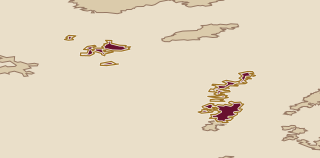
Meursault is the domaine's home and the place named on its principal wines. Arnaud Ente is typically among the first producers to begin harvesting each vintage. That early timing does not describe underripe fruit. It follows meticulous vineyard work that allows the grapes to reach the desired ripeness sooner than surrounding parcels, giving the wines naturally bright acidity without sacrificing weight.
The place therefore appears in the label and in the calendar. The wines are Meursault, but their shape is also marked by when the fruit is picked: freshness arrives through earlier harvest work rather than through a thin or stripped style.
How it is made
The cellar
The vineyard work is labour-heavy and closely timed. Arnaud Ente is regularly among the first to harvest because meticulous management allows the grapes to reach ripeness early. Earlier picking supports the domaine's naturally acidic style, keeping the wines fresh while retaining the concentration expected from ripe fruit.
The cellar follows the same direction. New oak for the top cuvées was reduced from 35 percent to 20 percent, allowing fruit, acidity and mineral flavour to remain more exposed. Since 2018, primary vinification has taken place mainly in Wineglobes, which limit oak contact and help preserve a cooler, fresher feel in the finished wine.
What they make
The named 2013 bottles show a clear progression within Meursault. Meursault village-level 2013 is the most direct expression, linear and precise, with the village name carrying the range's starting point. Meursault Clos des Ambres 2013 moves into a tighter register, marked by minerals, herbs and concentrated energy held in reserve.
Meursault La Sève du Clos 2013 occupies the deepest position among these examples. Its profile brings together complexity, purity, minerality and depth, so the range moves from a readable line through compact herbal concentration toward a more layered and expansive wine.
Wines to try
First bottle
Meursault village-level 2013 is the right first bottle because it presents the domaine's style without asking the wine's greatest concentration to do the explaining. It is linear, precise and composed, with acidity giving the palate lift and mineral flavour keeping the finish clean. The village-level label places it at the most accessible point of the named range, while the taste shows the estate's early-picking and reduced-oak direction in a readable form.