NoleaWorld of Wine

Vougeot · Bourgogne · France

Producer profile

Domaine de la Vougeraie

Founded in 1999 by Jean-Charles Boisset, Domaine de la Vougeraie brings together 37 hectares across 29 Burgundy appellations, split between the Côte de Nuits and Côte de Beaune and farmed biodynamically across the estate since 2011.

Place
Vougeot · Bourgogne · France
Known for
Biodynamic Côte d'Or wines across 29 appellations, with Pinot Noir from Savigny-lès-Beaune, Nuits-Saint-Georges and Charmes-Chambertin, plus the Chardonnay-only Clos Blanc de Vougeot monopole.
Wine context
Chardonnay · Pinot Noir
Editorial basis
World of Wine editorial profile · 12 sources

World of Wine editorial profile · Source list ↓

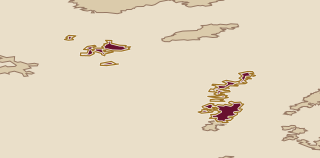
Atlas locationVougeot · Bourgogne · France47.11° N · 4.94° E

At A Glance

Domaine de la Vougeraie is a Burgundy estate founded in 1999 by Jean-Charles Boisset, bringing together 37 hectares across 29 appellations. Its vineyards are divided equally between the Côte de Nuits and Côte de Beaune. Pinot Noir carries the red range from Bourgogne to grand cru, while Clos Blanc de Vougeot provides a rare white counterpoint: Chardonnay from a historic monopole.

The Producer

Jean-Charles Boisset created Domaine de la Vougeraie to gather the strongest parts of the Boisset family's vineyard holdings under one name. The estate now stretches across the Côte d'Or, with bottles that move from broad Bourgogne appellations to highly specific grand cru parcels.

Pascal Marchand was the original winemaker, followed by Pierre Vincent from 2006. The change sits inside a larger estate built to show differences between vineyards rather than flattening them into one house style. A bottle of Bourgogne Pinot Noir carries the family range at its widest, while Charmes-Chambertin concentrates the work into one old Pinot Noir planting.

Place

The Côte d'Or is the physical frame, split between the Côte de Nuits and Côte de Beaune. The equal division gives the range two Burgundy registers: Pinot Noir from northern sites such as Nuits-Saint-Georges and Charmes-Chambertin, and wines from the Côte de Beaune, including Savigny-lès-Beaune Premier Cru.

The labels carry those differences directly. Bourgogne names the regional appellation, Savigny-lès-Beaune identifies a village and its premier cru level, and Charmes-Chambertin names a grand cru vineyard appellation. The grape remains Pinot Noir in each red example, while place changes the bottle's scale, texture and detail.

Soil And Site

Savigny-lès-Beaune Premier Cru comes from 100% Pinot Noir planted in sandy, pebbly, iron-rich soil. Those physical details anchor the wine in the Côte de Beaune and separate it from the denser, older planting behind Charmes-Chambertin.

The 2022 Charmes-Chambertin is also 100% Pinot Noir, planted at 10,000 vines per hectare through massal selection. More than half of the original parcel comes from vines planted in 1901 and 1902, giving the bottle a direct link between old plant material, dense planting and a grand cru label.

Clos Blanc de Vougeot changes grape and colour. It is a Chardonnay-only monopole, planted by Cistercian monks nine centuries ago. Its uninterrupted white-grape history makes the bottle a distinct site story within an estate dominated by red Burgundy.

Story

The estate's modern chapter began in 1999, when Jean-Charles Boisset consolidated selected family vineyards into Domaine de la Vougeraie. The range acquired a single name, but its vineyards remained spread across the Côte d'Or, so the cellar had to handle many appellations and site conditions.

The farming then moved toward one estate-wide method. Biodynamic cultivation began as a transition in 2001 and covered the whole estate by 2011. Pascal Marchand's original winemaking period gave way to Pierre Vincent in 2006, while the bottles continued to be organised around vineyard origin. The estate's history therefore runs from consolidation in the cellar and on the label toward greater separation in the vineyard.

Vineyards And Cellar

Domaine de la Vougeraie uses biodynamic preparations, including cow horn compost infusions. By 2011, every part of the estate was cultivated biodynamically. Across 29 appellations, one farming method meets different soils, slopes, grapes and vineyard ages.

The cellar consequence is a range that keeps site names visible. Pinot Noir from Savigny-lès-Beaune can be read through its sandy, pebbly, iron-rich ground, while Charmes-Chambertin carries massal selection, dense planting and vines dating from 1901 to 1902. Clos Blanc de Vougeot retains Chardonnay as its defining vineyard choice.

Wines

The range begins with Bourgogne wines, where the regional appellation presents the family holdings in their broadest form. Savigny-lès-Beaune Premier Cru narrows the focus to 100% Pinot Noir from a named Côte de Beaune site. Nuits-Saint-Georges Clos de Thorey moves into a more detailed Pinot Noir register, and Charmes-Chambertin occupies the grand cru end of the red range.

The 2022 Clos de Thorey brings spiced tea, earth, red currant, dark currant and subtle wood on the nose. Raspberry and ripe redcurrant follow on the palate, with fruit and acidity held in close balance and tannin supplying shape. The 2022 Charmes-Chambertin is broader and more deeply textured, finishing with the width and length expected from its old grand cru planting.

Clos Blanc de Vougeot changes the range's colour and grape without changing its focus on named place. Chardonnay is planted alone in the monopole, making the bottle a white Burgundy with a clear historical and vineyard-specific role.

In The Glass

A 2022 Nuits-Saint-Georges Clos de Thorey opens with spiced tea and damp earth before redcurrant and dark currant fill out the nose. Subtle wood sits behind the fruit instead of replacing it. On the palate, raspberry and ripe redcurrant bring the wine forward, while acidity keeps the fruit moving and tannin leaves a firm line through the finish.

Charmes-Chambertin shifts the sequence from fragrant red fruit toward width and depth. Its old Pinot Noir vines and dense planting support a broad, textured middle palate, then carry the wine into a grand, lingering finish. The contrast between the two reds comes from bottle level, vineyard history and site, while the shared grape keeps the comparison legible.

A Bottle To Understand It

Choose the 2022 Charmes-Chambertin. It is 100% Pinot Noir from a grand cru planting at 10,000 vines per hectare, with more than half of the original parcel planted in 1901 and 1902 through massal selection. In the glass, the wine is luxuriously wide and textured, with a long, grand finish.

This bottle gathers the estate's most concrete threads into one place: old vines, dense planting, selected plant material, biodynamic farming and a named grand cru vineyard. It is the first bottle to open when the question is how Domaine de la Vougeraie turns a large Côte d'Or range into a detailed vineyard wine.

Anecdote

In 1964, Jean-Claude Boisset bought Les Evocelles in Gevrey-Chambertin, his home village and the place where the family's vineyard history began. The plot was the first acquisition in a sequence that continued for decades. In 1999, Jean-Charles Boisset gathered selected family holdings into Domaine de la Vougeraie, turning a collection of separate vineyard assets into one named estate. Les Evocelles was no longer an isolated family purchase. It had become part of a 37-hectare domaine spread across 29 Burgundy appellations, with bottles ranging from Bourgogne Pinot Noir to Charmes-Chambertin grand cru.

Final Word

Domaine de la Vougeraie is broad in scale but specific in its bottles. The estate covers both halves of the Côte d'Or, farms all its vineyards biodynamically, and keeps grape, appellation and parcel visible across the range. The 2022 Charmes-Chambertin brings the story into one glass: old Pinot Noir vines, dense planting, a grand cru site and a finish that carries well beyond the first sip.

Sources

Keep following the thread

Where to go next

placeRead the Bourgogne guideSee Domaine de la Vougeraie in the wider setting of Bourgogne.mapFind Domaine de la Vougeraie on the mapKeep the producer, its region and nearby places together.learningUnderstand Pinot NoirRead the quick library guide to Pinot Noir, which is listed with this producer.