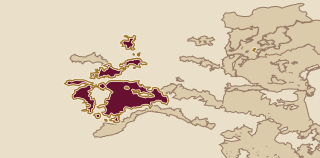
The Langhe lies south and east of Alba, across vineyard hills and ridges. It is home to Barolo and Barbaresco, both made from Nebbiolo. Other reds use Barbera, Dolcetto and Pelaverga, while Arneis makes white wine and Alta Langa is a sparkling wine.
Nebbiolo can look delicate and feel firm
What changes here
Barolo and Barbaresco come from defined parts of the Langhe and are made from Nebbiolo, a late-ripening grape. The wines can look pale and smell fragrant while still having pronounced acidity and tannin, the drying grip in your mouth. Langhe Nebbiolo and Nebbiolo d'Alba come from broader areas and are usually ready to drink sooner.
Some Barolo and Barbaresco labels name a smaller geographical area too. Check the producer and vintage, the harvest year, alongside the origin.
Barbera has bright acidity; Dolcetto is usually softer
Names to know
Barbera d'Alba has bright acidity and relatively modest tannin. Dolcetto d'Alba and Dogliani tend to be darker, softer and ready sooner. They use different grapes from Barolo. Verduno Pelaverga adds another local red to the list. Langhe DOC, an appellation defining origin and production rules, can cover a wide range of grapes and blends, so the grape name on these labels matters.
Choosing Nebbiolo, Barbera or Dolcetto
First bottle
Choose Langhe Nebbiolo if you want to try the grape in a wine that is usually ready to drink sooner than Barolo or Barbaresco. Barbera d'Alba is another red, with bright acidity and less tannin. Dolcetto is often made to drink young with a meal. If you prefer a firmer Nebbiolo wine, look for Barolo or Barbaresco.
Continue through the region
Elsewhere in Piemonte
- Alto Piemonte11 producersAlto Piemonte includes Gattinara, Ghemme and several smaller wine areas. Nebbiolo grows here on volcanic and glacial soils and is also used in blends.
- Canavese & Torinese7 producersCanavese and the Torinese hills lie near the Alps. Alongside the area's red wines, you'll find whites made from Erbaluce, a local grape known for its pronounced acidity.
- Monferrato & Asti34 producersIn the hills east of the Langhe, Monferrato and Asti make Barbera reds alongside sparkling wines from Moscato. Other local grapes include Grignolino, Ruchè and Brachetto.
- Roero9 producersAcross the Tanaro from the Langhe, Roero makes red wines from Nebbiolo and whites from Arneis. Roero Arneis can have peach, pear, almond and floral notes.
Producers in Langhe
Start with these
- G.D. VajraThe Vajra family makes Barolo and Langhe Nebbiolo in Vergne, the highest village in the commune of Barolo.
- Produttori del BarbarescoProduttori del Barbaresco is a village cooperative whose members grow Nebbiolo for Langhe Nebbiolo and Barbaresco.
- Giacomo ConternoGiacomo Conterno grows Nebbiolo in Serralunga d'Alba for Barolo, ageing Cascina Francia in large Slavonian oak casks and giving Monfortino Riserva a longer stay in wood.
- ViettiVietti is based in Castiglione Falletto, making Barolo from named vineyards including Rocche di Castiglione, Brunate and Lazzarito, alongside Barbera and the white Roero Arneis.
- Pio CesarePio Cesare works from cellars in central Alba, making Barolo and Barbaresco from family-owned vineyards, with separate bottlings from Ornato, Mosconi and Il Bricco.
Browse 144 more
- Agricola BosioBel Colle, owned by the Bosio family, is based in Verduno and makes Barolo from Monvigliero and Barbaresco from Pajorè in Treiso.
- Agricola BrandiniSerena and Giovanna Bagnasco run Agricola Brandini in La Morra, making Barolo from organically farmed vineyards alongside Alta Langa sparkling wine.
- Alberto BallarinAlberto Ballarin makes Barolo from vineyards in La Morra, Monforte d'Alba and Novello, with a separate bottling from the Bussia vineyard in Monforte.
- Albino RoccaAlbino Rocca is a wine producer in Piemonte.
- Amalia Cascina in LangaThe Boffa family runs Amalia Cascina in Langa in Monforte d'Alba, making Barolo Le Coste di Monforte alongside other Langhe wines.
- Antica Cantina Di CalossoAntica Cantina di Calosso is a growers' cooperative in Calosso, Asti province, making Moscato wines and the Monlusso Barbera d'Asti red.
- Az. Vitivinicola Aurelio SettimoThe Settimo family makes Barolo in La Morra's Annunziata hamlet, ageing it in large oak casks and bottling Rocche dell'Annunziata separately, alongside a Dolcetto d'Alba.
- Azelia di Luigi ScavinoThe Scavino family runs Azelia in Castiglione Falletto, making Dolcetto, Barbera and Nebbiolo wines, including Barolo Bricco Fiasco.
- Azienda Agricola Altare di Altare NicholasNicholas Altare farms old Dolcetto vines in San Luigi, Dogliani, and makes his organic Dogliani red entirely in concrete tanks.
- Azienda Agricola Bovio Gianfranco di Bovio AlessandraAlessandra and Marco Bovio run their family's Barolo estate in La Morra, with vineyards there and in Castiglione Falletto, including the old Gattera parcel.
- Azienda Agricola Bric CenciurioBric Cenciurio is a family estate with vineyards in the Roero and Langhe, making Arneis, Barbera d'Alba and Barolo Monrobiolo di Bussia.
- Azienda Agricola Ca´ViolaBeppe Caviola's Ca'Viola estate grows vines in Montelupo Albese and the Barolo area, making Dolcetto, Barbera and Nebbiolo wines, including old-vine Bric du Luv Barbera and Caviòt Barolo.
- Azienda Agricola CaglieroAzienda Agricola Cagliero is a wine producer in Piemonte.
- Azienda Agricola CamparoThe Drocco family farms Camparo's vineyards organically in Diano d'Alba, Grinzane Cavour and La Morra, making Dolcetto di Diano d'Alba and Barolo.
- Azienda Agricola Elio AltareSilvia Altare runs her family's estate in La Morra, where Barolo Arborina is made with a short fermentation on the grape skins and aged in small French oak barrels.
- Azienda Agricola Elio GrassoElio Grasso and his son Gianluca make Barolo in Monforte d'Alba, bottling Gavarini Chiniera and Ginestra Casa Matè separately and ageing both in large Slavonian oak casks.
- Azienda Agricola Elvio CognoNadia Cogno and Valter Fissore run the Elvio Cogno estate in Novello, making Barolo from Nebbiolo grown in the Ravera vineyard area.
- Azienda Agricola Enzo BogliettiEnzo Boglietti's family estate in La Morra makes Barbera d'Alba and Dolcetto d'Alba alongside Barolos bottled separately by vineyard, including Arione in Serralunga d'Alba.
- Azienda Agricola Eugenio BocchinoAzienda Agricola Eugenio Bocchino is a wine producer in Piemonte.
- Azienda Agricola FalletoAzienda Agricola Falleto is a wine producer in Piemonte.
- Azienda Agricola Gabutti - Boasso FrancoFranco Boasso and his sons make Barolo in Serralunga d'Alba, bottling their vineyards separately and ageing the wines in large, old Slavonian oak casks.
- Azienda Agricola GillardiGillardi farms organically in Piemonte and makes Barolo alongside HARYS, a red wine whose name spells its grape, Syrah, backwards.
- Azienda Agricola Giovanni BoroliGiovanni and Isabella Boroli's La Giasira estate lies between Noto and Modica in southeastern Sicily, where they grow Grillo, Nero d'Avola and Nerello Mascalese organically.
- Azienda Agricola Giovanni Rosso di Rosso DavideGiovanni Rosso is a family wine estate in Serralunga d'Alba, with vineyards including Cerretta, La Serra and Broglio.
- Azienda Agricola Giuseppe BocchinoThe Bocchino family makes Moscato wines in Canelli, including Sorì dei Fiori and, when autumn conditions allow, Re d'Autunno from grapes left to dry on the vine.
- Azienda Agricola LalùLalù is Lara Rocchetti and Luisa Sala's estate, with vineyards in Monforte d'Alba and La Morra and a Barolo from Le Coste di Monforte.
- Azienda Agricola Lodali WalterWalter Lodali and his mother Rita run their family's estate in Treiso, making Barbaresco from Nebbiolo, including the Lorens bottling from the Giacone vineyard.
- Azienda Agricola MarcalbertoMarcalberto is a family estate in Santo Stefano Belbo making Alta Langa sparkling wines from Pinot Nero and Chardonnay, with fermentation in oak followed by a second fermentation in bottle.
- Azienda Agricola Mario GagliassoThe Gagliasso family makes Barolo in La Morra, including separate wines from Rocche dell'Annunziata and Torriglione, with Luca and Nicoletta now working in the winery.
- Azienda Agricola Pian Del BoscoOmar and Luana Borello make Moscato d'Asti, Asti Spumante and Langhe Nebbiolo at Pian Del Bosco, their family estate above Mango.
- Azienda Agricola Piero GattiBarbara Gatti runs her family's Piero Gatti estate in Santo Stefano Belbo, making a sweet, lightly sparkling Piemonte Moscato from estate-grown Moscato Bianco.
- AZIENDA AGRICOLA RABAJA' DI ROCCA BRUNOBruno Rocca and his children Francesco and Luisa make Barbaresco at their family estate in the Rabajà vineyard area, bottling Nebbiolo from several named sites.
- Azienda Agricola Renato CorinoRenato Corino and his children run a Barolo estate in La Morra's Arborina vineyard area, making several Barolos alongside a Langhe Nebbiolo for earlier drinking.
- Azienda Agricola Roberto VoerzioRoberto Voerzio makes Barolo in La Morra, bottling named vineyards separately and limiting the amount of fruit on each vine by thinning the bunches.
- Azienda Agricola Savigliano Pier GiorgioThe Savigliano family farms in Valle Talloria, a hamlet of Diano d'Alba, making Dolcetto di Diano d'Alba and Nebbiolo d'Alba.
- Azienda Agricola SottimanoThe Sottimano family makes Barbaresco from five vineyards across Neive and Treiso, fermenting each separately with native yeasts and bottling without filtration.
- Azienda Agricola TacchinoAlessio and Romina Tacchino run their family's estate in Castelletto d'Orba, making Du Riva Dolcetto d'Ovada Superiore without oak and a dry Gavi di Gavi white from Cortese.
- Azienda Agricola TinteroAzienda Agricola Tintero is a wine producer in Piemonte.
- Azienda Agricola ViginDavide Viglino makes wine at his family's Vigin estate in Treiso, with separate Barbarescos from Cottà and Montersino alongside Langhe Nebbiolo and Barbera d'Alba.
- Borgo MaraglianoBorgo Maragliano makes sparkling wine in Piemonte using the traditional method, with a second fermentation in bottle.
- Bosio Family EstatesBosio Family Estates makes Moscato d'Asti in Santo Stefano Belbo and owns Belcolle, whose wines include Barolo and Barbaresco from named Langhe vineyards.
- BroviaCristina and Elena Brovia run their family's estate in Castiglione Falletto with winemaker Alex Sanchez, making separate vineyard Barolos aged in large oak casks and bottled without filtration.
- Bruna GrimaldiBruna Grimaldi's family estate farms organically in Serralunga d'Alba and Grinzane Cavour, making Barolo Badarina alongside Dolcetto, Barbera and a white from Arneis.
- Bruno GiacosaBruna Giacosa runs the Bruno Giacosa estate, making Nebbiolo wines from Falletto in Serralunga d'Alba for Barolo and from Asili and Rabajà for Barbaresco.
- Bruno RoccaBruno Rocca's family estate sits in the Rabajà vineyard area of Barbaresco, where its Nebbiolo wines age first in small oak barrels and then in larger casks.
- Ca' BarunCa' Barun is an Italian wine producer.
- Ca' de LionCa' de Lion is a Ghione family sparkling wine house in Canelli, making dry wines from Pinot Nero and Chardonnay, including Alta Langa.
- Ca' del BaioThe Grasso family makes Barbaresco Asili at Ca' del Baio in Treiso, alongside Barbera d'Alba and Dolcetto d'Alba.
- Cantina Bartolo MascarelloMaria Teresa Mascarello runs this small estate in Barolo, blending Nebbiolo from several vineyards into one Barolo and ageing it in large old oak casks.
- Cantina Nada GiuseppeThe Nada family makes Barbaresco from its Casot vineyard in Treiso, ageing the wine in large old oak barrels, with Riesling also in the range.
- Cantina Terre del BaroloBased in Castiglione Falletto, the Terre del Barolo cooperative brings together growers across the Barolo zone and blends Nebbiolo from all eleven villages in its Undicicomuni wine.
- Cantina Vallebelbo SCACantina Vallebelbo is a cooperative of Langhe grape growers whose wines include Moscato d'Asti and Miravento, a gently sparkling white.
- Cantine dei Marchesi di Barolo S.p.aThe Abbona family runs Marchesi di Barolo from cellars in Barolo village, making wines including Barolo Cannubi from the vineyard of that name.
- Casa Vinicola MarencoThree Marenco sisters run this family estate in Strevi, making sweet, lightly sparkling Brachetto d'Acqui and Moscato d'Asti from their own grapes.
- Cascina CorteCascina Corte farms old Dolcetto vines on the San Luigi hills outside Dogliani and makes part of its range, including Nascetta and Nebbiolo, in terracotta vessels.
- Cascina Disa - Elio SandriAt Cascina Disa on Perno Hill in Monforte d'Alba, Elio Sandri makes Barolo, Barbera and Dolcetto, fermenting in cement and ageing in old Slavonian oak casks.
- Cascina GentileDaniele Oddone runs Cascina Gentile in Capriata d'Orba, making Ovada reds from Dolcetto and white wines from Cortese in Gavi and Timorasso in the Colli Tortonesi.
- Cascina LuisinRoberto Minuto runs Cascina Luisin in Barbaresco's Rabajà district, making separate Barbaresco wines from the Rabajà, Asili and Sorì Paolin vineyards.
- Cascina MassaraThe Burlotto family's Cascina Massara grows its grapes in Verduno, making Barolo from the Massara and Monvigliero vineyards alongside a light Verduno Pelaverga red.
- Cascina RabaglioCascina Rabaglio sits just outside Barbaresco, making separate Barbaresco wines from Gaia Principe and Meruzzano, with Langhe Arneis and Riesling among its whites.
- Castello di NeiveCastello di Neive is a family estate in Neive, making Barbaresco from the Santo Stefano vineyard and ageing it in the castle's eighteenth-century vaults.
- CavallottoCavallotto makes Barolo from its Bricco Boschis and Vignolo vineyards in Castiglione Falletto, ageing the wines in large Slavonian oak casks.
- CerettoThe Ceretto family works from the outskirts of Alba, making separate Barolo wines from Brunate, Prapò and Bricco Rocche, and Barbaresco from Bricco Asili.
- Colombo Antonio e FigliColombo Antonio e Figli is a family estate in Bubbio, making still Pinot Nero reds and Alta Langa sparkling wines, including a Chardonnay white.
- ContrattoContratto makes dry Alta Langa sparkling wines from Pinot Noir and Chardonnay grown in Bossolasco, ageing the bottles in its underground cellars beneath Canelli.
- Costa di Bussia - Tenuta ArnulfoCosta di Bussia grows Nebbiolo and Dolcetto on the Bussia hill in Monforte d'Alba, making Barolo aged in large Slavonian oak casks alongside Langhe Nebbiolo and Dolcetto d'Alba.
- Crissante AlessandriaCrissante Alessandria is a family estate in La Morra, making Barolo from its holdings across the village and separate bottlings from the Capalot and Galina vineyards.
- CuvageCuvage is a sparkling wine house in Acqui Terme, using grapes including Nebbiolo for wines whose bubbles develop in the bottle and Moscato, Cortese and Brachetto for those made in tanks.
- Damilano Azienda AgricolaDamilano is a family estate in Barolo village, making separate vineyard bottlings including Cannubi and ageing its Cannubi Riserva for seven years before release.
- Diego ConternoDiego Conterno and his son Stefano farm in Monforte d'Alba, making Barolo from the Ginestra vineyard alongside reds from Barbera and Dolcetto and a white from Nascetta.
- Diego MorraDiego Morra works from the family farmstead in Verduno, making Barolo from the Monvigliero vineyard and a Langhe rosé from Nebbiolo.
- E. Pira & Figli - Chiara BoschisChiara Boschis makes Barolo in Barolo village, bottling Cannubi and Mosconi as separate vineyard wines alongside Via Nuova, a blend from vineyards across three villages.
- Ettore GermanoThe Germano family makes separate vineyard Barolos in Serralunga d'Alba, while its higher vineyards at Cigliè supply Riesling, Chardonnay and Alta Langa sparkling wines.
- Fletcher WinesAustralian winemaker David Fletcher makes Nebbiolo-led wines, including Barbaresco from Faset and Ronchi, at a converted railway station in Barbaresco village.
- FontanabiancaThe Pola family's Fontanabianca estate in Neive makes Barbaresco from the Bordini and Serraboella vineyards, alongside Arneis and Barbera.
- FontanafreddaFontanafredda farms organic vineyards in Serralunga d'Alba, with a range that includes Langhe Nebbiolo, Barolo bearing the village name and Barolos from individual vineyards.
- Francesco Rinaldi & FigliSisters Paola and Piera Rinaldi run Francesco Rinaldi & Figli in Barolo village, making separate vineyard Barolos aged in large Slavonian oak casks.
- FrascaFrasca grows grapes around Nizza Monferrato and Moasca in the Monferrato hills, where winemaker Matteo Gerbi makes reds from Barbera, Freisa and Grignolino.
- Fratelli AlessandriaFratelli Alessandria is a family estate in Verduno, making Barolo from San Lorenzo and Gramolere alongside Speziale, a pepper-scented red from the local Pelaverga Piccolo grape.
- Fratelli CigliutiClaudia and Silvia Cigliuti run this family estate in Neive, making both Barbaresco and Barbera d'Alba from the Serraboella hill.
- Fratelli Martini Secondo LuigiBased in Cossano Belbo, Fratelli Martini Secondo Luigi makes Prosecco from Veneto-grown Glera grapes under the Casa Sant'Orsola label, alongside aperitivo drinks.
- Fratelli Serio & Battista BorgognoFratelli Serio & Battista Borgogno is a family estate on Barolo's Cannubi hill, blending its three parcels into Barolo Cannubi and ageing the wine in large Slavonian oak casks.
- GajaGaja is a Piemonte producer making Barbaresco from estate-grown Nebbiolo, alongside Barolo and Gaia & Rey, a white Chardonnay from vineyards in Treiso and Serralunga d'Alba.
- GaresioGaresio makes Barolo from Nebbiolo grown in Serralunga d'Alba, Nizza from Barbera in Castelnuovo Calcea, and Alta Langa sparkling wines from Pinot Noir and Chardonnay.
- Giacomo Borgogno & FigliGiacomo Borgogno & Figli makes Barolo in Piemonte's Langhe hills, including wines from Cannubi, Liste and Fossati, with long ageing in large Slavonian oak casks.
- Giacomo GrimaldiFerruccio and Alberto Grimaldi run this family Barolo estate, making separate wines from Le Coste in Barolo, Ravera in Novello and Fornaci in Monforte d'Alba.
- Giacosa FratelliGiacosa Fratelli comes from Piemonte, Italy.
- Gianfranco AlessandriaVittoria and Marta Alessandria run their family's estate in Monforte d'Alba, making Barolo from the San Giovanni vineyard alongside Barbera d'Alba and Dolcetto d'Alba.
- Giovanni SordoThe Sordo family makes eight separate vineyard Barolos from its base in Castiglione Falletto, fermenting in stainless steel and ageing in large Slavonian oak casks.
- Giuseppe MascarelloGiuseppe Mascarello is a family estate in the Langhe making Barolo from the Monprivato vineyard in Castiglione Falletto, with ageing in large Slavonian oak casks.
- Josetta SaffirioSara Vezza leads Josetta Saffirio in Monforte d'Alba, making Barolo from the Castelletto hillside alongside Langhe Nebbiolo, rosé and a white from the local Rossese Bianco grape.
- LaficaiaAt Laficaia in Casalotto di Mombarruzzo, Enrico Piantato makes Barbera d'Asti from inherited family land, alongside sparkling wines that also include Barbera.
- Luigi PiraThe Pira family farms in Serralunga d'Alba, making separate Barolo wines from Margheria, Marenca and Vigna Rionda alongside reds from Dolcetto and Barbera.
- Luigi VogheraLivio Voghera runs his family's estate in Tetti, Neive, making Barbaresco and other Langhe reds aged in large old oak casks, with Arneis among the whites.
- Mancino VermouthGiancarlo Mancino makes vermouth at a family distillery in Asti, with a range that includes dry Secco, barrel-aged Vecchio and Chinato based on Barbera d'Asti.
- Marchesi di BaroloThe Abbona family runs Marchesi di Barolo below the village's castle, making Barolo from Nebbiolo vineyards across the Langhe, including Cannubi.
- Margherita OttoAlan Manley's Margherita Otto estate in Monforte d'Alba makes a Barolo that brings together Nebbiolo from four parcels across Monforte, Serralunga d'Alba and Barolo.
- Mario MarengoMarco Marengo, his wife Jenny and son Stefano run this La Morra family estate, making separate Barolos from the Brunate and Bricco delle Viole vineyards.
- Martini & RossiMartini & Rossi produces vermouth and sparkling wines at Pessione, south-east of Turin, with a range that includes herbal Rosso, sweeter Bianco and Moscato-based Asti.
- Massimo Rivetti Family FarmMassimo Rivetti and his three sons farm vineyards around Neive, Mango and Alba, making a range that includes Barolo, Barbaresco and Langhe Nebbiolo.
- MassolinoAt their family estate in Serralunga d'Alba, Franco, Roberto and Paola Massolino make Barolo from named vineyards, including Vigna Rionda, with ageing in large oak casks.
- Matteo Ascheri Azienda AgricolaMatteo Ascheri and his son Giuseppe run the family winery in Bra, making Barolo from Langhe vineyards alongside Verduno Pelaverga and Gavi del Comune di Gavi.
- Mauro MolinoMauro Molino's family estate in La Morra makes separate Barolos from Conca and Berri in La Morra and Perno in Monforte d'Alba.
- Mauro SebasteFrom a winery in Alba, Mauro Sebaste makes wines from the Langhe, Roero and Monferrato, including Barolo from the Cerretta vineyard in Serralunga d'Alba.
- Mauro VeglioMauro Veglio is based in La Morra and makes Barolo from vineyards across four communes, with most wines aged in used French oak barrels and Paiagallo in larger casks.
- Mauro Veglio Azienda AgricolaAt Cascina Nuova in La Morra's Annunziata hamlet, the Veglio family makes Barolo from named vineyards including Arborina, ageing most wines in used French oak barrels.
- MGM Mondo del VinoMGM Mondo del Vino is a producer and wine merchant in Priocca, buying grapes from growers for labels including Riva Leone Barbera, Angelo Montepulciano d'Abruzzo and Sonovino from Puglia.
- Michele ChiarloBased in Calamandrana, Michele Chiarlo works with Piemonte's Nebbiolo, Barbera, Cortese and Moscato grapes, making wines that include Barolo from Cerequio and Cannubi and Moscato d'Asti Nivole.
- Michele ReverditoMichele and Sabina Reverdito run their family estate in La Morra, making separate Barolos from vineyards across four communes, as well as Verduno Pelaverga and Langhe Nebbiolo.
- Monchiero Fratelli Azienda AgricolaVittorio, Luca and Stefano Monchiero make Barolo from vineyards in Castiglione Falletto and La Morra, ageing it in large Slavonian oak casks.
- MonterusticoThe Vaira family's Monterustico estate in Farigliano farms old Dolcetto vineyards for its Dogliani red, which ages in stainless steel.
- Nada FiorenzoBruno and Danilo Nada run this family estate in Treiso, making separate Barbarescos from Nebbiolo grown in the Manzola, Rombone and Montaribaldi vineyards.
- Paolo ScavinoElisa and Enrica Scavino run this family estate in Castiglione Falletto, making Barolo from vineyards across eight communes and fermenting each plot separately.
- ParussoMarco and Tiziana Parusso run their family estate in Bussia, Monforte d'Alba, making separate Barolos from the Bussia, Mosconi and Mariondino vineyards.
- Pelissero Az. Agr. VitivinicolaGiorgio Pelissero runs this Treiso family estate, making Barbaresco from estate-grown Nebbiolo alongside wines from Barbera and Dolcetto.
- Pico MaccarioBased in Mombaruzzo, Pico Maccario makes Barbera from its Monferrato vineyards, with Langhe holdings supplying Nebbiolo for Barbaresco and Barolo, including Cannubi.
- Piero BenevelliIn Monforte d'Alba, Massimo Benevelli makes separate Barolos from Le Coste di Monforte, Mosconi and Ravera di Monforte, using the same fermentation and ageing methods for each.
- Piero BussoPiero Busso and his son Pierguido farm Nebbiolo around Neive and Treiso for Barbaresco, including Mondino and Albesani Vigna Borgese, with ageing in large oak casks.
- Podere Ruggeri CorsiniLoredana Addari and Nicola Argamante run Podere Ruggeri Corsini in Monforte d'Alba, making separate Barolos from Bricco San Pietro and Bussia alongside Barbera, Dolcetto and Langhe Nebbiolo.
- Poderi Aldo ConternoAldo Conterno's sons run this family estate in Bussia, Monforte d'Alba, making three Barolos from individual vineyards and Granbussia, a blend of all three sites.
- Poderi CellarioFausto and Cinzia Cellario farm hillside vineyards around Carrù in the western Langhe, making Dolcetto, Nebbiolo and lightly sparkling wines from Nascetta and Moscato Giallo.
- Poderi CollaPoderi Colla brings grapes from its Langhe properties to a cellar in Alba, making Barolo Bussia Dardi Le Rose, Barbaresco Roncaglie and Bricco del Drago, a blend of Dolcetto and Nebbiolo.
- Poderi e Cantine OdderoBased in Santa Maria di La Morra, Poderi e Cantine Oddero makes Barolo from vineyards in La Morra, Castiglione Falletto and Serralunga d'Alba, including Brunate and Vignarionda.
- Poderi Fogliati di Annalisa ChiappaAnnalisa Chiappa and her brother Guido run Poderi Fogliati on Pugnane hill, making Barolo and Langhe Nebbiolo from vineyards on the boundary between Castiglione Falletto and Monforte d'Alba.
- Poderi Luigi EinaudiPoderi Luigi Einaudi is a family estate based in Dogliani, making Dolcetto di Dogliani alongside Barolo from its own Nebbiolo vineyards in the Langhe.
- Poderi RosetSilvio Busca's Poderi Roset estate in Verduno makes Barolo and an unoaked red from Pelaverga Piccolo, alongside Barbera and Dolcetto.
- PrunottoThe Antinori family's Prunotto estate in Alba makes Barolo and Barbaresco from named vineyards as well as Barbera from the Langhe and Monferrato.
- RattiPietro Ratti runs the family estate in Annunziata, La Morra, where the Barolo range includes Marcenasco, made from Nebbiolo grown on local clay and limestone soils.
- Revello FratelliRevello Fratelli is based in Annunziata, La Morra, making separate Barolos from Giachini, Conca and Gattera, as well as Cerretta in Serralunga d'Alba.
- RicossaRicossa farms vineyards at Castel Boglione in Monferrato and works with growers across the Langhe and Roero, producing Barbera d'Asti, Barbaresco and reds made with partially dried grapes.
- Rizieri Società Agricola SempliceArturo Verrotti di Pianella's Rizieri estate in Diano d'Alba makes Arneis and Langhe reds, with a separate Nebbiolo vineyard at Silio in La Morra supplying Barolo.
- Roagna Azienda Agricola I Paglieri S.SAlfredo and Luca Roagna make Barbaresco and Barolo from named Langhe vineyards, including Pajè, Asili and Pira, with separate bottlings from older vines.
- RocchevibertiClaudio Viberti runs Roccheviberti in Castiglione Falletto, making separate Barolos from Rocche di Castiglione and Bricco Boschis, alongside Barbera and Dolcetto.
- San Biagio Azienda Agricola di Giovanni RoggeroThe Roggero family's San Biagio estate in La Morra makes Barolo from named local vineyards, Barbaresco from Treiso and Alta Langa sparkling wines from Pinot Noir.
- San SilvestroThe Sartirano family runs San Silvestro in Novello, making Barolo, Gavi and Barbera, including a red made from Barbera grapes dried on racks before pressing.
- Santamaria di Walter VibertiWalter Viberti makes Barolo Capalòt and Langhe Nebbiolo Freròt from a single Nebbiolo vineyard in Santa Maria di La Morra, choosing between the wines during ageing.
- SottimanoThe Sottimano family farms Nebbiolo around Neive and Treiso, making separate Barbarescos from Basarin, Cottà, Pajorè, Fausoni and Currà, all bottled without filtration.
- Tenuta il FalchettoThe Forno brothers run Tenuta il Falchetto across the Langhe and Monferrato hills, making Moscato d'Asti, Barbera and Alta Langa sparkling wines.
- Tenute Cisa Asinari Dei Marchesi di GresyThe di Grésy family makes Barbaresco at Martinenga, a vineyard surrounding its winery near Barbaresco village, with separate bottlings from the Camp Gros and Gaiun parcels.
- Terre del BaroloTerre del Barolo is a grower cooperative in Castiglione Falletto, drawing grapes from all eleven Barolo villages for wines ranging from tank-aged Langhe Nebbiolo to Barolo from named vineyards.
- TrediberriBased in Berri, a hamlet of La Morra, Trediberri makes Barolo from the Rocche dell'Annunziata vineyard and Langhe Nebbiolo intended for early drinking.
- Viberti GiovanniClaudio Viberti runs this family estate in Vergne, making Barolo from Bricco delle Viole, San Pietro and La Volta, alongside Barbera d'Asti under the Collejato label.
- ViottiThe Viotti family farms in Castel Rocchero in Monferrato, making an oak-aged red from Albarossa and Cartòs, a lightly sparkling Brachetto d'Acqui.
- Vite ColteVite Colte is a grower-owned cooperative in Barolo with a range centred on Barbera, from steel-aged Rosso Fuoco to oak-aged Barbera d'Asti and Nizza.