
NoleaWorld of Wine

Piemonte · Italy

Producer profile

Azienda Agricola Vigin

Small Treiso estate producing Barbaresco from two named parcels, Cottà and Montersino, alongside Langhe Nebbiolo and Barbera d'Alba. Founded 1947; first commercial vintage 2002.

Place
Piemonte · Italy
Known for
Barbaresco DOCG from two named parcels, Cottà and Montersino
Wine context
Barbera · Nebbiolo
Editorial basis
World of Wine editorial profile · 4 sources

World of Wine editorial profile · Source list ↓

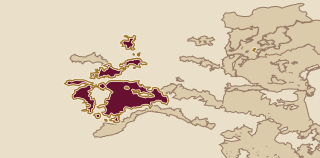
Atlas locationPiemonte · Italy44.68° N · 8.09° E

At A Glance

Producer: Azienda Agricola Vigin Village: Treiso, Cuneo Province, Piedmont Appellation: Barbaresco DOCG, Langhe DOC, Barbera d'Alba DOC Grapes: Nebbiolo, Barbera Founded: 1947 First commercial vintage: 2002

The Producer

Vigin sits on a hillside at Via Meruzzano 33/a in Treiso, one of three communes that make up the Barbaresco production zone alongside Barbaresco itself and Neive. Orlando Viglino founded the agricultural holding in 1947 and farmed its roughly 7 hectares for the rest of his life. He never made a single commercial release. His grandson Davide Viglino started vinifying in 2002, more than fifty years after Orlando first broke ground, and built the range that exists today: a Barbera d'Alba, a Langhe Nebbiolo, and Barbaresco from two separate vineyard parcels, Cottà and Montersino.

Five hectares of the seven are under vine. The wines carry the names of the parcels rather than the family name alone, a small-estate choice that places the Langhe land at the centre of what Vigin argues it is.

Place

Treiso is the southernmost commune in the Barbaresco DOCG zone, set in the Langhe hills above the Tanaro river valley in Cuneo Province. Nebbiolo grown here follows the broad DOCG signature: high tannin, firm acidity, aromas that move from dried rose and cherry toward tar, leather, and cedar as the wine ages. The appellation law requires at least two years of ageing before release, one of those in oak, which is why every Barbaresco arrives with structural depth already laid in. It is built for time, not immediate pleasure.

The Barbaresco zone is smaller and generally regarded as producing wines of earlier approachability than Barolo to the southwest, though the tannin load is still substantial in youth. Treiso's position within the zone adds a regional inflection, though specific soil composition and altitude data for the Cottà and Montersino parcels are not on record.

Soil And Site

The estate covers approximately 7 hectares, roughly 5 of which are planted. The Cottà and Montersino parcels lie within the Barbaresco DOCG boundary in Treiso.

Story

Orlando Viglino arrived at Treiso in the years after the Second World War and built a farming operation from an agricultural holding that had no commercial wine ambition. He grew grapes, tended the land, and maintained the estate across his lifetime without ever sending a bottle to market. Whether that reflected pragmatism, a preference for selling grapes in bulk to négociants, or simply the economics of postwar Piedmont, is not recorded. What is recorded is that he never drank the wine himself.

The transition came with the third generation. Davide Viglino began vinification in 2002, formalising what had been an agricultural estate into a producing winery. He gave the wines individual names, Moody for the Langhe Nebbiolo, My Ruby for the Barbera, Cottà and Montersino for the two Barbarescos, and positioned the range with Barbaresco at the top. That architecture, from everyday Barbera through DOCG Nebbiolo, is a small estate's way of showing the full hierarchy of Piedmontese red grapes without overextending production.

Vineyards And Cellar

Seventy per cent of the estate's 7 hectares is under vine. Nebbiolo occupies the upper range of the programme, going into both the Langhe DOC and the Barbaresco DOCG from two separate parcels. Barbera goes into the My Ruby. The Langhe Nebbiolo is made to drink within a few years: the Moody shows sturdy tannins on release that the winery projects will soften within one to two years, with further development over six. The Cottà Barbaresco carries more weight and demands longer cellaring, with a drinking window that opens around four years after harvest.

Oak ageing figures in the Moody's palate profile, oak spice registering alongside the red fruit. Specific oak type and total ageing duration are not confirmed for any wine in the range.

Wines

Vigin makes four wines across three appellations. It is the entry point of the range and the only wine built around Barbera rather than Nebbiolo.

Moody is Langhe Nebbiolo DOC, a lighter appellation category than Barbaresco that allows Nebbiolo to be released earlier and drunk younger. The 2021 opens with rose, cherry and clove on the nose, then moves to fresh and dried strawberry, raspberry, red currant and oak spice across the palate. The tannins are sturdy on release and built for short-term development rather than long cellaring.

Cottà is Barbaresco DOCG from the Cottà parcel. The 2019 shows a bouquet of red fruit, black pepper and cedar, while the palate runs through dried cherry, red currant, thistle, leather, tea and clove. The tannins are prominent and well polished. A drinking window of 2023 to 2031 gives the wine eight years of useful life from the vintage.

Montersino is also Barbaresco DOCG, from the second named parcel. No tasting notes are available.

In The Glass

The two documented wines sit at opposite ends of the Nebbiolo spectrum Vigin covers. Moody, from the Langhe Nebbiolo appellation, opens with a floral and spiced nose, rose petals and clove setting the tone, before a palate of fresh strawberry, raspberry, and red currant with oak spice running underneath. The tannins grip but loosen with a year or two in bottle, and the wine holds for six years from vintage. It is Nebbiolo at a lighter register, approachable and food-friendly.

Cottà Barbaresco trades that freshness for depth. The nose is more austere: red fruit pulled back behind black pepper and cedar. In the mouth, the fruit is dried rather than fresh, cherry and red currant compressed to leather, thistle, tea, and clove. The tannins are a dominant presence, prominent even when polished, and the wine needs time. Open it before 2023 and the wood and tannin dominate. Give it to 2025 or 2026 and the secondary flavours begin to settle into something more complex.

A Bottle To Understand It

Vigin Cottà Barbaresco is the bottle to open first. It is 100% Nebbiolo from a named parcel in Treiso, aged to DOCG minimum requirements and carrying the full character of the appellation: dried cherry, leather, clove, and firm tannin that have been polished by time in oak. The drinking window runs to 2031, so there is no urgency, but a bottle opened in the mid-2020s will show the wine in a settled state, past the grip of youth and into the leather-and-dried-fruit register Barbaresco is known for. Buy it, wait two years, and open it with something that can hold its own against the tannin.

Anecdote

Orlando Viglino spent his life growing grapes and never once drank the wine. He founded the estate in 1947, maintained the vineyards through the postwar decades, and farmed the land in Treiso until his death without making a single commercial release. He was, by his family's account, a lifelong abstainer, someone who cared about wine as a crop and a craft without caring to taste it. His grandson Davide came back to the estate in 2002 and looked at what Orlando had built: roughly 7 hectares on a Langhe hillside, vines in the Barbaresco zone, and no bottles to show for it. Davide began vinifying that year. The first commercial Barbaresco came from parcels Orlando had farmed for decades. The estate that now makes Cottà and Montersino was built by a man who never opened one.

Final Word

Vigin is a small estate with a short commercial history and a long agricultural one. Davide Viglino has twenty-odd vintages behind him and two named Barbaresco parcels to work with. The Cottà is the wine to track: a DOCG Nebbiolo from a named Treiso parcel, with the tannin and acidity to age, and a flavour profile that rewards patience. The Montersino remains undocumented but adds a second parcel perspective to the range. For anyone mapping small Barbaresco producers, Vigin is a family estate worth finding.

Sources

Keep following the thread

Where to go next

placeRead the Piemonte guideSee Azienda Agricola Vigin in the wider setting of Piemonte.mapFind Azienda Agricola Vigin on the mapKeep the producer, its region and nearby places together.learningUnderstand NebbioloRead the quick library guide to Nebbiolo, which is listed with this producer.