
NoleaWorld of Wine

Piemonte · Italy

Producer profile

Azienda Agricola Pian Del Bosco

Family estate above Mango making Moscato d'Asti and Langhe reds from hillside parcels the Borello family has worked since 1990.

Place
Piemonte · Italy
Known for
Moscato d'Asti DOCG from calcareous clay hillside parcels above Mango, with Langhe Nebbiolo and Asti Spumante completing the range.
Wine context
Barbera · Nebbiolo
Editorial basis
World of Wine editorial profile · 4 sources

World of Wine editorial profile · Source list ↓

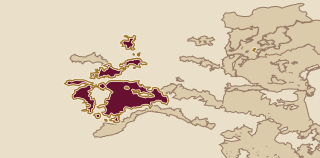
Atlas locationPiemonte · Italy44.70° N · 8.16° E

At A Glance

Location: Mango, Cuneo province, Piedmont, Italy Owners: Omar and Luana Borello Core grape: Moscato Bianco Key appellations: Moscato d'Asti DOCG, Asti Spumante DOCG, Langhe Vineyard communes: Mango, Santo Stefano Belbo, Castiglione Tinella Consortium: I Vini del Piemonte

The Producer

Omar and Luana Borello farm the hillside above Mango that the Borello family has held since autumn 1990, when they bought a Moscato d'Asti vineyard on the Pian Del Bosco slope. For decades the grapes left the farm in other people's tanks. The decision to bottle under their own name came later, and when it did, Omar and Luana named the estate after that original plot.

The estate sits within the Moscato d'Asti DOCG, the appellation built on Moscato Bianco grown across the limestone and clay hills south of Alba between the towns of Canelli and Santo Stefano Belbo. Omar's family background is in Langhe viticulture; Luana trained as a wine technician in Roero, the territory across the Tanaro River that faces the Langhe from the north. Between them, the Borellos cover both sides of the landscape that defines southern Piedmont's aromatic wine culture.

Pian Del Bosco belongs to the I Vini del Piemonte consortium, a network of small and medium growers across Langhe, Roero, Monferrato, and northern Piedmont.

Place

Mango is a hilltop commune in the Cuneo province, positioned in the southern Langhe between Alba and Canelli. The three communes where Pian Del Bosco holds vineyards, Mango, Santo Stefano Belbo, and Castiglione Tinella, all fall within the Moscato d'Asti DOCG zone. That appellation covers 52 comuni across three provinces and is built entirely around Moscato Bianco, a grape that performs differently here than almost anywhere else it grows.

At these southern Langhe elevations, the growing season is warm enough to ripen Moscato fully but the autumns cool down sharply at night, slowing the final weeks before harvest and preserving the grape's characteristic perfume. The calcareous clay soils on the east and south-facing slopes around Mango retain moisture without waterlogging, which keeps vine stress low and aromatic intensity high. The altitude and aspect explain why Moscato d'Asti from this corridor smells as much of apricot blossom and white peach as it does of ripe fruit.

The Langhe appellation, which covers Pian Del Bosco's Nebbiolo parcels, is a broader designation that runs across the hills between the Tanaro and the Belbo rivers. Nebbiolo grown here at the Langhe DOC level is lighter-framed than Barolo or Barbaresco but shares the same grape and the same calcareous bedrock.

Soil And Site

The slopes around Mango and Castiglione Tinella are calcareous clay, the substrate associated with the Moscato d'Asti zone across much of its production area. This soil type holds water well enough to sustain vines through dry summers without concentrating tannin in the grape skins, which matters for Moscato Bianco because the wine is made from the pulp alone, with no extended skin contact. The clay fraction contributes to aromatic depth, while the calcareous element keeps the soil open and draining on steeper parcels.

The Pian Del Bosco site above Mango sits on one of the commune's south-facing hillsides, with morning sun reaching the vines early and afternoon shade from the ridge line moderating temperature during the hottest part of the day. That exposure is one reason Moscato picked from this kind of slope shows more apricot and citrus pith than the broader fruit character that comes from flatter, warmer positions.

Story

The Borello family's connection to the Pian Del Bosco hillside above Mango began in autumn 1990 with a single purchase: one Moscato d'Asti vineyard. For over thirty years, those vines contributed fruit to others' wines, and the Borello name stayed off every label.

Omar and Luana changed that. Omar grew up working Langhe land; Luana came to winemaking through formal training in Roero, where the hills face the Langhe across the Tanaro. When they built the estate as a bottled winery, they drew those two geographical inheritances into a single house: Moscato from the southern Langhe communes, Nebbiolo and Barbera from the broader Langhe and Piedmont territory, and the Roero knowledge Luana brought as a technician.

The name they chose, Pian Del Bosco, is the hillside where it all began. The estate philosophy, as Omar and Luana state it, is that great wine grows from attention to the earth and patience in the cellar. For a family that waited more than thirty years to put its name on a bottle, that is less a marketing position than a description of how it actually happened.

Vineyards And Cellar

Vineyard holdings spread across Mango, Santo Stefano Belbo, and Castiglione Tinella, three communes that between them cover the hillside terrain most associated with Moscato d'Asti in the southern Langhe. All three lie within the DOCG zone.

For Moscato d'Asti, the cellar job is to arrest fermentation early, before the wine reaches full alcohol, leaving residual sweetness and a gentle natural fizz. The wine is bottled at around 5 to 5.5 percent alcohol with a light mousse from carbon dioxide retained during fermentation. The wine is low pressure, sweet, and highly aromatic, carrying the fruit character of Moscato Bianco without the heat of a fully dry wine.

Asti Spumante DOCG uses the same grape from the same zone but is made sparkling at higher pressure, producing a fully bubbly wine rather than the frizzante style of Moscato d'Asti. The two wines share a grape and an appellation boundary but behave quite differently in the glass.

Langhe Nebbiolo, bottled as 'Ludovica', comes from separate parcels and follows a different cellar path: full fermentation, some oak ageing, and bottle rest before release. Nebbiolo is Piedmont's most demanding red grape, and the Langhe DOC version is typically made to be approachable earlier than Barolo or Barbaresco while carrying the same basic fruit and tannin profile.

Wines

Pian Del Bosco produces four main wines from its hillside parcels.

The Moscato d'Asti DOCG is the estate's founding wine and clearest expression of place. Made from Moscato Bianco on the calcareous clay slopes of Mango and Castiglione Tinella, it is low-alcohol, slightly fizzing, and sweet, with the fine mousse and delicate aromatics that separate Moscato d'Asti from any other sparkling or semi-sparkling Piedmont wine. The aroma is dominated by white peach, apricot, and orange blossom; the palate is light-bodied and gently sweet, held in balance by the grape's natural acidity.

The Asti Spumante DOCG uses the same Moscato Bianco fruit but at higher carbonation, producing a fully sparkling wine. The effervescence is more insistent than in the Moscato d'Asti, and the style is suited to a longer pour time, where the bubbles have space to carry the aromatic character across the glass.

The Langhe Nebbiolo 'Ludovica' is the estate's red, named for Omar and Luana's daughter. Nebbiolo from Langhe parcels gives a wine of firm tannin, cherry and dried rose on the nose, and mouth-drying grip on the finish. The Langhe DOC version is typically less concentrated than Barolo or Barbaresco.

A Barbera from the Piedmont or Alba zone rounds out the range as an everyday red, lighter in tannin than the Nebbiolo and higher in natural acidity, with dark plum fruit and a juicy, direct finish.

In The Glass

The Moscato d'Asti opens with a pour that already releases white peach, apricot, and a thread of orange blossom. The mousse is light, barely more than a tingle on the lip. In the mouth, sweetness arrives first, then the grape's acidity cuts through and lifts the finish, preventing any sense of heaviness. At around 5.5 percent alcohol, the wine feels almost weightless, and the aromatic intensity, high even by Moscato standards, is what carries it.

The Asti Spumante is louder in the glass, the bubbles driving aroma upward with more force. Sweet and fully sparkling, it has more presence than the Moscato d'Asti but the same core fruit character.

The Langhe Nebbiolo 'Ludovica' opens with red cherry, dried rose petal, and a faint tar note typical of Nebbiolo even at the Langhe DOC level. The tannins are firm and fine-grained rather than coarse, the acidity is high, and the finish is long with a drying grip that calls for food. This is not a wine for early drinking without a table: Piedmontese braised meats or aged cheese bring it into balance.

A Bottle To Understand It

Start with the Moscato d'Asti DOCG. It is the wine the Borello family built the estate around, and it is the clearest expression of what the Pian Del Bosco hillside above Mango produces. Pour it cold, into a white wine glass rather than a flute, and let the aroma open for a minute. White peach, apricot, and orange blossom will rise from the glass before you lift it. In the mouth the wine is sweet but light, the mousse almost imperceptible, the acidity keeping the sweetness in check from the first sip to the finish. At around 5.5 percent alcohol, it is lightly sparkling and sweet. Drink it cold, drink it soon after opening, and pay attention to what Moscato Bianco grown on calcareous clay in the southern Langhe actually smells and tastes like. That is what Pian Del Bosco is.

Anecdote

In autumn 1990, the Borello family bought one vineyard on the Pian Del Bosco slope above Mango and planted Moscato Bianco on the calcareous clay hillside. For more than thirty years after that purchase, the grapes left the farm. Harvest after harvest the fruit went elsewhere, to other cellars, other labels, other names. Omar and Luana eventually decided to stop sending it away. They built a winery, took the name of the hill they had farmed since 1990, and put Borello on the label. The first bottle of Moscato d'Asti that carried the Pian Del Bosco name was made from vines the family had tended for over three decades before anyone outside the family ever tasted a wine with their name on it.

Final Word

Pian Del Bosco is a Piedmontese estate above Mango. The Borello family purchased a Moscato d'Asti vineyard there in autumn 1990, and Omar and Luana later bottled under their own name. The wines cover the southern Langhe and Asti aromatic territory with the Moscato d'Asti and Asti Spumante, and extend into the Langhe red with the Nebbiolo 'Ludovica'. For anyone wanting to understand what Moscato d'Asti actually is, beyond its reputation as a dessert wine afterthought, this is a clean and direct place to start.

Sources

Keep following the thread

Where to go next

placeRead the Piemonte guideSee Azienda Agricola Pian Del Bosco in the wider setting of Piemonte.mapFind Azienda Agricola Pian Del Bosco on the mapKeep the producer, its region and nearby places together.learningUnderstand NebbioloRead the quick library guide to Nebbiolo, which is listed with this producer.