NoleaWorld of Wine

Piemonte · Italy

Producer profile

Fratelli Serio & Battista Borgogno

Fifth-generation family estate at the centre of Cannubi, farming three hectares of Nebbiolo across three named parcels since 1897. Traditional wooden-vat fermentation, large Slavonian oak ageing, and an annual parcel-by-parcel blending decision define the flagship Barolo.

Place
Piemonte · Italy
Known for
Barolo Cannubi DOCG from three named parcels, Gourat, Battista, and Nuova, blended fresh every vintage from three-hectare holdings at the centre of the hill.
Wine context
Barbera · Nebbiolo
Editorial basis
World of Wine editorial profile · 4 sources

World of Wine editorial profile · Source list ↓

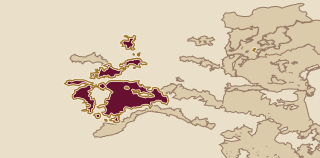
Atlas locationPiemonte · Italy44.62° N · 7.95° E

At A Glance

Producer: Fratelli Serio & Battista Borgogno Location: Cannubi, Barolo DOCG, Piedmont, Italy Founded: 1897 Generation: Fifth (currently led by sisters Federica Boffa and Emanuela Bolla) Flagship: Barolo Cannubi DOCG (100% Nebbiolo) Farming: Organic Key grape: Nebbiolo

The Producer

Fratelli Serio & Battista Borgogno farms three hectares at the centre of Cannubi, the most debated single-vineyard cru in Barolo, and has done so without interruption since 1897. The estate is small and the range is compact: a flagship Barolo Cannubi, a Langhe Nebbiolo, a Barbera d'Alba Superiore, a Dolcetto, and a Langhe Nascetta white from a rare indigenous Piedmontese grape.

What sets the estate apart is not the address alone but what the family does with it. Fermentation happens in large wooden vats. Ageing happens in large Slavonian oak casks, each holding 25 to 50 hectolitres, which transfer slow, even oxygen contact without the vanilla or toast of smaller barrique. Every vintage, the three Cannubi parcels, named Gourat, Battista, and Nuova, are tasted separately and blended from scratch. No locked formula carries forward from one year to the next.

The estate is now in its fifth generation. Sisters Federica Boffa and Emanuela Bolla lead it today, following mothers Anna and Paola, who held winemaking authority before them.

Place

Cannubi sits between the communes of La Morra and Barolo village in the Barolo DOCG, the appellation built around Nebbiolo in the Langhe hills of Piedmont. It faces south to southwest on a saddle of land that rises and falls between two geological formations, a position that has made it one of the most argued-over vineyard names in Italy.

Barolo produced from Serralunga d'Alba, on its compact Helvetian soils, tends toward power and density. Barolo from La Morra, on looser Tortonian marls, tends toward aromatic lift and earlier approachability. Cannubi sits at the junction and draws from both. The wines are perfumed and long-lived without the sheer weight of a Serralunga. They open sooner than a typical Castiglione Falletto but carry more grip than the softest La Morra style. That middle character is not accidental; it is written into the geology.

The Cannubi label appears on many bottles from different producers because the cru covers a larger area than the Borgogno holding. Three hectares in the centre of the hill, distributed across three sides, is a very specific claim within that broader name.

Soil And Site

The Borgogno parcels on Cannubi sit where two geological components meet: Elveziano soils, a sandstone and clay formation from the Helvetian epoch, and Tortoniano soils, the calcareous marl that dominates much of the Barolo DOCG. The Elveziano component is the older, more compact layer; the Tortoniano is looser and richer in limestone.

Cannubi's soils are thin sand and limestone. The Elveziano fraction provides drainage and gives the vine moderate stress; the Tortoniano fraction supplies the mineral charge that shows in the wine's long acidity and angular tannins. Growing Nebbiolo on this thin, mixed ground keeps yields naturally low and concentrates both aroma and grip.

Story

Cavalier Francesco Borgogno began producing wine in the mid-1800s from the Cannubi area, and when brothers Serio and Battista formalised the estate in 1897 they built the winery directly on the hill rather than in the valley. That decision locked the family into Cannubi before its international reputation was established.

Five generations later, the estate still ferments in wood and ages in large Slavonian oak casks of the same scale and type the brothers would have used, while most Barolo producers have moved toward shorter macerations, smaller barrique, or at least partial modernisation. The Borgogno commitment to a 30 to 40 day maceration and a 30 month oak ageing programme is not a marketing position; it shapes every bottle the estate releases.

The female-led fifth generation carries the same production logic forward. Federica and Emanuela did not redesign the cellar or change the house style when they took over. They continued the organic farming their predecessors had established and maintained the annual parcel-by-parcel blending practice that has always defined the flagship.

Vineyards And Cellar

The three hectares on Cannubi are divided across three named parcels: Gourat, Battista, and Nuova, positioned on three main sides of the hill. The Nebbiolo from each parcel is fermented and aged separately before the annual blending decision.

Fermentation takes place in large wooden vats with frequent remontage, the pump-over technique that submerges the grape solids and extracts colour and tannin. The maceration runs for 30 to 40 days, which is at least twice the minimum legal requirement for Barolo and longer than most traditionally styled producers use today. The extended contact pulls deep tannin from the skins and builds the backbone that the wine needs for a decade of ageing.

After fermentation, the wine moves to large Slavonian oak casks for 30 months. Large-format oak allows slow oxidation without the strong aromatic imprint of new barrique. A further 6 months in horizontal racks follows before release. The total elevage from harvest to release runs well past three years.

The Barbera d'Alba Superiore takes a different route. Fermentation happens in stainless steel rather than oak, which preserves the grape's primary fruit character. Prolonged maceration deepens colour and tannin, and the wine then ages for a minimum of 12 months in a combination of large and small oak casks. The Superiore DOC designation requires longer ageing than standard Barbera d'Alba, and the Borgogno version uses that time to build body and integrate the oak while keeping the grape's natural acidity forward.

Wines

The Barolo Cannubi DOCG is the estate's central wine. It is 100% Nebbiolo from Gourat, Battista, and Nuova, blended annually. The nose on the 2021 opens with raspberry, balsamic, and a mineral thread. On the palate the wine is medium-bodied with firm, angular tannins, refreshing acidity, and a long finish. Jancis Robinson scored it 17.5+ out of 20; Decanter gave 92 points in 2025. It is drinkable over the next 10 years and remains approachable but far from its peak.

The Langhe Nebbiolo DOC is the estate's Nebbiolo entry point, carrying the broader Langhe appellation label rather than Barolo DOCG. It draws on the same grape but without the extended maceration and prolonged oak programme of the flagship.

The Barbera d'Alba Superiore is 100% Barbera with a colour that reads intense ruby with purple reflections. The nose shows ripe cherry, plum, spice, and chocolate alongside a faint wood note. The palate is full with lively acidity, soft and integrated tannins, and a long fruity-spicy finish. Drink within five to seven years of vintage.

The Dolcetto rounds out the red range, sourced from the Langhe. The Langhe Nascetta is a white wine from the rare indigenous Nascetta grape, a variety that has been revived across Piedmont over the past two decades and sits on the Borgogno range as a nod to that indigenous white tradition.

In The Glass

The Barolo Cannubi 2021 opens mid ruby with early orange tinges at the rim, a colour signal that the tannins are beginning their long evolution. Raspberry and balsamic rise from the glass first, with a mineral undercurrent that tracks the Cannubi geology rather than oak. On the palate the wine is neither soft nor aggressive: medium body, an acid line that keeps the fruit sharp, and angular tannins that pull across the finish without softening. Nothing about it is ready. The long maceration has laid down tannin that needs time to resolve, and the 30 months in Slavonian oak have added weight without covering the grape's character with wood flavour. It is drinkable over the next 10 years.

The Barbera d'Alba Superiore reads differently. The steel fermentation has kept the primary fruit vivid: cherry and plum are forward and clear, the spice note comes from the oak contact that followed rather than from a blended wood character. The acidity is lively and direct, the tannins soft and already integrated. Where the Barolo asks for patience, the Barbera rewards opening now.

A Bottle To Understand It

Start with the Barolo Cannubi DOCG. It is 100% Nebbiolo from three parcels on the centre of Cannubi, fermented in wood for up to 40 days and aged in large Slavonian oak for 30 months. The 2021 opens with raspberry, balsamic, and mineral on the nose, then delivers medium body, angular tannins, and a long acid-driven finish. No barrique sweetness, no soft early fruit. The wine is precise in a way that only shows once the tannins begin to knit, which takes years. Buy it now, drink it over the next 10 years, and the combination of Cannubi's geological midpoint and the Borgogno cellar programme will be legible in every sip.

Anecdote

In 1897, brothers Serio and Battista Borgogno built their winery directly on Cannubi rather than in the more convenient valley below. At that moment Cannubi was a known hill in the Barolo area but far from the contested global address it would become. They were not buying into a famous name; they were committing to a specific saddle of sand and limestone above Barolo village because they believed the ground was worth farming from the inside. The winery they constructed that year still stands on the hill. The five generations that followed it have farmed the same three hectares, in the same three parcels, using the same large wooden vats and Slavonian oak casks, without relocating, selling, or restructuring the estate.

Final Word

Fratelli Serio & Battista Borgogno has stayed in one place, on three hectares of Cannubi, for 128 years. The cellar methods have not changed to follow fashion. The blending decision is remade fresh every vintage. What arrives in the bottle is a Barolo shaped by one of Piedmont's most contested hillsides and by a family that decided very early on that the hill was worth the commitment.

Sources

Keep following the thread

Where to go next

placeRead the Piemonte guideSee Fratelli Serio & Battista Borgogno in the wider setting of Piemonte.mapFind Fratelli Serio & Battista Borgogno on the mapKeep the producer, its region and nearby places together.learningUnderstand NebbioloRead the quick library guide to Nebbiolo, which is listed with this producer.