At A Glance
Producer: Gianfranco Alessandria Village: Monforte d'Alba Appellation: Barolo DOCG, Barbera d'Alba DOC, Dolcetto d'Alba DOC Grapes: Nebbiolo, Barbera, Dolcetto Wine: Barolo San Giovanni Vineyard: Around seven hectares Style: Modernist: short macerations, temperature-controlled fermentation, small French oak
The Producer
In 1986, Gianfranco Alessandria took over four hectares of vines in Monforte d'Alba from his father Giuseppe and made a decision that reshaped what the family did with them. Giuseppe had farmed the land and sold the grapes. Gianfranco bottled them under the family name, expanded the holding to around seven hectares, and pointed the winery at Barolo. That pivot now runs through the whole estate: a small, focused range built on Nebbiolo from the San Giovanni vineyard in Monforte d'Alba, one of the main communes inside the Barolo production zone in the Langhe hills of Piemonte.
Gianfranco's daughters Vittoria and Marta run the winery today. Marta brings formal oenological training; the estate's winemaking vocabulary has grown with it, though the address and the fruit remain the same.
Place
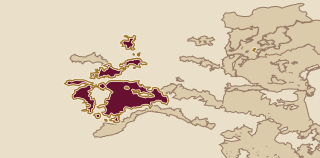
Monforte d'Alba sits in the southern arc of the Barolo zone, the DOCG appellation that covers eleven communes in the Langhe hills south of Alba in Piemonte. Nebbiolo grown in Monforte tends toward fuller body and firmer tannin than the wines from the lighter Tortonian soils farther north around La Morra: the Helvetian soils here, a compact mixture of limestone and clay, give the grape more to push against.
The San Giovanni vineyard is in Monforte d'Alba. Its position within the commune shapes the character of Barolo San Giovanni: deeper colour, more grip on the mid-palate, and the slow aromatic development.
Soil And Site
The Langhe hillsides in Monforte d'Alba carry a mix of limestone and clay, with compact Helvetian sediments that drain adequately but hold enough moisture to keep Nebbiolo from stressing in dry years. This soil type contributes to the tannin grip and aromatic depth that distinguishes Monforte Barolo from lighter-soiled communes to the north. The estate farms seven hectares across this terrain, growing Nebbiolo on the parcels best suited to Barolo, with Barbera and Dolcetto occupying the remaining land.
Story
Giuseppe Alessandria established the family presence in Monforte d'Alba across four hectares. When his son Gianfranco took over in 1986, the question was not whether to keep farming but what to do with the fruit. Selling grapes had sustained the family. Bottling them under a family label was a different kind of bet: it required a winery, a market, and a name worth putting on glass.
Gianfranco made all three work. He expanded the estate to around seven hectares, built the cellar infrastructure for estate bottling, and moved toward the modernist Barolo style then gaining ground in the Langhe: shorter macerations to soften tannin, temperature-controlled fermentation for aromatic clarity, and small French oak barrels in place of the large Slavonian casks of the older tradition. The San Giovanni Barolo became the estate's argument: that Monforte Nebbiolo handled this way could be both approachable in youth and built for the long term.
When Vittoria and Marta took over from their father, the direction held. Marta's oenology training brought new technical grounding to choices that Gianfranco had made by instinct and observation.
Vineyards And Cellar
Fermentation takes place in vertical, temperature-controlled stainless steel tanks with short macerations. Keeping maceration time brief softens the extraction of coarse tannin from Nebbiolo skins, giving the wine more approachable fruit on release without sacrificing the structural depth that Monforte sites provide.
Ageing moves into small French oak barrels, 225 litres each. The Barolo San Giovanni spends 24 months in this wood, with 40 percent new oak and the remainder second- and third-passage barrels. The proportion of new oak adds vanilla and spice without overwhelming the fruit; the older barrels contribute oxygen exposure and gentle integration rather than primary oak flavour. The combined regime shapes a Barolo that is more forward than a large-cask traditional wine but carries enough weight and tannin to develop further in bottle.
The standard Barbera d'Alba is fermented in the same temperature-controlled tanks. The estate also produces a Barbera d'Alba Vittoria, a separate elevated cuvee named for the elder daughter.
Wines
The range runs across three appellations and four labels.
Dolcetto d'Alba is the lightest red in the range, made from Dolcetto grown on the estate's Langhe parcels. Dolcetto produces wines with soft tannin, low acidity, and dark fruit from these hillside soils.
Barbera d'Alba is the standard Barbera bottling. In the glass it is deep ruby red, very dark and intense. The nose carries cherry, blackberry, and strawberry, the ripe red-fruit profile that Barbera produces when grown on Langhe clay and limestone. Barbera naturally lacks the coarse tannin of Nebbiolo, which makes it drinkable younger and more forgiving of food.
Barbera d'Alba Vittoria is the elevated Barbera cuvee, named for Gianfranco's eldest daughter. It sits above the standard bottling in the range hierarchy. The specific oak regimen differs from the standard wine, though the exact treatment is not publicly detailed.
Barolo San Giovanni is sourced from the San Giovanni vineyard in Monforte d'Alba. Nebbiolo at this address gives deep colour, pronounced tannin, and the high natural acidity that defines Barolo. Twenty-four months in 225-litre French oak, 40 percent new, shapes a wine with spice, dark fruit, and the grip to develop over years.
In The Glass
The Barbera d'Alba opens with cherry, blackberry, and strawberry, fruit-forward and immediate. The colour is dark ruby, nearly opaque. Barbera's low natural tannin means there is no resistance in the mouth; the wine moves easily, with enough body to sit alongside food and enough freshness to avoid heaviness. It is the range's most immediate red.
The Barolo San Giovanni is a different proposition. Nebbiolo from Monforte d'Alba produces a wine that is closed when young: the tannin is firm, the colour garnet-deep, and the aromas take time to open from their initial tightness into the dried rose, tar, and dark cherry that define mature Barolo. Twenty-four months in small French oak adds a layer of spice and a rounder edge to the mid-palate than a large-cask wine would show at the same age. The acidity remains high, carrying the wine through the finish and underpinning its capacity to age. The wine needs food or time.
A Bottle To Understand It
Start with the Barolo San Giovanni. It is Nebbiolo from the San Giovanni vineyard in Monforte d'Alba, aged 24 months in 225-litre French oak barrels, 40 percent of them new. The wine is garnet red in the glass, with firm tannin, high acidity, and the dried fruit and spice character that small-oak Barolo shows after a few years in bottle. It is not a wine to open the same day it arrives: give it air, or give it years. Either way, it explains what the estate does and where it sits in the Barolo landscape. A family-run Monforte producer choosing modernist cellar work and releasing it under a name that was in bulk sales thirty years ago: the bottle carries all of that.
Anecdote
When Gianfranco Alessandria took over the family farm in 1986, his father Giuseppe had never put the family name on a bottle. Four hectares of Nebbiolo, Barbera, and Dolcetto in Monforte d'Alba had sustained the household by selling fruit in bulk, the way most small Langhe growers worked at the time. Gianfranco changed this immediately. He built the infrastructure for estate bottling, placed the Alessandria name on the label, and began making Barolo from the San Giovanni vineyard. Years later, when his eldest daughter Vittoria was old enough to be part of the story, he gave her name to a separate Barbera bottling. The Barbera d'Alba Vittoria now sits in the range as a named cuvee carrying her name on every label, a gesture that turned the original decision to put the family name forward into something that would outlast the generation that made it.
Final Word
Gianfranco Alessandria is a small Monforte d'Alba estate with a clear direction: Barolo from San Giovanni, made in the modernist style, and a Barbera range alongside it. Gianfranco's daughters run it now, and the winery's shape has not changed since he set it. The San Giovanni Barolo is the bottle to seek.