NoleaWorld of Wine

Piemonte · Italy

Producer profile

Vietti

Vietti is a four-generation Castiglione Falletto estate that pioneered single-vineyard Barolo in 1961 and rescued Roero Arneis from near-extinction in 1967.

Place
Piemonte · Italy
Known for
Barolo from named single-vineyard crus (Rocche di Castiglione, Brunate, Villero, Lazzarito); Roero Arneis
Wine context
Barbera · Chardonnay · Nebbiolo · Pinot Grigio / Pinot Gris
Editorial basis
World of Wine editorial profile · 7 sources

World of Wine editorial profile · Source list ↓

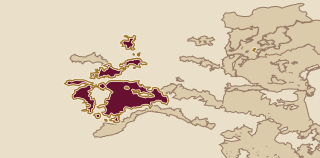
Atlas locationPiemonte · Italy44.62° N · 7.98° E

At A Glance

Producer: Vietti Village: Castiglione Falletto Region: Langhe, Piedmont, Italy Grapes: Nebbiolo, Barbera, Arneis, Moscato Bianco Key Wines: Barolo crus (Rocche di Castiglione, Brunate, Villero, Lazzarito), Roero Arneis, Barbera d'Alba Style: Traditional Barolo from named single-vineyard crus; unoaked Arneis; forward Barbera Entry Bottle: Roero Arneis

The Producer

Vietti sits in Castiglione Falletto, a hilltop village that looks out over the Barolo production zone from its centre. Carlo Vietti founded the estate there around 1873, and four generations of the family have worked the same address since. The estate makes Nebbiolo-based Barolo and Barbaresco, Barbera in two appellations, Moscato d'Asti, and Roero Arneis, but two decisions from the 1960s give the range its character: in 1961, winemaker Alfredo Currado bottled a single-vineyard Barolo from Rocche di Castiglione at a time when no one was doing it, and in 1967, the estate produced the first commercial pure-varietal Arneis, reviving a white grape that had nearly vanished from Piedmont.

Currado joined the estate in 1960 and changed the direction of the cellar almost immediately. Before his arrival, Barolo was blended from multiple sources and sold without vineyard attribution. Currado's insistence on separating what each site produced is now the standard model across the appellation. The estate today runs four named Barolo crus alongside its full range, and Barbera, perhaps unexpectedly, accounts for half of total production.

Place

Castiglione Falletto is a commune in the Langhe, the chain of hills in southern Piedmont that runs south from Alba toward the Ligurian Alps. The Barolo DOCG surrounds the village and its neighbours; the appellation name, Barolo, comes from a village to the southwest. Nebbiolo is the only grape permitted in Barolo and Barbaresco, the two serious red appellations anchoring this part of Piedmont.

The estate's most powerful cru sits outside its home village. Lazzarito is a vineyard in Serralunga d'Alba, a commune at the southeastern edge of the Barolo zone known for compact, calcareous soils and wines with notably firm tannin and long cellaring requirements. That address changes the label: Barolo Lazzarito carries the Serralunga name, and its drink window, opening from 2026 on the 2019 vintage, reflects how the place handles Nebbiolo.

Arneis comes from across the Tanaro river. The Roero zone sits on the opposite bank from Barolo, on sandier, lighter soils, and the Roero DOC gives the Arneis grape its label. The geography separates the two whites in the range by more than name: Arneis on Roero sand ferments at low temperature in steel and never touches oak, producing a wine that tastes nothing like the Nebbiolo on the hills opposite.

Soil And Site

Lazzarito is a bowl-shaped vineyard at 260 to 390 metres altitude in Serralunga d'Alba. Vines average 42 years old, a maturity that limits yields and concentrates the Nebbiolo fruit before it enters the cellar. The elevated, south-facing amphitheatre orientation gives the site a long growing season, which at Serralunga means more tannin extraction and a finish that requires years to open.

Story

When Alfredo Currado took over the cellar in 1960, Barolo was sold as a regional blend. Grapes from Brunate, Rocche, Villero, and Lazzarito went into the same vat, and the label said Barolo without elaboration. Currado decided the individual vineyards were producing differently enough to bottle separately. In 1961 he vinified the Rocche di Castiglione parcel alone and put the vineyard name on the label.

The immediate consequence was one bottle. The longer consequence was a labelling convention that now covers the entire appellation. By the late twentieth century, single-vineyard crus had become the primary way Barolo and Barbaresco producers communicated quality, origin, and price. Currado had not theorised the change; he had made a practical decision about what the fruit was doing.

Six years later the estate turned to a disappearing grape. By the 1960s, Arneis had almost no commercial presence in Piedmont. A few rows of vines remained. In 1967, Vietti produced the first commercial bottle of pure-varietal Roero Arneis, creating an appellation wine from something that was close to extinct. Roero Arneis is now a recognised DOC with multiple producers. Vietti's 1967 decision sits at the start of that category.

Vineyards And Cellar

Nebbiolo wines age in large botti, the traditional large-format Slavonian oak casks that impart minimal oak flavour while allowing slow oxidation and gradual tannin softening. The format suits Nebbiolo's natural grip: the large surface-to-volume ratio of barriques would add detectable oak character that competes with the grape's own aromatic profile. Lazzarito spends 30 months in large cask before bottling.

Barbera takes a different path. It spends 6 to 8 months in barriques, giving the grape a rounder, more forward profile with slightly more oak presence than the Nebbiolo wines. The difference in vessel matches the difference in purpose: Barbera is the earlier-drinking, higher-volume part of the range.

Arneis is handled in steel with no oak contact. Harvest happens in early September to preserve freshness. Fermentation runs at 14 to 16 degrees Celsius with natural carbon dioxide retained, and the wine ages on lees in tank before release. The low-temperature fermentation and extended lees contact build texture without adding weight, keeping the wine's citrus and melon character intact.

Wines

The range divides across three tiers by grape and aging trajectory.

At the lighter, earlier-drinking end: Moscato d'Asti from 100% Moscato Bianco at 5% alcohol, lightly sparkling and sweet, with peach, apricot, pear, rose petal and fresh ginger, its sweetness lifted by fresh acidity. Roero Arneis sits alongside it in weight if not in style: dry, medium-bodied, with citrus, melon and fresh flowers on the nose, a mineral thread through the mid-palate, and an almond note on the finish. Both bottles are for drinking young.

Barbera occupies the mid-range. The 6 to 8 months in barriques adds a plush, forward quality that Nebbiolo in large botti never has. Barbera d'Asti and Barbera d'Alba come from two appellations, and together they account for half the estate's production.

The Barolo crus are the long-term tier. Rocche di Castiglione, the estate's home vineyard and the first named cru the estate bottled, sits in the central Barolo zone. Brunate and Villero are neighbouring crus. Lazzarito, from Serralunga d'Alba, is the most compact and mineral of the four, with tannins that take the longest to settle. All four age in large botti and need significant cellar time before they begin to show their full character.

In The Glass

Roero Arneis opens with citrus and melon, fresh-cut flowers and a mineral note that runs through the mid-palate. The finish carries a faint almond character that is specific to Arneis and not typical of the Chardonnay or Pinot Grigio that dominates northern Italian whites. Acidity is fresh rather than sharp, and the medium body makes the wine easy to read from the first sip.

Barbera in barriques delivers riper, rounder fruit than the Nebbiolo wines. The short oak contact adds a slightly plush texture without making the wine heavy; it drinks earlier and more readily than anything from the Barolo range.

Barolo Lazzarito is a different proposition. The nose is high-toned, with red fruit and a floral top note typical of Nebbiolo on calcareous soils. In the mouth, the tannins are dense and mineral rather than soft, gripping the palate through a long finish. The wine spends 30 months in large cask before bottling. The 2019 vintage opens from 2026 and has a window through 2046, which gives a sense of the patience required.

A Bottle To Understand It

Start with Roero Arneis. It is 100% Arneis from the Roero zone, fermented cold in steel and aged on lees with no oak, and it delivers what the estate does with a white grape that nearly disappeared: clean, citrus-forward, medium-bodied, dry, with a mineral thread and an almond finish that no other common Italian white quite matches. It does not require any knowledge of Barolo to appreciate. It also carries the date 1967 behind it, the year Vietti produced the first commercial bottle of this variety, which means the glass has a small piece of regional history in it. This is the right first bottle: affordable, immediate, and specific to this producer in a way that a generalist Piedmont white is not.

Anecdote

In 1961, Alfredo Currado separated the harvest from the Rocche di Castiglione vineyard and vinified it alone. At the time, Barolo was blended from whichever parcels a producer held and sold without vineyard attribution on the label. Currado had been watching what each site produced since taking over the cellar the previous year, and the Rocche fruit was behaving differently enough that he decided not to blend it away. The bottle that came out of that decision carried the vineyard name on the label, making it one of the first named single-vineyard Barolos in the appellation's history. By the end of the twentieth century, virtually every producer in Barolo and Barbaresco was naming the vineyard on the label. Currado had not written a manifesto or argued for a new category. He had paid attention to one harvest and made a practical choice about where the grapes belonged.

Final Word

Vietti is a Castiglione Falletto estate with two acts in its history that shaped categories, not just bottles: single-vineyard Barolo in 1961, and pure-varietal Roero Arneis in 1967. The range today runs from approachable whites to Barolo crus built for decades in the cellar. The Arneis is the way in; the Lazzarito is where the range arrives.

Sources

Keep following the thread

Where to go next

placeRead the Piemonte guideSee Vietti in the wider setting of Piemonte.mapFind Vietti on the mapKeep the producer, its region and nearby places together.learningHow place shapes wineSee how climate, landscape and local choices become part of a wine.