NoleaWorld of Wine

Piemonte · Italy

Producer profile

Fontanafredda

Fontanafredda farms approximately 120 certified-organic hectares in Serralunga d'Alba from vineyards that once belonged to Italy's first king. Its range moves from Langhe Nebbiolo through communal Barolo to single-vineyard crus, including La Rosa, which the estate declared the first certified cru Barolo in the Langhe in 1964.

Place
Piemonte · Italy
Known for
Barolo DOCG, Serralunga d'Alba
Wine context
Nebbiolo
Editorial basis
World of Wine editorial profile · 7 sources

World of Wine editorial profile · Source list ↓

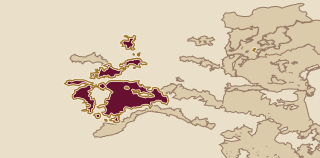
Atlas locationPiemonte · Italy44.64° N · 7.99° E

At A Glance

**Location**
Serralunga d'Alba, Piemonte, Italy
**Grape**
Nebbiolo
**Appellation**
Barolo DOCG, Langhe DOC, Alta Langa DOCG
**Vineyards**
Approximately 120 hectares, certified organic
**Cellar**
Nineteenth-century cellars; oak casks, steel vats
**Range**
Ebbio Langhe Nebbiolo through single-vineyard cru Barolos

The Producer

Fontanafredda farms approximately 120 certified-organic hectares in Serralunga d'Alba, at the southern end of the Barolo zone in Piemonte. It is one of the largest private estate holders in the zone, and its vineyards trace their ownership to Italy's first king. The range runs from village-level Langhe Nebbiolo through communal Serralunga Barolo to named single-vineyard crus, with all wines built on Nebbiolo grown on the estate's own land.

The estate's most argued bottle is La Rosa, a single-vineyard Barolo that Fontanafredda vinified separately from 1964 and declares the first certified cru Barolo in the Langhe. That claim sits alongside a founding chronology of concrete technical ambition: the estate installed what it records as the first concrete fermentation vats in Europe in 1887, when most Langhe producers still fermented in wood.

Place

Serralunga d'Alba sits at the southern end of the Barolo production zone on compact Helvetian soils, calcareous marl laid down when this part of Piemonte was still under a shallow sea. The geology is denser and less fertile than the Tortonian soils further north around La Morra and Barolo village, and the difference is legible in the glass. Nebbiolo from Serralunga tends to produce firm, tight tannin, pronounced acidity, and wines that need years before they open fully.

Fontanafredda's soils are chalky at the base, with local variation in sand and silt content across the estate's parcels. The Lazzarito parcel, where La Delizia sits, narrows to a strip of marl, limestone and clay perched above the village. The communal Barolo label reads Barolo del Comune di Serralunga d'Alba, and that designation is not decorative: Serralunga is one of only a handful of Barolo communes whose name can appear on the label as a legal qualifier, and it signals a particular style of wine.

Soil And Site

The dominant soil type across the Fontanafredda estate is chalky calcareous marl, consistent with Serralunga's Helvetian geological base. The chalk helps Nebbiolo retain acidity at full ripeness, which in turn supports the long ageing arc that Serralunga Barolo is known for. Locally, the parcels vary in their sand and silt proportions, which affects drainage and the speed at which the vines reach maturity. La Delizia, within the Lazzarito vineyard, grows on a narrower strip of marl, limestone and clay that runs along a ridge above the village.

Story

The land that became Fontanafredda entered recorded history when Vittorio Emanuele II, the first king of unified Italy, purchased his first Barolo vineyard in 1866. The estate and hamlet took the name Fontanafredda, and the vineyard he named La Rosa after his morganatic wife, Rosa Vercellana, was planted alongside the hunting grounds where the king retreated from Turin.

After Vittorio Emanuele's death, his son Emanuele Alberto di Mirafiori transformed the private royal estate into a working winegrowing enterprise in 1878. He installed specialist paid staff across more than 300 hectares, a scale and employment model that had no precedent in the Langhe. Nine years later, in 1887, Emanuele Alberto added concrete fermentation vats to the cellar. The estate records these as the first such vats in Europe, and whether or not that priority is unassailable, the date puts Fontanafredda decades ahead of widespread concrete adoption in winemaking.

The enterprise did not survive the twentieth century intact. Phylloxera damaged the vineyards, and the Great Depression finished the work. In 1931 the land and cellars were sold to Monte dei Paschi di Siena, the Tuscan bank, which held the estate for 77 years. In 2008 Oscar Farinetti and Luca Baffigo purchased Fontanafredda, returning it to Piedmontese ownership. Seven years later, in 2015, the conversion of all estate vineyards to organic agriculture began. The first certified-organic harvest came in 2018.

Vineyards And Cellar

Fontanafredda's organic regime excludes chemical fertilizers, herbicides and systemic treatments across all approximately 120 hectares. The estate uses controlled grassing between rows, which keeps the soil active, limits erosion on the slopes, and forces the Nebbiolo vines to compete for nutrients, concentrating what the fruit carries into the cellar. That competition tends to reduce yields and sharpen the aromatic intensity of the grape.

The cellar occupies nineteenth-century buildings on the estate. Oak casks and steel vats handle red wine ageing. The concrete vats installed in 1887 are still part of the estate's infrastructure. For the Ebbio Langhe Nebbiolo, the wine ages in wood for at least four months before spending one to two months in bottle before release. The Barolo range ages in the historic cellars in a mix of oak cask and steel, consistent with the communal-level and cru wines' need for extended élevage before the tannin from Serralunga's calcareous soils softens enough for the bottle to open.

Wines

Nebbiolo runs through every level of the range. The entry point is Ebbio Langhe Nebbiolo DOC, drawn from hillside parcels in the Roero and Langhe rather than solely from Serralunga. The whole-cluster fermentation gives Ebbio a slightly different character from the estate's Barolos: softer, warmer, with a velvety fullness and more immediate fruit. The wood ageing adds weight without dominating; it is an earlier-drinking wine built for the first years after release.

The Barolo del Comune di Serralunga d'Alba DOCG, sold as Renaissance, carries the communal village designation. It is vinified in the historic cellars using oak casks and steel vats, and the 2020 vintage shows the spice, dried rose and firm tannin that the Serralunga soils typically produce. This is the wine that most directly expresses the estate's home village: whole-commune character, long ageing capacity, and the particular grip of Helvetian calcareous marl.

La Rosa Barolo DOCG is a single-vineyard cru. Fontanafredda first vinified it separately in 1964 and calls it the first certified cru Barolo in the Langhe. The parcel carries a named personal history: it was purchased by Vittorio Emanuele II in 1866 and named after Rosa Vercellana. La Delizia Barolo DOCG comes from a parcel within the Lazzarito MGA, on a marl, limestone and clay ridge above the village, a site with different drainage and soil density from the broader estate.

Contessa Rosa Alta Langa DOCG is a traditional-method sparkling wine. Fontanafredda produced its first version in 1959 and treats it as the foundation of its present Alta Langa work, a category that has grown significantly in market recognition over the past decade.

In The Glass

Serralunga Nebbiolo arrives with dried rose, tar and spice on the nose: the classic aromatic register of the grape on calcareous soil. In the mouth the tannin is firm from the first sip and stays present through the finish, not harsh but definite, the kind that comes from compact marl rather than sandy Tortonian soils. The acidity is high and keeps the wine feeling alive even when the fruit is still closed. On the Ebbio, the whole-cluster fermentation and shorter ageing translate into a softer, warmer version: the Nebbiolo character is recognizable but the tannin has less grip and the body is fuller and more immediate. At the Barolo level, and more so at the cru level, the wines need time. A young Renaissance Barolo from a firm vintage like 2020 gives you the profile clearly: dried cherry, iron, spice and tannin that asks for a few more years. The finish is long and mineral, consistent with Serralunga's chalk-dominated soils.

A Bottle To Understand It

Start with the Barolo del Comune di Serralunga d'Alba Renaissance. It is a communal-level Barolo vinified from Fontanafredda's estate Nebbiolo in the historic cellars using a mix of oak cask and steel vat. The label's Serralunga d'Alba designation identifies the village and its geological character: calcareous marl, firm tannin, long ageing arc, and that iron-and-rose aromatic signature that separates Serralunga from the softer communes to the north. A Barolo from a decade like 2016 or 2019 will already show how the wine opens: spice and dried cherry with a mineral, dry finish. A younger vintage like 2020 needs time. Either way, this bottle shows the estate's location and its cellar method more directly than the Ebbio or the crus.

Anecdote

Vittorio Emanuele II bought the La Rosa vineyard in 1866. He named it after Rosa Vercellana, the Piedmontese woman he had married morganatically two years before his death, outside the rules of dynastic succession and without legal claim on the crown. The name was personal rather than commercial: a private piece of land named for a private attachment. Nearly a century passed before anyone treated the parcel differently from the rest of the estate. In 1964 Fontanafredda vinified La Rosa separately from the broader harvest and declared it a single-vineyard Barolo, registering it as the first certified cru Barolo in the Langhe. The wine has carried that designation since. Every bottle of La Rosa still reads the name a nineteenth-century king gave to a vineyard he meant as a private gesture, and it now carries one of the oldest documented single-vineyard records in the appellation.

Final Word

Fontanafredda is a large Serralunga estate with a royal founding, a century of difficult ownership history, and a present built on organic farming and a clear hierarchy of Nebbiolo wines. Its home village gives the bottles their character: firm tannin, high acidity, long ageing. The communal Barolo is the clearest first introduction to that character; the crus La Rosa and La Delizia show where the individual parcels take it.

Sources

Keep following the thread

Where to go next

placeRead the Piemonte guideSee Fontanafredda in the wider setting of Piemonte.mapFind Fontanafredda on the mapKeep the producer, its region and nearby places together.learningUnderstand NebbioloRead the quick library guide to Nebbiolo, which is listed with this producer.