At A Glance
Estate: G.D. Vajra Village: Vergne, Commune of Barolo Region: Piemonte, Italy Grapes: Nebbiolo, Dolcetto, Barbera, Moscato Bianco Farming: Certified organic since 1971 Current generation: Giuseppe, Francesca, and Isidoro Vajra
The Producer
G.D. Vajra sits higher than almost anyone else in Barolo. Vergne is the uppermost village in the Barolo commune, and the family vineyards climb between 350 and 400 metres above sea level. That altitude is not incidental: it pulls harvest later into autumn, holds acidity in the fruit, and produces Nebbiolo with a cooler, more restrained character than the wines from lower villages in the zone.
Aldo Vajra built the estate while working as a schoolteacher. He farmed organically from 1971, before certification systems existed for it and before the idea had any commercial currency in Barolo. Three of his children, Giuseppe, Francesca, and Isidoro, now run the winery and farm the same way.
The range moves from the Langhe Nebbiolo Claré J.C. at entry level through the Barolo Albe at the village Barolo tier, with Moscato d'Asti as a separate register entirely. Nebbiolo runs through the spine of the estate; Dolcetto and Barbera also grow in the Vergne vineyards.
Place
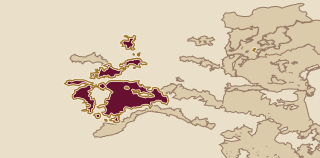
Barolo is a DOCG appellation in the Langhe hills of southern Piemonte. It takes its name from the village of Barolo but covers eleven communes, and the character of the wine shifts noticeably across the zone. Vergne, on the western edge of the appellation within the Commune of Barolo, sits at one of the highest points available in the DOCG. The altitude adds weeks to the growing season and keeps temperatures lower than the warmer valley floors further south, which means the grapes arrive at harvest with more natural acidity and a cooler fruit register.
The Langhe denomination, which covers a broader territory around the Barolo and Barbaresco zones, allows Vajra to bottle Nebbiolo under the Langhe DOC label without the ageing requirements that Barolo DOCG demands. The Claré J.C. sits in that tier: Nebbiolo from Vergne altitude, released young and unoaked.
Soil And Site
Vergne's vineyards sit on the higher terraces of the Barolo zone. At 350 to 400 metres, the parcels face a range of aspects. The elevation slows sugar accumulation and preserves the grape's natural acidity, which gives Nebbiolo from this address a firmer, more angular profile at harvest than fruit grown on the warmer lower slopes further into the appellation.
Story
Aldo Vajra came to farming the family land in the early 1970s alongside a career in teaching. The two lives ran in parallel: school terms and harvests, classroom and vineyard. In 1971 he committed the estate to certified organic farming. The Barolo zone had no organised organic movement at the time, no collective infrastructure to lean on, and no obvious premium for choosing it. Aldo chose it anyway.
That decision set the direction the family has followed across generations. Giuseppe, Francesca, and Isidoro took over from their father and kept the organic certification intact, now more than fifty years old. Nothing in the range changed: the same grapes, the same village, the same farming philosophy that a schoolteacher chose before most of his neighbours had considered it.
Vineyards And Cellar
Nebbiolo, Dolcetto, and Barbera grow in the Vergne vineyards at between 350 and 400 metres. The altitude extends the ripening arc. Later harvest means the tannins in Nebbiolo have more time to resolve on the vine without losing the acid line that holds the wine together through ageing.
Organic farming across all parcels means no synthetic herbicides, pesticides, or fertilisers. The soil biology stays intact, which influences how evenly vines draw nutrients through the growing season and how consistently fruit ripens within each parcel.
Élevage details for the Barolo Albe are not confirmed in verified sources, so specific oak ageing periods are not stated here. What the tasting record shows is a wine with firm medium-plus tannins, medium body, and holding acidity: the profile of a Nebbiolo that was not pushed toward early softness.
Wines
The Langhe Nebbiolo Claré J.C. is the first wine in the Nebbiolo range. It carries Nebbiolo from the Vergne altitude, bottled young and without extended oak ageing. The colour is ruby and bright. The nose opens on cherries, raspberries, and fresh rose petals with an earthy undertone. The tannins are light and present, the acidity solid. It reads more like a cool-climate red with Pinot-adjacent weight than the dense, structured wines Nebbiolo produces in warmer addresses.
The Barolo Albe is the estate's village-tier Barolo, a DOCG wine drawn from three Vergne vineyards. The 2020 vintage shows cherry, pomegranate, dried herbs, and old wood on the nose at medium intensity. The palate is medium-bodied with medium-plus tannins and acidity that keeps the wine upright. It is a Barolo made for a table and for time in bottle rather than for drinking on release.
Moscato d'Asti, made from Moscato Bianco under the Moscato d'Asti DOCG, occupies a separate register. Golden apple, apricot, and candied peach on the nose, over a floral base. The palate is lively with delicate carbonation and a clean, long finish. At roughly 5.5% ABV, it is one of the lightest wines in the range and has nothing in common with the Nebbiolo bottles except the address.
Dolcetto and Barbera are also grown in the Vergne vineyards.
In The Glass
The Claré J.C. opens with cherries and rose petals lifted by a slight earthiness, the kind of nose Nebbiolo gives when the fruit is harvested with acidity still in charge. In the mouth the tannins are lighter than the grape's reputation suggests: airy and soft rather than gripping, with a clean acid line running through to a fruit-forward finish. It drinks young.
The Barolo Albe is a different register. Cherry and pomegranate on the nose carry dried herb and old wood behind them. On the palate the tannins take hold more firmly: medium-plus, with enough grip to remind you this is Nebbiolo grown for the long term. Medium acidity holds the wine together. The finish is dry and slightly austere on release, softening with a few years.
Moscato d'Asti comes from a different part of the estate's work entirely. The Moscato Bianco grape at low alcohol produces a wine that is sweet without being heavy: the carbonation carries the wine across the palate, the acidity under the fruit keeps it from cloying, and the finish is clean enough to go again.
A Bottle To Understand It
Start with the Langhe Nebbiolo Claré J.C. It is Nebbiolo from the same Vergne vineyards that produce the Barolo, at the same altitude, without the ageing and oak that Barolo DOCG requires. The wine is ruby and clear, the nose is cherries, rose petals, and a touch of earth, the tannins are light and present rather than gripping, and the acidity runs straight through to a clean finish. It shows what Nebbiolo does at 350 to 400 metres when it is left unobscured by barrel time: the grape's natural colour, fruit, and acid, in a bottle you can drink now.
Anecdote
Aldo Vajra was teaching school in the early 1970s and farming the family land in Vergne between terms. He was not a full-time winegrower yet: harvests fit around the academic calendar, and vineyard decisions were made on weekends and in summer. In 1971, working within those constraints, he committed the estate to certified organic farming. Barolo had no organic movement to speak of, no shared knowledge base, no growers' cooperative to make the transition easier. He made the choice without a network and without a price premium waiting on the other side. His children, Giuseppe, Francesca, and Isidoro, now manage the estate. The organic certification Aldo took out while juggling a teaching timetable has held without interruption through every generation change since.
Final Word
G.D. Vajra is a family estate that made its defining choice early and has not revised it. Organic farming in 1971, in Vergne at the top of the Barolo zone, by a schoolteacher fitting harvests around the academic year: that combination produced a winery with a clear physical address, a long farming record, and a range of Nebbiolo wines that carry the cooler end of the appellation into the glass.