
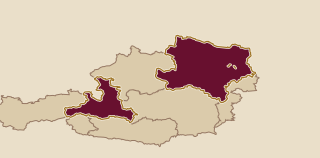
The vineyards extend from the narrow Danube valley in the west to open country near Slovakia in the east. Lower Austria contains eight specific wine regions, with landscapes ranging from the river terraces of Wachau to the broad loess terraces of Wagram. Loess is a fine soil deposited by wind.
Grüner Veltliner, Riesling and Zweigelt
Grapes and styles
Grüner Veltliner accounts for almost half of Lower Austria's vineyard area. Light regional and Weinviertel bottlings can be dry and gently peppery. Fuller versions have more weight in the mouth, and some have the acidity and concentration to age. A village or vineyard name locates their origin more closely.
Riesling occupies far less land, yet it is central to the steep and terraced parts of Wachau, Kremstal, Kamptal and Traisental. These dry Rieslings commonly combine ripe fruit with firm acidity, the mouth-watering freshness in the wine. Zweigelt is the principal red grape by area, particularly important in Carnuntum. Thermenregion also grows the local white grapes Zierfandler and Rotgipfler.
The Danube regions and vineyards around Vienna
Background
Wachau follows the Danube west of Krems, with vineyards rising on terraces above the river. Kremstal surrounds Krems and continues into adjoining valleys and loess-covered land. Kamptal takes its name from the Kamp River and includes both rocky sites and deep loess. Traisental is smaller and lies around another Danube tributary. Grüner Veltliner and Riesling are the principal grapes under the DAC rules in all four. DAC identifies a protected Austrian wine origin with its own grape and production requirements.
East of Krems lie Wagram's broad terraces. Weinviertel covers a much larger area north of Vienna and was Austria's first DAC, with Grüner Veltliner at its centre. Carnuntum lies toward the Slovak border, where warmer conditions suit Zweigelt and other reds. Thermenregion runs south of Vienna and makes red wine, Chardonnay and wines from its local white varieties.
Regional wines and Weinviertel Grüner Veltliner
Everyday bottles
Niederösterreich on a label means the grapes come from the wider federal state. A wine may use that name because its grapes or style do not fit a narrower DAC. Regional Grüner Veltliner, Zweigelt and rosé appear under this broader origin.
Weinviertel DAC is another place to look for a dry Grüner Veltliner. It is widely available and follows rules for that dry style. Village and single-vineyard wines from the Danube regions usually cost more; their labels identify the grapes' origin more closely.
Regional names and Wachau label terms
Read the label
Read the complete origin: Wachau DAC, Kamptal DAC and Carnuntum DAC have different permitted grapes and production rules. A village name gives a more specific origin, and Ried introduces a single vineyard.
Wachau labels may also carry Steinfeder, Federspiel or Smaragd when the producer belongs to Vinea Wachau. These terms distinguish wines under the association's own alcohol and production rules. The red-white-red strip on the bottle's capsule identifies Austrian Qualitätswein, wine that has passed official testing. It does not specify a grape or one of Lower Austria's eight wine regions.
Choosing Grüner Veltliner or Riesling
First bottle
A regional or Weinviertel Grüner Veltliner is a good first bottle if you want a light, dry white with a gently peppery flavour. A dry Riesling from Wachau or Traisental offers firm acidity and ripe fruit.
To compare places, try Grüner Veltliner from Weinviertel alongside one from Kamptal, Kremstal or Wagram. Check the producer's notes too: the wines may differ in vineyard and cellar choices as well as origin. For a red, look for Zweigelt from Carnuntum. Thermenregion whites made from Rotgipfler, Zierfandler or a blend of the two offer local grapes to explore.
8 named areas
Inside the region
Explore the wine-growing areas of Lower Austria.
- 01Carnuntum5 producersCloser to the Pannonian Plain, Carnuntum gives Zweigelt and Blaufränkisch riper cherry fruit and rounder tannin.
- 02Kamptal20 producersCool Waldviertel air, loess and rock terraces shape Kamptal's peppery, high-acid Grüner Veltliner and taut Riesling. The area also produces red wines.
- 03Kremstal6 producersKremstal pairs spicy, ripe Grüner Veltliner with lighter, mineral Riesling.
- 04Thermenregion1 producerIn Thermenregion, indigenous varieties sit alongside fuller styles of white and red wine.
- 05Traisental2 producersTraisental centres on Grüner Veltliner and Riesling, the two main white grapes.
- 06Wachau12 producersRiesling and Grüner Veltliner grow on Wachau's steep Danube terraces of gneiss and loess. The wines can combine concentrated fruit with pronounced acidity; Grüner Veltliner may show apple, tropical fruit and white-pepper notes.
- 07Wagram7 producersWagram's loess soils support ripe, structured Grüner Veltliner and distinctive Roter Veltliner.
- 08Weinviertel8 producersWeinviertel has broad loess hills in Lower Austria. Grüner Veltliner is typically light, crisp and peppery.
Producer profiles
Start with these
Meet 5 producers from across Lower Austria.
- Domäne WachauDürnstein cooperative working organic Wachau parcels, from entry level Riesling to named site wines and Grüner Veltliner Federspiel.
- Weingut BründlmayerA Langenlois estate led by Willi Bründlmayer, known for Grüner Veltliner, Riesling, rocky Heiligenstein sites and bottle-fermented Brut.
- Schloss GobelsburgKamptal estate farming Riesling and Grüner Veltliner since 1171, the oldest documented winery in the Danube region.
- Weingut AlzingerDry Riesling and Grüner Veltliner from steep Wachau terraces in Unterloiben, shaped by rock-rich upper parcels and loess-based lower slopes.
- Weingut Bernhard OttA fourth-generation Grüner Veltliner estate in Feuersbrunn am Wagram, where Bernhard and Maria Ott work named loess sites with hand harvesting, spontaneous fermentation and large Stockinger casks.
Browse 60 more
- Bio Weingut Zahel GmbHFourth-generation Vienna estate farming 35 ha across 95 city parcels; Europe's first Regenerative Organic Certified winery and the home of the Gemischter Satz field blend.
- FJ GritschFJ Gritsch farms steep Wachau terraces around Spitz, with named Riesling and Grüner Veltliner wines.
- GrabenwerkstattBiodynamic Wachau estate farming named Riesling and Grüner Veltliner sites in the Spitzer Graben since 2014.
- Martin MuthenthalerWachau grower Martin Muthenthaler farms named Spitzer Graben plots and makes wild yeast Riesling and Grüner Veltliner.
- MeinklangMeinklang is a Michlits family grower and maker in Burgenland, farming vines with livestock, ancient grains, orchards, ponds and wildland.
- Quantum WineryMaissau winery led by Florian Schuhmann-Irschik, making biodynamic regional grape cuvées across five wine styles.
- Weingut AllramA four-generation Kamptal family estate in Straß, where hand-harvested Grüner Veltliner and Riesling run from village wines to longer-aged reserves.
- Weingut ArndorferOrganic Kamptal estate making Grüner Veltliner in classic, lees-aged and skin-fermented forms.
- Weingut Birgit EichingerA Kamptal estate where Birgit and Gloria Eichinger turn Grüner Veltliner and Riesling from named sites into dry wines marked by orchard fruit, citrus, spice and fresh acidity.
- Weingut Dorli MuhrBlaufränkisch-led wines from Prellenkirchen’s dry, windy Spitzerberg, where limestone, sandy ground and low rainfall shape distinct site bottlings.
- Weingut Familie BauerOrganic Wagram wines from Josef and Eva Maria Bauer, centred on Grüner Veltliner and Roter Veltliner from Großriedenthal’s loess, sand and gravel soils.
- Weingut Familie ProidlA ninth- and tenth-generation Senftenberg estate making site-led Grüner Veltliner and Riesling from steep Kremstal slopes.
- Weingut Familie ReinischFour generations in Tattendorf, with about 40 hectares and a 2023 Pinot Noir aged for ten months in large wooden casks.
- Weingut Familie SchusterA Großriedenthal family estate in Wagram, Schuster centres Roter Veltliner on loess soils, using manual organic farming and gentle cellar work to build dry whites with floral perfume, fruit weight and lees-derived texture.
- Weingut Fichtenbauer-MoldA family-run Langenlois estate focused on Kamptal DAC Riesling and Grüner Veltliner, with vineyards across loess, slate, granite and gneiss.
- Weingut FidesserA family-run Lower Austrian estate where biodynamic vineyard work meets bright Pet Nat Rosé and a large-wood-matured red from Ried Kirchleiten.
- Weingut FrankA ten-generation family estate in Herrnbaumgarten, making Weinviertel Grüner Veltliner, village Riesling and soft-fruited Zweigelt.
- Weingut Franz Hirtzberger GesmbHA five-generation Spitz estate turning Riesling and Grüner Veltliner from south-facing Wachau terraces into dry, site-named wines.
- Weingut Franz NetzlA six-generation Göttlesbrunn estate in Carnuntum, where organic vineyard work, loess-rich Zweigelt sites and structured red blends shape the range.
- Weingut Fred LoimerA Langenlois estate linking Kamptal and Gumpoldskirchen vineyards with biodynamic farming, skin-contact Achtung wines and a long-running sparkling programme.
- Weingut Georg WeinwurmA third-generation family estate in Dobermannsdorf, northeastern Weinviertel, making dry Gemischter Satz alongside reds, rosé, sparkling wine and varietal bottlings.
- Weingut Gerhard DeimA Schönberg estate in northern Kamptal, where Grüner Veltliner and Riesling meet named vineyard wines, large casks and sparkling wine.
- Weingut Geyerhof - Familie MaierA Demeter estate in Oberfucha, where Grüner Veltliner leads the range from southern Danube slopes.
- Weingut Hajszan NeumannVienna wines from Nussberg and Grinzing: biodynamic farming, salty old-vine Grüner Veltliner and dark-fruited, skin-fermented Zweigelt.
- Weingut HiedlerA 1856 Langenlois family estate making Kamptal Grüner Veltliner, Riesling and Weissburgunder from named vineyards, with hand work, natural yeast and lees ageing shaping dry, site-led whites.
- Weingut HirschFrom a 500-year-old Kammern farmstead in Kamptal, Johannes Hirsch makes Grüner Veltliner and Riesling from slopes around Kammern and Zöbing.
- Weingut Ingrid GroissA small family estate in Breitenwaida, Weinviertel, led by Ingrid Groiss and farmed organically since 2016, with Grüner Veltliner at its core.
- Weingut Josef JamekA fourth-generation Joching estate making Grüner Veltliner and Riesling from steep Wachau terraces above the Danube.
- Weingut JurtschitschA 62-hectare family estate in Langenlois, where Grüner Veltliner and Riesling lead into named Kamptal vineyard wines.
- Weingut KolkmanA four-generation family estate in Fels am Wagram, best understood through its dry Zweigelt Rosé Fruchtspiel.
- Weingut Kurt AngererA fourth-generation Lengenfeld estate in western Kamptal, where soil- and site-named wines bring gravel, loess and primary rock onto the label.
- Weingut LethA family winery in Fels am Wagram, where Franz Leth Junior leads a Grüner Veltliner range from bright, stainless-steel regional wines to the fuller single-vineyard Brunnthal.
- Weingut LoimerA Langenlois estate centred on Grüner Veltliner and Riesling, joining Kamptal fruit, biodynamic vineyard work and spontaneous fermentation.
- Weingut Ludwig Neumayer KGLimestone-shaped Grüner Veltliner and Riesling from Inzersdorf in Austria’s Traisental.
- Weingut Markus AltenburgerMarkus Altenburger farms 17 hectares in Jois organically, with Blaufränkisch at the centre of the range.
- Weingut Markus Huber GmbH & Co KGA Traisental producer centred on Grüner Veltliner, with Riesling, sparkling wine, brandy and occasional Trockenbeerenauslese.
- Weingut Martin ObenausA Glaubendorf grower-producer pairing Demeter-certified biodynamic farming with two distinct Zweigelt-led reds: bright, cherry-driven MO Rot and the firmer, deeper Unchained Rot.
- Weingut MüllerMartin Müller's cellar style emphasizes clear lines, freshness and lightness across the Weingut Müller range.
- Weingut Müller-GrossmannMarlies Hanke runs a Furth-Palt family winery with organic vineyards, a historic underground cellar and site, natural and sparkling wines.
- Weingut NastlA family estate in Langenlois, Kamptal, where Christian Nastl turns Zweigelt into bright, lees-aged rosé and works alongside his father Günter in the vineyards.
- Weingut NiglA family estate in Senftenberg near Krems, where Riesling and Grüner Veltliner link gneiss sites with loess-grown old vines.
- Weingut Philipp GrasslA third-generation Göttlesbrunn family estate focused on Zweigelt, Blaufränkisch and St.
- Weingut Pichler-KrutzlerFounded in 2007 by Elisabeth and Erich, this Wachau estate works plot by plot with acidity ahead of ripeness.
- Weingut PratschOrganic Grüner Veltliner from Hohenruppersdorf: a family estate whose range runs from light Weinviertel DAC to named-vineyard and Reserve wines.
- Weingut RablA family estate in Langenlois, Kamptal, farming 80 hectares across Grüner Veltliner, Riesling, Zweigelt, rosé and Eiswein.
- Weingut Rudi PichlerA 15-hectare family estate in Wösendorf, Wachau, focused on Grüner Veltliner and Riesling from terraces and named vineyard sites.
- Weingut Rudolf RablA Langenlois family estate with 80 hectares of vines, Rabl turns Grüner Veltliner, Riesling and Gelber Muskateller into distinct wines shaped by named sites and cellar work.
- Weingut SoellnerA family-run, Demeter-certified Wagram estate where Grüner Veltliner gains body, spice and juicy acidity through biodynamic farming, large wooden barrels and lees ageing.
- Weingut SteiningerA Langenlois family estate making bottle-fermented Kamptal Sekt from Grüner Veltliner and Riesling since 1989.
- Weingut TafernerA 25-hectare organic and sustainable family estate in Göttlesbrunn, Carnuntum, working hillside vineyards from regional Zweigelt to Ried Haidacker.
- Weingut TegernseerhofA fifth-generation Wachau estate in Unterloiben, where Martin Mittelbach shapes dry Grüner Veltliner from steep eastern terraces.
- Weingut TopfWeingut Topf in Straß shapes wines from Strassertal vineyards, spanning Riesling, Zweigelt, single-site bottlings and sparkling wines.
- Weingut UrbanihofAn eleventh-generation Fels am Wagram estate where Grüner Veltliner, organic vineyard work and fine-lees texture meet in the Ried Dorner 1598.
- Weingut Veyder-MalbergA small Wachau estate where Grüner Veltliner grows on loess-influenced slopes and Riesling climbs cold, rocky terraces in the Spitzer Graben.
- Weingut WaldschützA family estate in Straß-Elsarn at the beginning of Kamptal, making hand-harvested Grüner Veltliner, Riesling and other whites from mineral soils.
- Weingut WeszeliKamptal Grüner Veltliner and Riesling from Langenlois, shaped by biodynamic vineyard work, spontaneous fermentation, lees ageing and large wood.
- Weingut WieningerA family Vienna winery led by Fritz Wieninger, farming biodynamically across Bisamberg and Nussberg.
- Weingut ZahelA fourth-generation Vienna winery working across 35 hectares, from Gemischter Satz to one-barrel varietal wines.
- Winery Gruber RöschitzRöschitz family winery with organic vineyards, granite soils, Grüner Veltliner and Riesling.
- Winzerhof Harald und Andrea HochHollenburg family winery with conglomerate soils and pure Grüner Veltliner and Riesling Peter & Paul bottlings.