
NoleaWorld of Wine

Lower Austria · Austria

Producer profile

Schloss Gobelsburg

Kamptal estate farming Riesling and Grüner Veltliner since 1171, the oldest documented winery in the Danube region.

Place
Lower Austria · Austria
Known for
Kamptal Riesling and Grüner Veltliner from ancient estate
Wine context
Grüner Veltliner · Merlot · Pinot Noir · Riesling
Editorial basis
World of Wine editorial profile · 2 sources

World of Wine editorial profile · Source list ↓

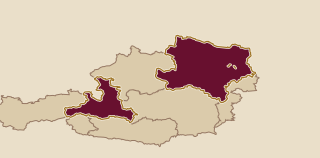
Atlas locationLower Austria · Austria48.46° N · 15.70° E

At A Glance

Region
Kamptal, Lower Austria
Main grapes
Grüner Veltliner, Riesling
Signature wines
Ried Heiligenstein Riesling, Ried Lamm Grüner Veltliner
Estate size
75–83 hectares
Defining feature
Oldest documented winery in the Danube region, farming continuously since 1171

The Producer

In 1171, Cistercian monks spreading out from Burgundy across Central Europe were donated their first vineyards at Gobelsburg, in what is now the Kamptal wine region of Lower Austria. The estate has produced wine ever since, making it the oldest documented winery in the Danube region. The castle and grounds passed through various aristocratic families before Zwettl Abbey acquired them in 1740, and the monks have held legal title ever since. Active winemaking control moved to Eva and Michael Moosbrugger in 1996, though the monastic ownership continues.

The Moosbruggers brought a clear farming ambition: vineyard work done by hand, mostly following organic practice, and a range organised around Kamptal's named parcels. Grüner Veltliner makes up half of total production, with Riesling accounting for a further quarter. The estate specialises in Rieslings made by traditional methods, alongside the whites and reds that fill out the Domaene Gobelsburg tier.

Place

The Kamptal runs north from the Danube along the river Kamp, in Lower Austria. Gobelsburg sits roughly 80 kilometres northwest of Vienna, where a continental climate gives hot summers and cold winters and the diurnal swings that keep acid intact in both Grüner Veltliner and Riesling. The named vineyard sites cluster along the slopes above the valley, each with its own geology and exposure.

Zöbing, to the north, is the home of the Heiligenstein, a south-facing slope of ancient volcanic origin. Renner sits below on clay and loam. Lamm is a loess and loam parcel producing Grüner Veltliner with a richer, fuller character than the stonier sites.

Soil And Site

The Kamptal's soils shift sharply across a short distance. Heiligenstein's volcanic bedrock produces Riesling with taut mineral character and firm acidity. Loess parcels such as Lamm give Grüner Veltliner more body and a rounder texture, while the Steinsetz site sits on soils that produce whites with good mid-palate weight. These geological differences are what give the estate's single-vineyard range its internal argument: the same hand-farmed practices, the same cellar intention, and notably different wines in the glass.

Story

For 256 years after Zwettl Abbey acquired the castle in 1740, the monks managed Gobelsburg as part of their monastic holdings. By the time Eva and Michael Moosbrugger took over in 1996, the vineyards and cellar needed significant work to match what the site and history were capable of producing. Michael Moosbrugger had help early on from Willi Bründlmayer, a respected producer in the Kamptal, whose guidance shaped the initial approach to vineyard management and cellar standards. Moosbrugger built the quality programme around what he described as monastic principles: patience in the vineyard, hand work, and minimal intervention in the cellar. The estate marked its 850th anniversary in 2021.

Vineyards And Cellar

The estate covers 75 to 83 hectares, farmed by hand and following organic practice, though as of 2022 the vineyards carried no official organic certification. Grüner Veltliner takes up half the planted area, Riesling a quarter. The red varieties, St. Laurent, Zweigelt, Pinot Noir and Merlot, make up the remaining quarter, with St. Laurent the largest at 8% of total production.

Rieslings are made by traditional methods, the specific focus the estate identifies as its signature. Across the range, the farming intention is consistent: hand work in the vines, limited additions, and a respect for what individual parcels express.

Wines

The range runs across three broad tiers. The Domaene Gobelsburg label covers entry-level wines including a Kamptal Grüner Veltliner, a Zweigelt and a rosé. The Grüner Veltliner is fresh and pepper-edged, lighter in body than the estate's named-site wines, with citrus and herb notes and a clean finish. The Zweigelt is red-fruited and relatively light in tannin, built for early drinking.

Mid-range parcels such as Steinsetz and Zöbing Riesling step up in site specificity. The Steinsetz shows more mid-palate weight than the entry-level whites. The Zöbing Riesling has stone fruit and firm acidity, a recognisable Kamptal character without the concentration of the top sites.

At the top sit the Erste Lage parcels, Ried Renner, Ried Lamm and Ried Heiligenstein, each bottled to show what its specific geology produces. Heiligenstein, on volcanic rock, is the estate's most mineral Riesling. Lamm, on loess and loam, gives Grüner Veltliner a textured, full-bodied character that ages well.

In The Glass

Gobelsburg's Grüner Veltliner opens with white pepper, green herb and citrus, the grape's familiar profile sharpened by Kamptal's continental acid levels. At the Domaene tier it is fresh and direct. At Lamm, the same grape takes on more weight: the loess gives a rounder texture, broader fruit and a finish with more length and grip.

The Rieslings track a similar logic across their sites. Zöbing brings stone fruit and clean acidity. Heiligenstein is the sharpest and most mineral of the set, with citrus and chalk on the nose, firm acid on entry, and a dry, precise finish that lingers without softening. Steinsetz sits between the entry-level and the Erste Lage in weight and complexity. The reds, led by St. Laurent, are lighter in body than Kamptal's whites, with red fruit and a moderate tannic grip.

A Bottle To Understand It

Göbelsburg Ried Heiligenstein Riesling is the wine that shows what this estate is most specifically known for. It comes from the volcanic slope at Zöbing, one of Austria's most regarded Riesling sites, and the geology of that bedrock shapes the wine in the glass: pale-fruited and dry on the nose, with lemon and white stone fruit, then firm acidity on entry, chalky mineral grip through the mid-palate, and a clean, dry finish with notable length. The Lamm Grüner Veltliner offers the estate's other main argument, fuller and richer, but Heiligenstein is where the estate's Riesling tradition, the oldest documented wine history in the Danube region, and a specific piece of volcanic ground all converge in one bottle.

Anecdote

When Michael Moosbrugger arrived at Gobelsburg in 1996, he took over an estate whose winemaking had been shaped by generations of monks who answered to different imperatives than a modern producer does. The cellar needed updating and the vineyards needed closer attention than institutional management had provided. Moosbrugger turned to Willi Bründlmayer, already established as one of Kamptal's leading producers, for guidance through the early years. That collaboration gave Gobelsburg a working framework: hand farming, minimal cellar additions, and a focus on what the named parcels could express when properly tended. The estate's current range, with Heiligenstein and Lamm at the top, is the direct result of the choices made in those first years after the secular handover.

Final Word

Schloss Gobelsburg is the oldest documented winery in the Danube region, and the single-parcel Rieslings and Grüner Veltliners from Heiligenstein and Lamm are the reason to pay attention. Eight and a half centuries of vine-growing continuity, and wines that still have something to say about the specific ground they come from.

Sources

Keep following the thread

Where to go next

placeRead the Lower Austria guideSee Schloss Gobelsburg in the wider setting of Lower Austria.mapFind Schloss Gobelsburg on the mapKeep the producer, its region and nearby places together.learningUnderstand RieslingRead the quick library guide to Riesling, which is listed with this producer.