
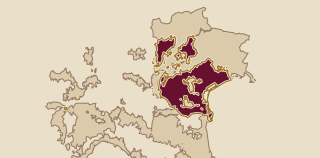
Valpolicella follows valleys north of Verona, while Bardolino lies closer to Lake Garda. Corvina, Corvinone, Rondinella and other local grapes make several different wines here. Fresh grapes give the lightest Valpolicella. Selected grapes are dried for fuller Amarone and sweet Recioto. Ripasso begins as Valpolicella, then ferments again with skins left from Amarone or Recioto production.
Drying and refermentation make different Valpolicella wines
What changes here
Valpolicella DOC is the freshest member of the family. Valpolicella Ripasso gains body and texture from its second fermentation. Amarone della Valpolicella is made from dried grapes fermented into a dry wine, giving greater concentration and alcohol. Recioto della Valpolicella also starts with dried grapes but keeps its sweetness. The richest bottle is not automatically the right one for the meal.
The valleys north of Verona
Names to know
Valpolicella follows a series of valleys north of Verona. Classica marks the historic western area, Valpantena names a valley of its own, and the wider DOC, the appellation defining origin and production rules, continues east through other Verona valleys. Bardolino lies closer to Lake Garda and makes lighter wines from the same local grape family. Compare Bardolino with Amarone or Ripasso to taste how much fuller the latter wines can be.
Choosing a lighter red, a fuller red or sweet Recioto
First bottle
For a lighter red, choose Valpolicella Classico or Bardolino. Ripasso offers more body and texture. Amarone is fuller again, with concentrated flavour and higher alcohol, so consider food that can match its weight. Recioto is sweet and can be served in a small glass.
To compare how production methods change the wine, try a Valpolicella and a Ripasso from a similar vintage, checking the producer's grape and ageing details.
Continue through the region
Elsewhere in Veneto
- Colli Berici, Colli Euganei & Vicenza (Vicenza / Padova hills)6 producersColli Berici, Colli Euganei, Vicenza and Breganze are wine areas in Veneto. In Colli Berici, varied soils, elevation and lower rainfall support structured wines, including those made from Tai Rosso.
- Garda (eastern Lake Garda shore)7 producersOn Veneto's eastern shore of Lake Garda, the lake and Monte Baldo-Adige climate influence vineyards on morainic soils. The area's Bardolino reds are fresh and light, with soft tannins.
- Padova plain — Riviera del Brenta, Bagnoli & Corti Benedettine4 producersRiviera del Brenta, Bagnoli di Sopra, Bagnoli Friularo, Corti Benedettine del Padovano and Merlara are separate wine appellations on Veneto’s plain.
- Piave, Lison & eastern plain (Treviso / Venezia)10 producersPiave, Lison, Piave Malanotte, Lison-Pramaggiore, Venezia, Vigneti della Serenissima and delle Venezie are separate wine appellations on Veneto’s plain.
- Prosecco — Conegliano-Valdobbiadene & Asolo (Treviso hills)14 producersIn the Treviso hills, Conegliano Valdobbiadene and Asolo are separate Prosecco DOCG areas, both centred on Glera. Rive identifies a commune or part of one within Conegliano Valdobbiadene; Cartizze names a smaller subzone near Valdobbiadene.
- Soave, Gambellara & Lessini (eastern Verona / western Vicenza)26 producersSoave, Gambellara and the Lessini hills sit together in eastern Veneto. Garganega anchors the Soave and Lessini side, while volcanic soils are central to Gambellara.
Producers in Valpolicella & Bardolino (Verona hills)
Start with these
- Giuseppe QuintarelliFamily estate in Cerè di Negrar farming 12 hectares at 500 metres in the Negrar Valley.
- BertaniGaetano Bertani learned from Jules Guyot in Burgundy, while Bertani uses natural appassimento and rests intact bunches on wooden racks.
- TedeschiTedeschi farms hillside vineyards across three named properties in Valpolicella, producing Amarone and Valpolicella wines from native Corvina, Corvinone, and Rondinella.
- Tommasi ViticoltoriFourth-generation family estate in Valpolicella Classica, best known for Amarone from two named cru vineyards, dried three months and aged three years in large Slavonian oak.
- Monte del FràThird-generation Bonomo family estate in Sommacampagna making Ripasso, Amarone and Recioto from Valpolicella Classico vineyards, alongside whites from the Custoza zone.
Browse 43 more
- Albino ArmaniAlbino Armani is a Veneto producer with regional cellars and Sauvignon Blanc Campo Napoleone made by cold maceration and stainless steel fermentation.
- Alpha ZetaA Veneto producer founded in 1999 by a British Master of Wine and a New Zealand winemaker, sourcing from hillside growers in the Alpone and Valpantena valleys to make fruit-forward wines at everyday prices.
- Antiche Terre VeneteFamily estate in the Valpantena arm of Valpolicella, carrying a century of vine cultivation through three generations to a winery formally launched around 2000, making Amarone by traditional appassimento on clay-limestone slopes.
- Azienda Agricola Bettili CristianaOrganic Valpolicella and Bardolino estate in Verona; Cristiana Bettili has farmed all vineyards without chemicals since 1999; the Ripasso Superiore is the flagship.
- Azienda Agricola BrunelliAzienda Agricola Brunelli is a Veneto estate founded in 1936, focused on fine wines from Valpolicella, including Classico, Superiore, Ripasso, and Amarone.
- Azienda Agricola Ca dei FratiBased in Lugana di Sirmione on Lake Garda's southern shore, Ca' dei Frati is one of the largest producers in Lugana and helped create the Lugana DOC in 1969.
- Azienda Agricola Coali Tenuta SavoiaFamily estate in the Valpolicella Classica heartland, farming Corvina, Corvinone, Rondinella, and Oseleta on calcareous-marly hillside soils and making the full range from Classico through Amarone and Recioto from estate fruit only.
- Azienda Agricola Le TendeOrganic Bardolino estate on the calcareous eastern shore of Lake Garda, where two families divide the work: one runs the land and cellar, the other designs the labels.
- Azienda Agricola Mizzon di Perusi NicolaSmall Valpolicella Classica estate farming six hectares of mixed soils in Valgatara since the early 1900s.
- Azienda Agricola Monte del Frà s.s.A Verona estate working across Custoza, Valpolicella, and Soave since 1958, best known for a Custoza Superiore that has held Gambero Rosso's Tre Bicchieri for twelve consecutive years.
- Azienda Agricola ScrianiFamily estate in Fumane, Valpolicella Classica, making handcrafted Amarone and Carpanè from hillside Corvina, Corvinone and Rondinella parcels.
- Azienda Agricola Valerio Zenato s.s.Azienda Agricola Valerio Zenato s.s. is a Veneto producer associated with Turbiana marked by floral notes, green almond character, and natural acidity.
- Azienda Agricola Zanoni PietroSmall Valpolicella family estate north of Verona making two wines from three hillside properties: an Amarone built on a 100-day raisining process and a Valpolicella Superiore for earlier drinking.
- Azienda Vincola FarinaFourth-generation Valpolicella Classica house founded in the early 19th century, making Amarone from 80 hectares of owned and partner vineyards in Pedemonte.
- Benedetti WineryA Montefalco estate working Sagrantino, Italy's most polyphenol-rich red grape, toward earlier drinkability without losing its colour depth or aromatic complexity.
- BollaLarge Valpolicella producer based in San Pietro in Cariano, credited with bringing Amarone to commercial sale in 1953.
- Cantina ValpantenaCantina Valpantena presents Torre del Falasco Amarone, a 2020 Valpolicella red with layered floral, cherry and spice-driven character.
- Cantina Valpolicella NegrarGrower cooperative in Negrar di Valpolicella making Amarone, Ripasso and Recioto from Corvina, Corvinone and Rondinella using the traditional appassimento drying method.
- Cantina Vini Armani A. SrlAlbino Armani is a multi-site Veneto producer tracing roots to 1607.
- Cantine di Verona s.c.a.A Veneto cooperative formed in 2021 from the merger of Cantina Valpantena, Cantina di Custoza, and Cantina Colli Morenici, spanning Valpolicella and Lake Garda with 1,800 hectares.
- Cantine LenottiA four-generation Veneto family estate based in Bardolino on the eastern shore of Lake Garda, producing Bardolino, Valpolicella, Amarone, Soave, and Custoza from vineyards established in 1906 and bottling independently since 1972.
- Casa Vinicola SartoriValpolicella Classica house founded in Negrar in 1898, making Amarone since 1961 from Corvina, Corvinone and Rondinella dried on traditional arele racks at Villa Maria.
- CorteforteSmall Fumane estate producing Amarone, Ripasso, and Recioto from 4.5 hectares of organic Valpolicella Classico vines.
- Domaine BenedettiFamily estate in Negrar, Valpolicella Classica, run by brothers Simone and Matteo Benedetti; four generations on the same hillside parcels, producing Classico Superiore, Ripasso, Amarone, and Recioto from Corvina, Corvinone, and Rondinella on calcareous-clay hillside soils.
- Gruppo Italiano ViniItaly's largest wine group, with fifteen cellars from Veneto to Sicily and two fruit-led Umbrian whites under the Bigi brand.
- Guerrieri RizzardiA Veronese estate with roots in 1649, Guerrieri Rizzardi farms its own vineyards in four Classico appellations and vinifies at cellars within each zone.
- La Collina dei CiliegiHigh-altitude Valpantena estate farming Corvina, Corvinone and Rondinella at up to 700 metres, where ripening runs a month later than the valley floor below Verona.
- La GiarettaFamily estate in Valgatara making estate-bottled Amarone and IGT wines from ten hectares of classic Valpolicella hillside.
- Le FragheMatilde Poggi’s estate in Cavaion Veronese makes Bardolino reds, Chiaretto rosé and Garganega white.
- Luigi RighettiFamily winery in Valgatara, Valpolicella Classico, producing organic-farmed wines from Corvina, Rondinella and Molinara across a range from fresh Valpolicella to single-vineyard Amarone.
- Monte ZovoFour-generation Cottini family estate in Veneto making Valpolicella and Lugana DOC from three properties across the Verona hills and the southern shore of Lake Garda.
- Pasqua Vigneti e CantineVeronese family house founded in 1925, farming three organically tended vineyard projects on a single eastern Valpolicella ridge.
- ScrianiFamily-managed Valpolicella Classica producer in Fumane; Stefano Cottini oversees the full cycle from hillside native-red vineyards to bottling, with Carpanè alongside Amarone.
- Societa Agricola IL Sasso di Bellamoli Diego e Stefano & C. S.a.s.A 10-hectare organic estate on calcarenite terraces in the historic Valpolicella Classica hills, making three wines from Corvina, Corvinone and Rondinella with no wood and no chemical additives.
- Societa Agricola Le BigneleA hillside family estate in Marano di Valpolicella making traditional Ripasso and Amarone from nine hectares farmed by the Aldrighetti family since 1818.
- Società Agricola Ripa della Volta S.r.l.Ripa della Volta is an organically certified Valpantena estate founded in 2015, farming 15 hectares of native varieties at altitude and producing a Corvina-led Ripasso that reads dry and fresh for the category.
- Società Agricola SpadaFour-generation family estate in San Pietro in Cariano, farming 10 hectares in the Valpolicella Classica and producing Ripasso, Amarone, and Recioto by an artisanal appassimento method.
- Societa Agricola Tedeschi Srl.A Valpolicella family estate since 1630, Tedeschi farms 48 hectares of hillside vines across the historic Classica zone and the high-altitude Maternigo property, producing Amarone from named single vineyards.
- Tenuta MarcatiVerona-province label covering Custoza, Valpolicella, Ripasso and Amarone, with a family history that runs from a wartime pharmacy to a drinks company distributed across more than 40 countries.
- Tenuta San LeonardoA former monastery on the Adige in southern Trentino, farmed organically and built around a Bordeaux-variety red that Carlo Guerrieri Gonzaga shaped through a long association with Mario Incisa della Rocchetta, the creator of Sassicaia.
- Tenute Ca'BottaYoung Valpolicella estate committed entirely to dried grape wines, from its flagship Cajo' Amarone down through two Ripasso wines, using its own patented Fermentino Ca'Botta fermentation method.
- Vigna '800Vigna '800 makes authentic wines from its own vineyard grapes, guided by traditions handed down by founder Gino.
- Vini Pietro ClementiA hillside estate in Marano di Valpolicella farming 14 contiguous hectares of Corvina-dominant vines at altitude, without synthetics, fining, or filtering.