
At A Glance
- **Location**
- Valpantena, Verona, Veneto, Italy
- **Grapes**
- Corvina, Corvinone, Rondinella
- **Signature Wine**
- Amarone della Valpolicella
- **Farming**
- Pergola Veronese and Guyot, hand harvest
- **Cellar**
- Traditional appassimento, minimum 18 months in wood
- **Founded**
- Family roots early 1900s; modern winery circa 2000
The Producer
Antiche Terre Venete sits in the Valpantena, a narrow valley that runs north from Verona and sits just east of the Valpolicella Classica zone. The estate grows Corvina, Corvinone, and Rondinella on clay-limestone slopes and builds its range around those three grapes. Its anchor wine is Amarone della Valpolicella, made by the traditional appassimento method: hand-harvested grapes dried in wooden trays for roughly 90 to 120 days before fermentation, with the finished wine spending a minimum of 18 months in wooden containers.
The winery came into being around 2000 as a formal estate, though the family connection to this land goes back to the early twentieth century. Vittorio Sancassani cultivated grapes in the Valpantena in the early 1900s. The land stayed in the family through two more generations before a nephew, Luciano, resolved to make a winery of it. A second family joined the enterprise, and the estate describes itself today as the meeting point of two families and a shared ambition.
Place
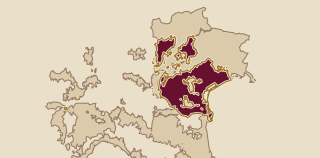
Valpantena is one of the lateral valleys that branch off from the Adige plain northeast of Verona. It falls within the broader Valpolicella denomination but carries its own sub-designation: wines from here may add the word Valpantena to the appellation name on the label, distinguishing them from the Classica zone to the west and from the extended Valpolicella area that stretches further east.
The valley matters for Amarone because the denomination covers this entire arc of hills, and grapes grown here qualify for the same appellation as those from the older Classica heartland. The difference is landscape and soil. Valpantena is a tighter valley, and the slopes that face the valley floor collect light and drain cold air at night, which helps preserve acidity through the long growing season that Amarone requires.
Soil And Site
The vineyard soils in Valpantena are clay-limestone, with deposits of Biancone, a white limestone rock that the estate notes for its capacity to absorb and reflect light radiation. Clay holds moisture and moderates vine stress in dry years; the limestone fraction drains well and adds a mineral base to the soil chemistry. Together they give Corvina and Corvinone the slow, even ripening that appassimento demands: grapes going into the drying lofts need good skin integrity and firm acidity to last 90 to 120 days without rot.
Vines are trained using two systems: the traditional Veronese Pergola, which lifts the canopy high to manage the valley heat and allows air circulation around the bunches, and the modern Guyot cordon, which concentrates vine energy into fewer shoots and can produce lower yields. Both are harvested by hand.
Story
Vittorio Sancassani was farming grapes in the Valpantena while the valley was still entirely agricultural land and decades before Amarone existed as a named wine. His son Sergio continued working the land through the mid-twentieth century, maintaining the family's connection to the valley without moving toward a commercial label. The decision to formalize the estate came with the next generation. A nephew named Luciano looked at the vineyards and the family history and chose to build a winery. That founding, around 2000, brought in a second family as partners, joining their resources and knowledge to Luciano's inherited land.
The interval between Vittorio's vines and Luciano's first label is the defining fact about this estate. The land accumulated a century of cultivation before the bottles appeared. Whether that continuity shaped the wine in any technical sense is hard to say, but it shaped the name: Antiche Terre Venete, old Venetian lands, is an estate that earned that description before it ever labeled a bottle.
Vineyards And Cellar
Manual harvest begins in the second half of September. Grapes destined for Amarone are selected in the vineyard and placed in small wooden trays in drying lofts, where low humidity and cool autumn air remove roughly a third of their weight over 90 to 120 days. That concentration raises sugar levels dramatically, deepens colour, and shifts the aromatic register toward dried plum and cherry while adding layers of dried spice.
Fermentation follows the extended drying. The resulting wine, dense with sugar and extract, ferments to high alcohol and retains some residual character before moving into wooden containers for a minimum of 18 months of ageing. The oak contact at this stage adds the toasted spice character that marks the palate: measured rather than heavy, given the estate's own description of misurato affinamento in legno, measured wood maturation.
The Valpolicella Valpantena is a fresher expression of the same grapes, with Corvinone making up half the blend, Corvina a third, and Rondinella the remaining 15 percent. It does not go through appassimento, and it is a lighter, fruit-forward red that sits at the other end of the range from the Amarone.
Wines
The range is built around two confirmed wines. Amarone della Valpolicella is the lead bottle: Corvina, Corvinone, and Rondinella dried for 90 to 120 days, fermented to full weight, aged a minimum of 18 months in wood. It is a full-bodied red with concentrated dark fruit, dried spice, and firm tannin from both the appassimento concentration and the oak contact. This is not a wine for the first week after purchase; the wood ageing and the extract from dried grapes both need time to integrate.
Valpolicella Valpantena is the second confirmed wine: 50 percent Corvinone, 35 percent Corvina, 15 percent Rondinella, without the drying stage. The wine carries the Valpantena sub-designation on the label and offers a more accessible version of the same grape trio, with lighter body, red cherry fruit, and softer tannin than the Amarone. It works as a companion to the Amarone in the range, giving drinkers a way into the denomination before committing to the intensity of the dried-grape wine.
A Ripasso may also be in production, which would use Valpolicella wine refermented on the pressed Amarone skins to add weight and extract, though this has not been confirmed in verified sources.
In The Glass
The Amarone opens with plum and cherry on the nose, lifted by a thread of raspberry that keeps it from reading as heavy. Behind the fruit there is dried spice from the oak ageing: not sharp oak but warm, toasted wood that has been absorbed into the fruit over 18 months or more. The palate is full-bodied, with the density that 90 to 120 days of drying produces: concentrated fruit, firm tannin, and a long finish that carries both the dark cherry character and the spice. The acidity from the Valpantena slopes keeps the wine from feeling thick despite its weight.
The Valpolicella Valpantena is a different register entirely: red cherry, lighter body, tannin that sits softly rather than gripping. The Corvinone-led blend brings a slightly rounder quality than a Corvina-dominant wine, and without appassimento the freshness reads through immediately. It is the kind of wine that works with a weekday dinner rather than requiring a special occasion.
A Bottle To Understand It
Start with the Amarone della Valpolicella. It is what Antiche Terre Venete exists to make, and it carries every decision the estate takes in vineyard and cellar: the clay-limestone slopes of Valpantena, the hand harvest, the three classic grapes of the denomination dried for three to four months in wooden trays, and 18 months of measured oak contact. On the nose: plum, cherry, a trace of raspberry, warm spice. In the mouth: full body, concentrated fruit, firm tannin that asks for food or time, a long finish. This is Amarone at its most transparent, made without pretense about what the wine is and where it comes from.
Anecdote
Vittorio Sancassani was tending vines in the Valpantena sometime in the early 1900s, years before anyone in the valley had thought to put a family name on a bottle. His son Sergio kept the land going through the middle decades of the century, pruning and harvesting without ambition beyond the next season. By the time Vittorio's grandson had grown up, the family owned a century of farming history in the valley but nothing that could be called a winery. It was Luciano, a nephew in the third generation, who finally looked at the accumulated land and decided it should carry a label. He brought in a second family, formed a partnership, and launched the estate around 2000. The vines had been there since before anyone alive could remember planting them. The bottles were new.
Final Word
Antiche Terre Venete is a Valpantena estate making Amarone from three classic Veronese grapes on clay-limestone slopes with Biancone limestone deposits. The winery is young in commercial terms, formally established around 2000, but the land behind it has a hundred years of continuous cultivation. The Amarone is the bottle that justifies seeking out the producer: full-bodied, appassimento-concentrated, with plum and cherry fruit, dried spice from measured oak, and firm tannin that rewards patience.