
Benedetti e Grigi
At A Glance
- **Region:** Umbria, central Italy
- **Appellation:** Montefalco DOCG / DOC, Spoleto DOC
- **Grapes:** Sagrantino, Sangiovese, Merlot, Trebbiano Spoletino
- **Style:** Modern red and white wines from native Umbrian varieties
- **Flagship:** Sagrantino di Montefalco DOCG
The Producer
Benedetti e Grigi works in the Montefalco zone of Umbria with one of Italian viticulture's most demanding grapes. Sagrantino carries higher polyphenol levels than almost any other red variety grown in Italy, producing wines of exceptional colour depth and tannic weight. Where most estates in the zone have built their reputation on wines that reward patience measured in decades, Benedetti e Grigi has chosen a different position: adjusting cellar work to make Sagrantino more approachable without abandoning its concentrated extract or aromatic complexity.
The range covers three appellations. Sagrantino di Montefalco DOCG is the flagship red, made entirely from Sagrantino as the denomination requires. Montefalco Rosso DOC is the lighter entry-level red, blending Sangiovese with a native territorial variety and Merlot. Ermes Spoleto, the estate white, is made from Trebbiano Spoletino under the Spoleto DOC, a different appellation to the east of Montefalco town.
Place
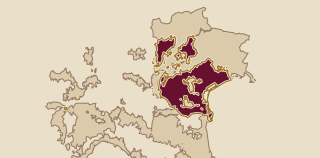
Montefalco sits on a hilltop plateau in the centre of Umbria, surrounded by olive groves and vineyards at around 400 metres above sea level. The appellation takes its name from the medieval walled town that overlooks the surrounding valley. Summers are warm and dry with warm days and cooler nights at altitude, a diurnal pattern that preserves aromatic complexity in the grapes even as they reach full ripeness. Winters can be cold. The Spoleto DOC, home to the Trebbiano Spoletino grape, lies in the valley running southeast from Montefalco toward the Roman city of Spoleto.
For Sagrantino di Montefalco DOCG, the entire wine must be made from Sagrantino grown within the defined zone. No other variety can be added. Montefalco Rosso DOC allows a broader blend and a lighter frame, making it the accessible daily wine alongside the more serious DOCG bottles.
Soil And Site
The Montefalco plateau rests on clay and limestone soils typical of inland Umbria. The clay fraction holds moisture through dry summers and contributes to the weight and extract that Sagrantino produces. Limestone beneath gives a mineral base that longer-aged examples can develop over time. No specific parcel or vineyard detail is confirmed for Benedetti e Grigi.
Story
Sagrantino has the longest and most complicated reputation of any Umbrian red grape. Grown almost exclusively in the Montefalco zone, it was historically made as a sweet passito wine before dry versions became the denomination's commercial and critical focus in the later twentieth century. The dry style brought international attention to the appellation but also exposed the grape's hardest quality to manage: an accumulation of tannin so pronounced that young bottles were often undrinkable without years of cellaring.
Benedetti e Grigi responded to that problem with a production adjustment. Traditional Sagrantino, fermented and aged by older methods, required a decade or more before the wine softened enough to show what was underneath the grip. The estate shifted cellar practice to reduce that burden, producing a Sagrantino with the same depth of colour and extract but a more accessible tannic character from an earlier point. The trade-off was deliberate: complexity kept, austerity reduced. That decision sits at the centre of what the estate now makes and how it positions itself in a zone where many producers still hold to the traditional extended ageing model.
Vineyards And Cellar
Sagrantino di Montefalco DOCG requires the wine to be made entirely from Sagrantino grapes grown within the appellation zone. The variety's great polyphenolic richness means fermentation extracts deep colour and a large tannin load from the skins. Benedetti e Grigi adjusts production methods to soften that tannic weight, producing results more drinkable in the shorter term than conventional Sagrantino while preserving the variety's concentration and aromatic profile.
The Montefalco Rosso 2019 was aged between 12 and 14 months in wood and a further 4 to 6 months in bottle before release, giving the Sangiovese-led blend time to settle and integrate the oak and the native variety component.
Ermes Spoleto, the Trebbiano Spoletino white, is handled for freshness rather than age, with the variety's aromatic character kept intact through careful cellar work.
Wines
Sagrantino di Montefalco DOCG is built entirely from Sagrantino. Deep ruby verging on opaque, with heavy extract and a tannic grip that even in the estate's adjusted style carries grip and body. The nose is dark-fruited, with plum and dried cherry character alongside the ferrous mineral quality the variety often shows. The finish is long and dry. Sagrantino at this level rewards food at the table: roasted meats, aged cheeses, dishes with enough fat and protein to meet the tannin rather than fight it.
Montefalco Rosso DOC is the lighter red, composed of 70 percent Sangiovese, 20 percent native territorial variety (identified by the Consorzio as "vitigno autoctono del territorio"), and 10 percent Merlot. The wood ageing runs to 14 months at the longer end, giving the blend some development and roundness without the weight of the Sagrantino DOCG. Sangiovese dominates the blend: medium-bodied, with firm acidity and moderate tannin.
Ermes Spoleto is the estate's white from Trebbiano Spoletino. Straw yellow with a faint greenish cast in the glass. The nose is fresh and delicate: yellow flowers and tropical fruit, light and aromatic. On the palate the wine is clean and direct, with moderate body and easy acidity for lighter dishes, fish, or vegetable-based Umbrian cooking.
In The Glass
Sagrantino di Montefalco DOCG rises from the glass with dark fruit, a hint of dried violet, and an earthy, slightly iron-edged quality that is particular to the variety. In the mouth the wine is dense, with concentration across the mid-palate and a firm tannic grip that the estate's production adjustments have softened but not eliminated. The finish is dry, long, and slightly chewy. Even in the modernised style, this is a wine that needs protein at the table.
Montefalco Rosso is fresher and lighter in the glass. Cherry and plum from the Sangiovese base, with a note of dried herb. The acidity is firm enough to cut through food, the tannins are moderate, and the finish is clean. It drinks well at three to five years from the vintage.
Ermes Spoleto is aromatic and light-bodied: yellow flowers and tropical fruit on the nose, with a fresh, clean palate and a short, dry finish. A wine for early drinking, best within two to three years of harvest.
A Bottle To Understand It
Start with Montefalco Rosso DOC. The blend of Sangiovese, native territorial variety, and Merlot, aged up to 14 months in wood, gives a clear picture of what Montefalco produces at the accessible end: medium-bodied, firm acidity, moderate tannin, dark cherry fruit, and a dry finish with some depth from the ageing. It costs less than the Sagrantino DOCG, it drinks well within a few years of the vintage, and it carries enough of the local variety to make the step up to Sagrantino easier to understand. The Sagrantino is the more serious and more demanding wine; the Montefalco Rosso is the right starting point.
Anecdote
Sagrantino's reputation as Italy's most tannic grape was never in dispute. What divided producers in the Montefalco zone was what to do with it. The traditional answer was time: ferment fully, age long in wood, then release when the wine was twenty years from harvest and finally, reluctantly, soft. Benedetti e Grigi took a different view. Rather than wait for the wine to solve its own tannin problem over two decades in the cellar, the estate adjusted production to soften the tannic grip earlier, making a Sagrantino that a buyer could open at five or eight years rather than twenty. The tannin is still there, the colour is still deep, and the extract is still present. What changed is when the bottle becomes worth opening. In a zone where patience has always been the house rule, that is a choice worth noting.
Final Word
Benedetti e Grigi makes a clear argument for Sagrantino as a variety that can be both serious and approachable. The estate's three wines cover the Montefalco zone from white to entry red to the demanding DOCG flagship, and each one reflects a producer that has thought carefully about when and how its bottles should be drunk. The Montefalco Rosso is the place to start; the Sagrantino DOCG is where the grape's full character becomes clear.