
NoleaWorld of Wine

Veneto · Italy

Producer profile

Cantine Lenotti

A four-generation Veneto family estate based in Bardolino on the eastern shore of Lake Garda, producing Bardolino, Valpolicella, Amarone, Soave, and Custoza from vineyards established in 1906 and bottling independently since 1972.

Place
Veneto · Italy
Known for
Bardolino DOC and full Veneto range including Valpolicella, Amarone della Valpolicella, Soave, and Custoza; export-oriented production using low-temperature fermentation and cold sterile bottling.
Wine context
Soave (Garganega)
Editorial basis
World of Wine editorial profile · 4 sources

World of Wine editorial profile · Source list ↓

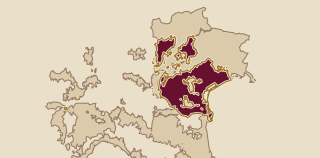
Atlas locationVeneto · Italy45.54° N · 10.72° E

At A Glance

**Location**
Bardolino, Lake Garda, Veneto, Italy
**Founded**
1906
**Generation**
Fourth
**Grapes**
Corvina, Rondinella, Molinara, Garganega, Trebbiano, Fernanda
**Appellations**
Bardolino, Valpolicella, Amarone della Valpolicella, Soave, Custoza
**Export**
90% of production, 40-plus countries

The Producer

Cantine Lenotti is a four-generation family estate based in Bardolino, on the eastern shore of Lake Garda in the Veneto. Alessandro Lenotti, born in 1855, was a high magistrate and landowner who turned his land into a wine operation. By 1906, the Lenotti name was recorded among the wine producers of Bardolino in the Oenological Map presented at the Milan Expo, which makes that exhibition the founding document of the estate.

For the first half of the twentieth century the family produced in bulk. The shift came in 1968, when Giancarlo Lenotti, trained as an oenologist, began bottling on the estate. In 1969 he installed what the estate describes as the first sterile, low-temperature bottling line in the appellation. Three years later, in 1972, the first labeled Lenotti bottles went to market. Claudio Lenotti, Giancarlo's grandson and the fourth generation, now runs the estate with his sister and brother. Under Claudio the estate expanded internationally: more than 90% of production now leaves Italy, shipped to over 40 countries.

Place

Bardolino sits on the eastern shore of Lake Garda in the province of Verona, at the western edge of the Veneto. The lake moderates temperature, extending the growing season and keeping summer nights cool enough to preserve acidity in the grapes. The soils around Bardolino are predominantly glacial moraine, a mix of gravel, sand, and clay deposited by the retreating glacier that carved the lake basin. These well-drained soils suit the light-bodied red grapes of the appellation: Corvina, Rondinella, and Molinara ripen without accumulating heavy sugar loads, producing Bardolino that is pale in color, low in tannin, and built for early drinking.

Lenotti's range extends east and north from Lake Garda into the Valpolicella zone, where the Corvina and Rondinella grape used for light Bardolino is also the grape behind Valpolicella, Ripasso, and the dried-grape Amarone. South of the lake lies the Custoza DOC, producing white wines from Trebbiano, Garganega, and the local Fernanda grape. East of Verona, the volcanic and limestone hills of the Soave zone produce Garganega-based whites. Lenotti holds vineyards or sourcing relationships across all these appellations, making the estate a broad map of the Veneto's main wine territories.

Soil And Site

The Bardolino terroir is defined by its glacial moraine soils. Gravel and sand dominate the shallower slopes closest to the lake, draining quickly and keeping vine roots under moderate stress. Clay increases on the flatter inland plots, where the heavier soils hold moisture through dry summers. The combination produces Corvina with good color and fresh acidity rather than deep extraction. Across the Valpolicella hills, limestone and clay marl soils shift the character of the same grape varieties toward more body and greater tannin potential, which is part of why Valpolicella and Bardolino taste different despite sharing grapes.

Story

Alessandro Lenotti did not build the estate to become a commercial winemaker. He was a magistrate who farmed his own land and treated wine as a personal calling. When the 1906 Milan Expo published its Oenological Map of Italian producers, his name appeared under Bardolino, a formal record that placed him among the region's serious producers.

The transition from gentleman farming to commercial production happened across several generations. Giancarlo Lenotti, Alessandro's grandson, studied oenology and returned to the estate with a specific plan. In 1968 he started bottling on the property. The following year he invested in cold-chain infrastructure: a sterile, low-temperature bottling line that allowed wine to be filled cleanly and sealed without heavy sulfur additions. For an appellation where bulk sales and demijohn distribution were still common, this was a significant commitment to quality and to export. The first labeled Lenotti bottle reached the market in 1972.

Claudio, Giancarlo's grandson, built the export operation that the bottling line made possible. Over 40 countries now receive Lenotti wine, and that international scale is the direct commercial consequence of a technology decision made more than half a century earlier.

Vineyards And Cellar

The estate's cellar philosophy centers on what Lenotti calls healthy grapes in a healthy environment. This integrates vineyard management of air, water, energy, and soil alongside the cellar methods that follow harvest.

In the cellar, Lenotti uses controlled fermentation at low temperature. Fermenting cold slows yeast activity and preserves aromatic compounds that would volatilize in a warmer ferment. It also reduces the need for sulfur dioxide additions, since cold conditions limit oxidation and microbial instability during the process. After fermentation, tartaric acid stabilization is achieved through electrodialysis rather than cold stabilization alone. Electrodialysis uses an electrical current to draw tartrate crystals out of the wine through a membrane, removing the risk of crystalline deposits in the bottle without chilling the wine to near-freezing temperatures for extended periods. Cold bottling in a sterile plant completes the process, sealing the wine at low temperature in a controlled environment to preserve fruit character through to the shelf.

The estate holds ISO 9001:2015 quality management certification, which formalizes the process controls across the production line.

Wines

The Lenotti range covers the five main Veneto appellations. Bardolino DOC is the home appellation: a light red from Corvina, Rondinella, and Molinara grown on the glacial moraine soils around Lake Garda. Pale ruby in color, low in tannin, and built for drinking young, Bardolino is the most immediate wine in the portfolio. A Bardolino Chiaretto, the pink version made from the same grapes, offers a dry rosé with similar freshness and weight.

Valpolicella extends the red range eastward into the Verona hills. Standard Valpolicella shares the same grapes as Bardolino but shows more body and darker fruit on the limestone-clay soils of that zone. Valpolicella Ripasso adds a second fermentation on the skins and lees left from Amarone production, producing a richer, fuller wine with more weight and dried-fruit character. At the top of the red range sits Amarone della Valpolicella, made from Corvina and Rondinella grapes partially dried for several months before pressing. The drying concentrates sugar and flavor. Sub-labels including "Di Carlo" and "Le Olle" appear on some Amarone and Bardolino Superiore bottles in certain markets; their exact function as a vineyard designation, sub-brand, or other category is not documented.

On the white side, Soave DOC is made from Garganega on the volcanic and limestone hills east of Verona: a dry white with almond, citrus, and stone fruit character and moderate acidity. Custoza DOC blends Trebbiano, Garganega, and Fernanda from south of Lake Garda, producing a light, dry white suited to local seafood and lake fish. The portfolio also includes sparkling wines.

In The Glass

Bardolino is the wine that shows the Lake Garda terroir most directly. The glacial soils and lake climate produce a pale red with light body, low tannin, and fresh acidity. Red cherry and watermelon rise from the glass, and the wine sits lightly on the palate with a clean, dry finish. It does not demand food but works well chilled alongside lighter dishes.

Valpolicella has more presence: deeper color, firmer tannin from the clay-limestone soils, and dark cherry fruit with an herbal edge from the Corvina grape. Ripasso adds dried-fruit density and a slightly drying texture on the back palate, where the second pass over Amarone skins leaves its mark. Amarone moves further still: high alcohol (typically above 14%), concentrated dried cherry and chocolate fruit, firm tannin, and a long, warming finish. The drying process removes water but not acidity, so even at full concentration Amarone retains enough acid to stay lively rather than heavy.

Soave brings almond and white stone fruit from the Garganega grape, with moderate acidity and a light bitter note on the finish that is characteristic of the variety. Custoza is lighter still, a blend that leans toward citrus and fresh herb with low tannin and easy acidity.

The low-temperature fermentation Lenotti applies across the range tends to produce wines that read fresher and more aromatic than those fermented warm: fruit is brighter, and the wines are clean rather than reduced or oxidative.

A Bottle To Understand It

Start with the Bardolino DOC. It is the estate's home wine, made from Corvina, Rondinella, and Molinara on the moraine soils of Lake Garda, and it demonstrates both the place and the cellar method in the clearest form. Cold-fermented, sealed in a sterile bottling line, and intended for early drinking, it arrives in the glass pale ruby, low in tannin, and fresh with red cherry and a clean, dry finish. No weight, no heat, no oak. It is the wine that explains what Bardolino is, where Lenotti comes from, and why the 1969 bottling line investment made commercial sense.

Anecdote

In 1969, Giancarlo Lenotti flew back from a tour of German winery facilities with a single purchase order in his luggage. Much of Bardolino at the time was still moving out of the region in bulk, filled into demijohns and sent to wholesalers who bottled under their own labels or sold it loose. Giancarlo had studied oenology and spent years watching the estate's wine disappear into other people's containers. The piece of equipment he ordered was a sterile, low-temperature bottling line, the first of its kind in the appellation. Cold filling under sterile conditions kept the wine stable without high sulfur additions and allowed bottles to travel to distant markets without spoiling. Three years after the line was installed, in 1972, the first bottle carrying the Lenotti name and label went to market. That bottle is now followed by millions sent each year to over 40 countries, all of them filled on equipment whose logic Giancarlo settled on in 1969.

Final Word

Cantine Lenotti is a Veneto producer whose range follows the full arc of what the region grows: from the pale, lake-fresh Bardolino of the western shore to the dried-grape weight of Amarone in the eastern hills. The four-generation family story runs from a magistrate who listed himself as a winemaker at a national exhibition in 1906 to a fourth-generation export operation that ships to more than 40 countries. The 1969 bottling line decision is the pivot between those two points. Start with Bardolino to understand where the family stands, and move toward Amarone if the range's full reach is the destination.

Sources

Keep following the thread

Where to go next

placeRead the Veneto guideSee Cantine Lenotti in the wider setting of Veneto.mapFind Cantine Lenotti on the mapKeep the producer, its region and nearby places together.learningHow place shapes wineSee how climate, landscape and local choices become part of a wine.