
At A Glance
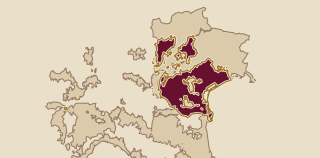
Region: Valpolicella, Veneto, Italy Village / Winery: Zovo district, hills north of Verona Vineyards: Three properties (Avesa, Persona, Quinzano), approximately 8 hectares Wines: Amarone della Valpolicella DOCG, Valpolicella Superiore DOC Signature grape: Corvina and Corvinone
The Producer
The Zanoni family farmed vineyards in the hills north of Verona throughout the twentieth century. Pietro Zanoni took formal charge in 1998 and replanted the estate to a high density guyot trellis system, cutting yields and changing the raw material entering the fruttaio. No new label, no new appellation, no consultant. The change was agronomic and quiet, aimed entirely at cutting yields and pushing ripeness in the fruit that would eventually spend approximately 100 days drying in the ventilated fruttaio.
The estate covers approximately 8 hectares spread across three named properties, Avesa, Persona, and Quinzano, all within the Valpolicella appellation on the hillsides above Verona. The winery occupies the Zovo district. Pietro makes two wines: an Amarone della Valpolicella DOCG and a Valpolicella Superiore DOC. That is the entire range. The narrowness is deliberate: every decision in the vineyard and cellar feeds one of two bottles.
Place
Valpolicella is a wine zone in western Veneto, beginning just north of Verona where the Lessini hills push toward the Adige valley. The name covers three legal categories that matter for labels: Valpolicella DOC (the entry level), Valpolicella Superiore DOC (a step up in minimum ageing), and Amarone della Valpolicella DOCG, the appellation's concentrated dried-grape wine and its most serious expression. Zanoni's three properties occupy the hillside terrain north of Verona within the Valpolicella appellation.
The hills are important for one practical reason: the fruttaio. The Amarone method depends on drying harvested grapes for several months before fermentation, and the elevation brings cooler air and reliable ventilation through the drying rooms. A warm, still valley floor would rot the grapes rather than desiccate them. The Valpolicella hills are, among other things, a climatic prerequisite for the wine.
Soil And Site
Zanoni farms three named properties: Avesa, Persona, and Quinzano. The winery and drying facilities are in the Zovo district. All three properties occupy the hillside position that the Valpolicella hills demand for Amarone production. Individual plot altitudes and soil composition for each parcel are not documented in available materials. What is known is the vine system: high-density guyot throughout, converted by Pietro after 1998, managed to constrain yields and concentrate each bunch before harvest selection begins.
Story
The family's vineyard work in Valpolicella began in the early 1900s. For the better part of a century, the Zanonis farmed grapes in a region where the most ambitious wine required patience measured not in months but in years: harvest in September, drying through winter, fermentation in January, at least two years in bottles, then release. Pietro grew up inside that rhythm.
When he took over in 1998, the replanting programme changed the agronomic premise without disturbing the winemaking tradition. Denser vines, tighter management, lower yields per hectare. The aim was better raw material for the fruttaio: grapes already carrying concentrated sugars and full phenolic development before they were ever laid in a box. The guyot conversion changed the raw material entering the fruttaio for Amarone della Valpolicella DOCG.
The estate has not expanded the range since. Two wines. One appellation family. The approach is to do the same things more precisely rather than to add categories.
Vineyards And Cellar
High-density guyot planting pushes each vine to ripen fewer bunches. The discipline is in the selection: at harvest, the team chooses only the loosest-packed clusters, the ones with enough space between berries for air to circulate freely during drying. Tightly packed bunches stay on the vine or go to the Superiore. This sorting decision, made bunch by bunch, determines what enters the fruttaio.
For the Amarone, selected bunches are arranged in small wooden boxes and carried into a ventilated drying loft. After approximately 100 days, the grapes reach an adequate level of raisining. Fermentation runs 21 to 28 days with punch down and pump over. Bottles rest horizontally for at least 24 months before release.
The Valpolicella Superiore follows a shorter cellar route: 10 days of temperature-controlled fermentation, 6 to 8 months in used vats, and 6 months of bottle ageing before release.
Wines
Zanoni makes two wines that span the full amplitude of Valpolicella.
Amarone della Valpolicella DOCG is blended from 45 percent Corvinone, 45 percent Corvina, 5 percent Rondinella, and 5 percent Oseleta, reaching 16.5 percent alcohol. The blend splits Corvinone and Corvina equally. Corvinone comprises 45 percent of the Amarone blend. Oseleta, a minor indigenous variety, comprises 5 percent of the Amarone blend. The combination, after 100 days of drying, produces a dense, warm red with concentrated red fruit, firm tannins, and ageing potential of up to 15 years from harvest.
Valpolicella Superiore DOC is 70 percent Corvina and 30 percent Rondinella at 13 percent alcohol. It is the counterweight: lean-bodied, grapey and bright, built for the table rather than the cellar. Where the Amarone needs time to open, the Superiore is fragrant and approachable when young, with a drinking window of approximately 5 years.
In The Glass
The Amarone opens with deep garnet colour and aromas of sweet and sour cherry jam, a clear super-ripeness from the 100-day drying, followed by tobacco and dried herb notes that deepen as the wine opens in the glass. On the palate it is warm and full, the high alcohol present but not burning, held in balance by body and acidity. The tannins are velvety and close-knitted, enveloping rather than gripping. The finish is very long with the same fruit-and-herb character carrying through from the first sniff. Young bottles are complete but tight; the wine can age for up to 15 years after harvest.
The Valpolicella Superiore offers a different experience from the same hillsides. The ruby is bright and clear, the aromas grapey and fresh, with direct cherry fruit and a lighter floral register. The mouthfeel is fresh, acidity is present and balancing, and the tannins are rounded rather than assertive. It is not a smaller Amarone. It is a separate wine built for different food and a different moment: lighter dishes, younger drinking, a more immediate kind of pleasure.
A Bottle To Understand It
Start with the Amarone della Valpolicella DOCG. It is the wine every decision at Zanoni points toward: the guyot replanting for tighter yields, the autumn harvest selection by cluster density, the 100 days in the fruttaio. At 16.5 percent alcohol with velvety tannins and sweet-and-sour cherry aromas threaded through with tobacco and herb, it is a wine of physical weight and considerable length. It is also the clearest illustration of what the Valpolicella hills make possible: a wine that begins not at the winery but in a ventilated room full of slowly drying grapes, months before fermentation ever starts.
Anecdote
In 1998, Pietro Zanoni chose to convert the estate's vineyards to a high density guyot trellis system. The replanting cut yields and changed the raw material entering the fruttaio for Amarone della Valpolicella DOCG. The grapes for Amarone della Valpolicella DOCG are left to raisin for approximately 100 days in a ventilated fruttaio before fermentation.
Final Word
Zanoni is a small Valpolicella estate with a simple range: two wines, eight hectares, and a century of family farming behind a single winemaking commitment. Amarone bottles rest horizontally for at least 24 months before release. The Superiore is ready far sooner. Both wines stay within the Valpolicella hills where they were grown, and neither apologises for the time and labour required to make them.