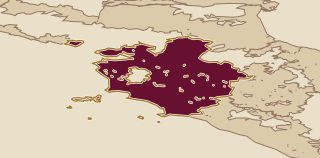
The inland hills around Chianti, Montalcino and Montepulciano form separate wine-growing areas. Farther west, vineyards around Bolgheri lie near the coast, while Maremma covers a broader stretch of southern coastal Toscana. The region’s wines also include Vin Santo, a sweet wine, and wines from the island of Elba.
Inland Toscana and the western coast
Sangiovese leads the main inland reds. Cabernet Sauvignon, Cabernet Franc and Merlot also grow near the coast.
Four parts of Toscana to compare
Across the region
Sangiovese connects much of inland Toscana, but Chianti, Montalcino and Montepulciano are separate places with their own appellation rules. On the western coast, Cabernet Sauvignon, Cabernet Franc and Merlot are planted alongside it.
Chianti hills
Central Toscana, between and around Florence and Siena
Sangiovese leads both Chianti and the separate Chianti Classico appellation.
Look forChianti · Chianti Classico · Vin Santo
Montalcino
A dry Mediterranean hill between the Ombrone, Asso and Orcia rivers
Brunello and Rosso di Montalcino use Sangiovese from the same municipality, with different ageing requirements.
Look forBrunello di Montalcino · Rosso di Montalcino
Montepulciano
Farther east in southern inland Toscana
Vino Nobile and Rosso di Montepulciano use Sangiovese, known locally as Prugnolo Gentile.
Look forVino Nobile di Montepulciano · Rosso di Montepulciano
Western coast and Maremma
From Bolgheri south through coastal Toscana
Cabernet Sauvignon, Cabernet Franc and Merlot are planted alongside Sangiovese and other grapes.
Look forBolgheri · Toscana IGT · Maremma Toscana
One grape, several Tuscan place names
Following Sangiovese
Sangiovese appears in several of Toscana's main inland wines. The complete place name and its production rules tell you which wine is in the bottle.
Start in the central hills
Sangiovese leads Chianti and Chianti Classico across a broad stretch of central Toscana.
Check the wine in the glass
These wines commonly have red-fruit flavours, mouth-watering acidity and drying tannin. Blending grapes, producer choices and harvest year can change the balance.
Move south
Montalcino and Montepulciano each give Sangiovese a separate place name and a separate set of appellation rules.
Then go west
Bolgheri and Maremma grow Cabernet Sauvignon, Cabernet Franc, Merlot and other grapes alongside Sangiovese.
Read the complete name on the label
Six labels explained
Tuscan labels can look closely related while referring to different places, grapes or ageing requirements.
ChiantiChianti ClassicoPlaceSeparate label excerptsHide explanationRead explanation
Two separate Sangiovese-led appellations
Classico names the historic territory between Florence and Siena
Brunello di MontalcinoRosso di MontalcinoPlaceSeparate label excerptsHide explanationRead explanation
Two Sangiovese wines from the same municipality
Brunello follows the longer ageing requirements
Vino Nobile di MontepulcianoPlaceHide explanationRead explanation
Sangiovese-led wine from the Tuscan town of Montepulciano
Montepulciano names the place here, not the grape grown elsewhere in Italy
Vernaccia di San GimignanoPlaceHide explanationRead explanation
Dry white Vernaccia from San Gimignano
The label gives you both the grape and the place
Bolgheri DOCPlaceHide explanationRead explanation
A coastal appellation that can include Cabernet and Merlot
Bolgheri Sassicaia DOC is a separate appellation
Toscana IGTPlaceHide explanationRead explanation
A broad regional category for wines made within its rules
Super Tuscan is an informal description, not another name for Toscana IGT
Chianti and Chianti Classico are separate appellations
The central hills
DOC and DOCG are Italian designations defining a wine’s origin and production rules. Chianti DOCG covers a large part of central Toscana and includes several named subzones. Chianti Classico DOCG belongs to the historic territory between Florence and Siena. It is a separate appellation, with different boundaries and rules, including a higher minimum share of Sangiovese.
These Sangiovese-led reds typically have red-fruit flavours, bright acidity and tannin, the drying grip in your mouth. Permitted blending grapes can alter the balance, so one wine may feel light and open while another is firmer. The producer and vintage, or harvest year, also help explain differences within the same appellation.
Vin Santo del Chianti and Vin Santo del Chianti Classico are separate sweet-wine appellations too. Read the full name to see which origin the bottle carries.
Montalcino and Montepulciano follow different rules
Two southern towns
Montalcino’s wine zone follows the historic borders of the municipality, between the Ombrone, Asso and Orcia rivers. Its climate is mainly dry and Mediterranean, with most rain in spring and late autumn. Soils vary across the zone.
Brunello di Montalcino and Rosso di Montalcino are both made from Sangiovese grown within the municipality. Brunello follows longer ageing requirements, while Rosso can be released earlier. Brunello’s flavours can include red and black cherry, liquorice and spice.
Montepulciano is another Tuscan town, farther east. Vino Nobile di Montepulciano requires at least 70 per cent Sangiovese, known locally as Prugnolo Gentile. The wine takes its name from the town, not from the Montepulciano grape grown elsewhere in Italy. Rosso di Montepulciano comes from the same municipal area and also requires at least 70 per cent Sangiovese, but it can be released much earlier.
Bolgheri, Maremma and the western coast
Along the Tyrrhenian Sea
Around Bolgheri and along the Etruscan Coast, Cabernet Sauvignon, Cabernet Franc, Merlot, Petit Verdot and Syrah grow alongside Sangiovese. Bolgheri’s rules were expanded to include red wine in 1994. Many coastal reds can now carry Bolgheri DOC; others use the broader regional category Toscana IGT.
Super Tuscan is an informal description for Tuscan reds that sat outside the appellation rules of their time, often because they contained Cabernet or Merlot. It is not a legal category. Sassicaia has its own Bolgheri Sassicaia DOC, so Super Tuscan, Toscana IGT and Bolgheri Sassicaia DOC are not interchangeable names.
Maremma covers a broader part of southern coastal Toscana, with wines carrying names such as Maremma Toscana and Morellino di Scansano. Elba has its own appellation and also makes Elba Aleatico Passito, a sweet wine from dried grapes.
Vernaccia and the smaller inland areas
Beyond the main reds
Vernaccia di San Gimignano is a dry white with fresh acidity, savoury flavours and medium body, meaning a moderate weight in your mouth. It offers a white-wine choice among the reds of inland Toscana.
Near Prato, Carmignano is another smaller growing area. Its wine names include Carmignano, Barco Reale di Carmignano and Vin Santo di Carmignano.
The black rooster and the full appellation name
On the bottle
Every Chianti Classico bottle must carry the black rooster, or Gallo Nero, on its neck or label. Names such as Riserva and Gran Selezione belong to the rules of that appellation; read them with the complete wine name.
Toscana IGT is a broad regional category. It can include wines made with grapes or methods outside the rules of a narrower Tuscan appellation. DOC and DOCG follow rules tied to the named appellation. These designations tell you which production rules apply; they do not rank every bottle by quality.
Choosing a Tuscan wine
Choosing a bottle
Chianti Classico, Rosso di Montalcino and Vino Nobile di Montepulciano are good places to try Sangiovese. Choose one according to your budget and the producer's drinking advice. A Bolgheri or Maremma red offers a different mix of grapes; Vernaccia di San Gimignano is an option for dry white wine.
For a comparison, try Rosso di Montalcino and Brunello di Montalcino from the same producer. Both use Sangiovese from the same municipality, but the ageing requirements differ. The vineyard selection and harvest year may differ too.
9 named areas
Inside the region
Explore the wine-growing areas of Toscana.
- 01Bolgheri & Etruscan Coast18 producersBolgheri & Etruscan Coast has modern plantings of Cabernet Sauvignon, Cabernet Franc, Merlot, Petit Verdot, Syrah and Sangiovese. Its soils include sandy clay loam, deep alkaline ground, fine gravel and fossil shells.
- 02Carmignano & Prato HillsNo producers listed yetCarmignano & Prato Hills includes Carmignano, Barco Reale di Carmignano and Vin Santo di Carmignano. Grand Duke Cosimo III formally defined Carmignano in 1716.
- 03Chianti Hills67 producersChianti DOCG and Chianti Classico DOCG sound like variations of one name. They are separate appellations, both centred on Sangiovese, and the full wording on the label tells you which one you have.
- 04Elba IslandNo producers listed yetElba Island is a wine area within Toscana, with Elba and Elba Aleatico Passito as its listed appellations.
- 05Lucca, Apuane & Northern Coast4 producersLucca, Apuane & Northern Coast is a wine area within Toscana, with Colline Lucchesi, Montecarlo and Candia dei Colli Apuani among its listed appellations.
- 06Maremma Grosseto6 producersMaremma Grosseto is a wine area within Toscana. Its listed appellations include Maremma toscana, Morellino di Scansano, Monteregio di Massa Marittima and Bianco di Pitigliano.
- 07Montalcino22 producersMontalcino's vineyards surround a hill south of Siena. Both Brunello di Montalcino and Rosso di Montalcino are made from Sangiovese grown here, but Rosso can be released much earlier.
- 08Montepulciano & Valdichiana13 producersVino Nobile di Montepulciano comes from the Montepulciano and Valdichiana area of Toscana. The wine uses 70-100% Sangiovese, known locally as Prugnolo Gentile.
- 09San Gimignano & Sienese Hills2 producersSan Gimignano & Sienese Hills includes Vernaccia di San Gimignano, a dry white with freshness, savouriness, medium body and persistence.
Producer profiles
Start with these
Meet 5 producers from across Toscana.
- Marchesi AntinoriMarchesi Antinori is a Tuscan wine producer whose family winemaking story began in Florence in 1385 and spans twenty-six generations.
- RicasoliBarone Ricasoli makes Chianti Classico at Castello di Brolio, a fortified hill estate in Gaiole in Chianti where the family has owned land since 1141.
- Biondi-SantiThe Tuscany estate that named and bottled Brunello di Montalcino for the first time in 1888, farming 33 hectares northeast of Montalcino on five vineyard plots.
- Marchesi FrescobaldiFlorentine merchant family making estate Chianti from eight Tuscan properties, with documented wine production at Nipozzano since the Renaissance.
- Tenuta San GuidoTenuta San Guido is the Bolgheri estate that planted Cabernet Sauvignon on the Tuscan coast in 1944, kept the wine private for more than two decades, and eventually earned Italy's only single-producer DOC for Sassicaia.
Browse 125 more
- Antonio Mastrojanni Societa Agricola Societa SempliceA Brunello di Montalcino estate in Castelnuovo dell'Abate, farming 14.4 hectares of Sangiovese on lacustrine clay and sand soils since 1975, now owned by Francesco Illy of the coffee family and moving toward biodynamic viticulture.
- ArgianoBrunello di Montalcino estate on a 350-metre calcareous marl plateau in the southwestern corner of Montalcino, farming 42 hectares of Sangiovese with a traditional large-cask ageing program rebuilt under new ownership from 2013.
- Azienda Agricola Biologica La Casa di BriccianoA family-run Tuscan organic farm, La Casa di Bricciano pairs farming established in 1992 with shallow, shale-rich soils.
- Azienda Agricola BrancatelliA Tuscan red estate planted organically to Cabernet Sauvignon, Cabernet Franc, Syrah and Petit Verdot.
- Azienda Agricola ContucciFamily estate in Montepulciano making Vino Nobile from exclusively local grape varieties, with cellars built into the town's medieval defensive walls.
- Azienda Agricola Cordella MaddalenaMaddalena Cordella farms Sangiovese Grosso on the heavy sandy clays of Torrenieri, in the northeastern sector of Brunello di Montalcino, where Crete Senesi soils produce a rounder, riper house style than the limestone zones closer to town.
- Azienda Agricola IL Palagio di Panzano di Monia PicciniMonia Piccini makes Sangiovese-only wines from her family's estate above Panzano in Chianti, where two contrasting soil formations pull each parcel in a different direction.
- Azienda Agricola MartocciaAzienda Agricola Martoccia brings Montalcino’s long-recognized Martoccia vineyard name to a focused collection of Rosso and Brunello wines.
- Azienda Agricola PolizianoAzienda Agricola Poliziano presents Tuscan reds shaped by French-oak élevage, from the flagship Vino Nobile Asinone to the modern, ageworthy Le Stanze.
- Azienda Tenuta Canto Alla MoraiaOrganic Supertuscan estate in Castiglion Fibocchi making one Cabernet-led blend, Moraia, from certified organic vines at 300 metres in the Arno valley hills.
- BrancaiaChianti producer founded in Castellina in Chianti, with Chianti Classico reds, Brancaia No 2 from Maremma Toscana, and Stella sparkling wine.
- Ca' MarcandaAngelo Gaja's Bolgheri estate, built from 80 hectares of Tuscan coastal clay after two years of negotiations, producing Camarcanda: a Cabernet Sauvignon-forward red reformulated in 2019.
- Campo alle CometeCampo alle Comete makes coastal Maremma reds, from Stupore, a blend led by Merlot, to Oltresogno, made from 100% Cabernet Sauvignon.
- Cantina BonacchiFour-generation Tuscan family farming 78 hectares across Chianti Montalbano, Chianti Classico, Brunello di Montalcino, and Bolgheri, producing over three million bottles a year under Andrea Bonacchi.
- Cantina Senesi AretiniA 235-grower cooperative in Sinalunga farming 350 hectares across the Siena-Arezzo border, making dry, mineral-driven Chianti from Sangiovese under minimal cellar intervention since 1971.
- CANTINA SOCIALE COLLI FIORENTINIThe world's largest Chianti producer by volume: a cooperative of 350 farming families in the Florentine hills, making Sangiovese-led Chianti Colli Fiorentini DOCG on solar energy from 1,500 hectares.
- Cantina Vignaioli del Morellino di ScansanoA Maremma cooperative of 170 growers founded in 1972, now producing one in five bottles of Morellino di Scansano DOCG at prices that reflect the appellation's best value argument.
- CarpinetoFive-appellation Tuscan estate founded in 1967 in Chianti Classico, farming Sangiovese across Brunello di Montalcino, Vino Nobile di Montepulciano, and IGT tiers under single family ownership.
- Casa Vinicola Alberto BartaliA Tuscan family estate founded in 1927 near the medieval hill-town of Monteriggioni, producing Chianti, Chianti Classico, Brunello di Montalcino, and Vernaccia di San Gimignano from its own farming estates.
- Casa Vinicola Luigi CecchiA four-generation Tuscan family company founded in 1893, based in Castellina in Chianti, making Sangiovese-led Chianti Classico from five estates across Tuscany and Umbria.
- Casa Vinicola Luigi Cecchi & FigliTuscan family wine house founded in 1893 by professional taster Luigi Cecchi, headquartered in Castellina in Chianti with four Tuscan estates and one in Umbria spanning Chianti Classico, Maremma, Brunello di Montalcino and Sagrantino di Montefalco.
- Castellani S.p.A.Tuscan family wine company founded in 1903, operating five estates across the region with a range from stainless-steel Chianti DOCG to Brunello di Montalcino.
- Castello BanfiMariani family estate in Montalcino, producing Brunello di Montalcino and the Merlot-Cabernet Super Tuscan Excelsus from a 2,830-hectare contiguous holding on the southwestern slopes of the hill.
- Castello dei RampollaA family estate in Panzano in Chianti with land held since 1739, making biodynamic Chianti Classico and two IGT reds from Sangiovese, Cabernet Sauvignon and Petit Verdot.
- Castello della PanerettaOld-vine Sangiovese and Canaiolo Nero estate on Chianti Classico's western edge, farming eight named parcels across contrasting galestro, schist, and hilltop soils since the Albisetti family arrived in 1984.
- Castello di AmaChianti Classico estate in Gaiole, founded 1976, producing Sangiovese-led wines from four named vineyard valleys at 430 to 527 metres, with San Lorenzo Gran Selezione as the flagship.
- Castello di BossiA fully organic Chianti Classico estate in Castelnuovo Berardenga, the southernmost commune of the zone, owned by the Bacci family since 1984.
- Castello di GabbianoA 165-hectare Chianti Classico estate on the Florence-Siena corridor, with documented wine production since 1480 and a cellar program since 2011 built around precise extraction and direct fruit.
- Castello di MeletoA large organic estate in Gaiole in Chianti, farming 130 hectares of Sangiovese under the Chianti Classico appellation, rescued from abandonment in 1968 by a public share-offering called Operazione Vigneti.
- Castello di MonsantoFamily estate in Chianti Classico's San Donato in Poggio subzone, built around Il Poggio, the first single-vineyard Chianti Classico Riserva to name its source parcel on the label.
- Castello di MonterinaldiChianti Classico estate on a medieval hill between Panzano and Radda, farming 17 individually mapped Sangiovese parcels on galestro and pietraforte at 400 metres.
- Castello RomitorioA Brunello di Montalcino estate founded in 1984 by Transavanguardia painter Sandro Chia, who bought a ruined medieval castle on the northwestern Montalcino ridge and planted 100% Sangiovese.
- Castello TricerchiCastello Tricerchi is a Montalcino estate with northern slopes, Sangiovese Grosso, castle cellars, and Brunello and Rosso di Montalcino.
- Ciacci Piccolomini d'AragonaA Montalcino Brunello estate run by the Bianchini family, who inherited it from the last countess of the Ciacci Piccolomini d'Aragona line in 1984.
- Col d'OrciaCol d'Orcia is a 540-hectare estate at the southwestern edge of Brunello di Montalcino, farming organically since 2010 and ageing its wines in large Slavonian and Allier oak casks.
- ColleMassari Spa Società AgricolaA family-owned Tuscan wine group farming Sangiovese organically across Montecucco, Montalcino, and Bolgheri, with a gravity-fed hillside cellar at its centre and a Brunello estate that selects its three wine tiers from a single harvest.
- Conti CostantiConti Costanti farms twelve hectares of galestro hillside above Montalcino and makes Brunello from a family whose Sangiovese was exhibited under that name in Siena in 1870.
- DievoleChianti Classico estate in Castelnuovo Berardenga, first recorded in 1090, organically farmed across 158 hectares, producing single-vineyard Sangiovese and a Riserva named for its 900 documented years.
- Donatella Cinelli ColombiniDonatella Cinelli Colombini runs two Tuscan estates: Casato Prime Donne in Montalcino, where every vintner and winemaker is a woman, and Fattoria del Colle near Trequanda.
- Famiglia CastellaniTuscan family producer with organic vineyards in the Pisan Hills, Chianti Classico Riserva, Vermentino and the coastal Guadalmare range.
- Famiglia CecchiFour-generation Tuscan producer based in Castellina in Chianti, farming Sangiovese across Chianti Classico, Morellino di Scansano, and Sagrantino di Montefalco through certified-organic estates.
- Fattoria AmoLorenzo Zonin farms Vernaccia di San Gimignano at 300 metres near San Gimignano on fossil-bearing soils, making an unfiltered still white and an ancestral-method sparkling wine that ships with its yeast sediment intact.
- Fattoria di CaspriBiodynamic natural-wine estate in the Arezzo hills, built by a French Alsatian oenologist on a mandate to make the most interference-free wine possible in Tuscany.
- Fattoria di FèlsinaA 600-hectare estate on the southeastern edge of Chianti Classico, farming Sangiovese on soils that shift from Chianti limestone toward the marine-sediment clays of the Crete Senesi.
- Fattoria FibbianoFamily estate in Pisa province's Era Valley farming fossil-marine hilltop soils with century-old Sangiovese clones and a full commitment to native Tuscan varieties.
- Fattoria Il MuroPancaro family estate outside Arezzo making Chianti DOCG and a Chardonnay IGT from galestro hillside vineyards above the Castro stream valley, with a fresh, accessible house style.
- Fattoria la MaliosaAn organic estate in the southern Maremma farming Ciliegiolo, Sangiovese and Procanico across clay and volcanic-soil territories near Saturnia and Pitigliano, using no additives or sulfites.
- Fattoria Le FontiA small Panzano estate at 450 metres, family-owned since 1994, producing three tiers of Chianti Classico and the IGT Supertuscan Fontissimo from organically farmed Sangiovese vines.
- Fattoria Loppiano 4.0 Soc. Agr. Coop.Organic Chianti cooperative at Incisa Valdarno, rooted in the Focolare movement since 1973, making low-sulfite Sangiovese from woodland-insulated hillside vineyards.
- Fattoria MontelloriFourth-generation family estate in Fucecchio, western Florence province, farming 55 hectares across three parcels.
- Fattoria NittardiCertified-organic Chianti Classico estate near Castellina in Chianti, owned since 1981 by the Canali Femfert family, with a Michelangelo provenance and a forty-year running artist-label program on its signature bottling.
- Fattoria PoggerinoFamily-run Chianti Classico estate in Radda farming biologically on galestro soils at altitude, making two Sangiovese-led wines from 11 hectares of estate vines.
- Fattoria RignanaOrganic Chianti Classico estate on the Panzano rim, making Sangiovese-led wines from Galestro vineyards at altitude.
- Fattoria SardiLucca estate using biodynamic practices for rosé from Sangiovese, Syrah and Vermentino.
- Fattoria SelvapianaOrganic Chianti Rufina estate at the foot of the Apennines, farming Sangiovese since the Giuntini family's 1827 acquisition.
- Fattoria ViticcioOrganic Chianti Classico estate in Greve in Chianti, farming Sangiovese and international varieties across hillside vineyards since 1964, with a range extending from Chianti Classico DOCG through a Cabernet Sauvignon and Merlot IGT to a coastal Bolgheri Rosso DOC.
- FontodiFontodi farms 90 hectares of Sangiovese in Panzano's Conca d'Oro, producing Chianti Classico and the 100% Sangiovese Flaccianello della Pieve.
- GiodoCarlo Ferrini's personal estate in Montalcino: six hectares, eight hand-selected Sangiovese clones, and a 2019 Brunello that garnered significant critical attention.
- GranducatoLong-established Chianti Classico producer at elevation in Radda in Chianti, making Sangiovese-led reds aged in large oak.
- Gualdo del ReEstate-bottled Merlot from Suvereto's hilltop vineyards, shaped by Val di Cornia iron-rich soils and sea air.
- Il PalagettoIl Palagetto is a Tuscan producer making approximately 350,000 bottles annually, with documented Chianti hand-harvesting and a distinctive 2021 Vernaccia di San Gimignano.
- Isole e OlenaChianti Classico estate in San Donato in Poggio making Sangiovese-led appellation wine and the estate Sangiovese IGT Cepparello from 56 hectares of galestro and marly schist at 350 to 450 metres.
- La PalazzettaLa Palazzetta is a Fanti-family estate on the southeastern slope of Montalcino, farming about 20 organically certified hectares of Sangiovese on limestone-rich soil at 365 metres near the Abbey of Sant'Antimo.
- Le MacchioleSingle-variety red specialist in Bolgheri; the estate that gave Cabernet Franc, Merlot, and Syrah their own bottles when the region was still writing its blending rules.
- Le RagnaieMontalcino estate farming three geographically separate corners of the hill, bottling each parcel under its own label to show what the same Sangiovese says in different soils and elevations.
- Marchesi MazzeiA Chianti Classico family with roots at Castello di Fonterutoli since 1435, farming Sangiovese on Alberese and sandstone across 114 parcels between 220 and 570 metres, with estates reaching to coastal Maremma and Noto in Sicily.
- Michele SattaMichele Satta built one of Bolgheri's first estates before the DOC existed and spent four decades broadening what the denomination could contain, bringing Syrah, Teroldego, Viognier, and native Sangiovese to a zone shaped by Bordeaux varieties.
- MontepelosoA Maremma estate near Suvereto where historian Fabio Chiarelotto has spent more than two decades producing low-extraction reds from Montepulciano, Sangiovese and Cabernet Sauvignon within the Val di Cornia DOCG.
- OrnellaiaBolgheri coastal estate founded 1981, making Cabernet Sauvignon-led Bordeaux blends from dozens of individually farmed parcels between the village of Bolgheri and the Tyrrhenian Sea.
- Ornellaia e Masseto Società Agricola srlBolgheri estate owned by Marchesi Frescobaldi, with Ornellaia Bolgheri Superiore and Le Serre Nuove dell’Ornellaia.
- PanizziOrganic Vernaccia di San Gimignano estate with two vineyard centres outside the medieval walls, led by a longstanding technical team.
- PetraA 300-hectare coastal estate in Suvereto where a Mario Botta winery cut into the hillside and a 2014 shift toward freshness changed what Maremma red wine could be.
- Petrolo Società Agricola s.s.A Tuscany estate in the Val d'Arno di Sopra making two named-vineyard wines: Galatrona, a single-vineyard Merlot planted in 1990, and Bòggina, Sangiovese planted in 1947.
- Pian delle Querci Societa AgricolaFamily estate in Montalcino making Brunello di Montalcino DOCG from clay-soil Sangiovese, fermented without added yeast in steel and aged three years in new large Slavonian oak.
- Pieve Santa RestitutaThe Gaja family's Brunello di Montalcino estate, purchased in 1994 as their first move outside the Langhe in 135 years.
- Podere BrizioPodere Brizio is a Montalcino estate focused on Sangiovese, with southwest-facing vineyards, olive groves and a soil-conscious approach.
- Podere CionaSmall high-altitude Chianti Classico estate near Gaiole, built from scratch by the Gatteschi family since 1990, farming 5.4 hectares on quartz arenite and clay schist at up to 625 metres.
- Podere Il Carnasciale - Il Carnasciale s.r.l. società agricolaA five-hectare hilltop estate in Tuscany's Valdarno di Sopra, devoted entirely to Caberlot, a natural crossing of Cabernet Franc and Merlot found nowhere else in meaningful commercial quantity.
- Podere MarcampoVolterra estate with a hand worked vineyard, Toscana IGT wines, and a Merlot red from Giusto alle Balze.
- Podere Poggio ScaletteFamily estate on Ruffoli hill in Greve in Chianti, growing Sangiovese on high-altitude Macigno sandstone.
- Podere San CristoferoA biodynamic Maremma estate farming Petit Verdot, Sangiovese and skin-contact whites on iron-rich coastal soils with full manual labour and no synthetic inputs.
- Podere San CristoforoBiodynamic coastal Tuscan estate making varietal Petit Verdot and a six-biotype Sangiovese from iron- and graphite-rich gravel.
- Podernuovo Srl Società AgricolaIGT Toscana estate in San Casciano dei Bagni, southern Tuscany, built from cleared ground by Paolo and Giovanni Bulgari after a 2004 purchase of abandoned vineyards.
- Poggio al SolePoggio al Sole is an organic, vegan-certified Chianti Classico estate in Tuscany, shaped by the Davaz family across two generations.
- Poggio al TesoroBolgheri estate founded by the Allegrini siblings in 2001, farming 64 hectares across four coastal plots to make Super Tuscan reds and Vermentino white within the Bolgheri DOC.
- PolizianoCertified organic estate in Montepulciano farming Prugnolo Gentile across four Tuscan zones, with a range that moves from an approachable Rosso through village Vino Nobile to two single-vineyard crus, Asinone and Pieve di Caggiole.
- Rocca delle MacìeLarge Chianti Classico estate founded in 1973 by film producer Italo Zingarelli at a restored medieval hamlet near Castellina.
- RuffinoLarge Tuscan house founded in Pontassieve in 1877, known for the Riserva Ducale range, a Chianti Classico-style Sangiovese blend with a royal origin story.
- San FeliceChianti Classico winery near Castelnuovo Berardenga, with Sangiovese at its core and a Vitiarium for native Tuscan grape research.
- San PoloBrunello estate on the warm southeastern face of Montalcino, farming galestro soils with organic practices and an underground cellar designed to cool by natural insulation.
- Società Agricola Francesca s.a.s. di Loia Franca & COrganic family estate on clay-silt hills above the Arno in Empoli and San Miniato, producing Chianti DOCG reds and a Vermentino white from 25 hectares.
- Societa Agricola Podere le RipiMontalcino estate with biodynamic vineyards in Castelnuovo dell'Abate and Camigliano, making Brunello di Montalcino, Rosso di Montalcino and Sant'Antimo.
- Società Agricola Querciabella SpAChianti Classico estate founded in 1974 at Ruffoli above Greve in Chianti; Sangiovese-first, certified organic and vegan biodynamic since 2000.
- Societa Cooperativa Vecchia Cantina di Montepulciano Societa AgricolaA grower cooperative at Montepulciano in southeastern Tuscany, founded in 1937 by fourteen local producers, now counting roughly 400 members farming approximately 1,000 hectares.
- Tenuta ArgentieraCoastal Bolgheri estate at the southern edge of the DOC, producing Merlot-led Bordeaux blends from five named hillside plots above the Tyrrhenian Sea.
- Tenuta Buon TempoOrganic Brunello di Montalcino estate at Castelnuovo dell'Abate, built from a 2012 purchase and a bare cellar; 14 hectares of Sangiovese Grosso aged three years in large Slavonian-oak casks.
- Tenuta Canto alla MoraiaCertified-organic Sangiovese estate on a Roman road in the eastern Chianti hills, farming high-density parcels at 300 metres in the province of Arezzo.
- Tenuta CarobbioA Panzano estate in the warm Conca d'Oro bowl, producing Chianti Classico from high-density Sangiovese vineyards and a separate track of varietal IGT crus in French oak.
- Tenuta CasteaniA family estate in the southern Maremma hills above former mineral mines, farming about 15 hectares organically and making wines from Vermentino, Sangiovese, Merlot and Syrah.
- Tenuta di ArgianoA founding member of the Consorzio del Brunello since 1967, Argiano farms 60 hectares of Sangiovese on the southwestern slope of Montalcino at 350 metres.
- Tenuta di BibbianoTenuta di Bibbiano makes Sangiovese-only Chianti Classico from two named slopes in Castellina, on the western edge of the appellation.
- Tenuta Di CapraiaCastellina in Chianti estate managed by Rocca di Castagnoli, making Chianti Classico, Riserva and Gran Selezione wines.
- Tenuta di CarleoneA 6 to 7 hectare biodynamic Sangiovese estate in Radda in Chianti, run by Irish winemaker Sean O'Callaghan, known for long-macerated Sangiovese aged in cement and a Chianti Classico that won Gambero Rosso Tre Bicchieri in 2025.
- Tenuta di GhizzanoA 280-hectare estate in the Pisan hills, farmed biodynamically by the same family since 1370.
- Tenuta di Gracciano della SetaFamily estate on the Gracciano hills in the Vino Nobile di Montepulciano DOCG zone, farming Prugnolo Gentile on silty-clay soils since the early nineteenth century.
- Tenuta di LillianoFamily-owned Chianti Classico estate bottling Sangiovese from Alberese limestone since 1958, with a three-tier range from vintage Chianti Classico to Gran Selezione.
- Tenuta ElmataNorwegian-founded Bibbona estate producing Sangiovese-led Toscana Rosso and coastal Sauvignon Blanc, certified organic from 2025.
- Tenuta La MassaA 25-hectare estate in Panzano's Conca d'Oro making IGT Toscana wines from Sangiovese, Merlot, Cabernet Sauvignon, and Petit Verdot, alongside a single-parcel Sangiovese cru from plot six.
- Tenuta Le ColonneOrganic Bolgheri estate on sandy coastal soils, making a Vermentino, a Merlot-led Bolgheri Rosso, a Cabernet Sauvignon-led IGT, and a Bolgheri Superiore.
- Tenuta LiciniaGalestro-rooted Tuscan estate near Lucignano making floral, graphite-edged Cabernet Sauvignon and Sangiovese with light extraction.
- Tenuta San JacopoEighteenth-century organic estate in Cavriglia, Tuscany, producing Sangiovese-led Chianti Superiore from 40 hectares of certified organic vineyards at 300 metres above sea level.
- Tenuta Sette PontiValdarno estate that began estate bottling in 1998 after four decades selling its grapes.
- Tenuta TreroseVino Nobile di Montepulciano estate on the Umbrian border, farming 103 hectares of Prugnolo Gentile across five named hills since 1982.
- Tenute del CerroItaly's largest private Vino Nobile producer, with five estates spanning Tuscany and Umbria and three distinct Italian red wine identities.
- Tenute PicciniFourth-generation Tuscan family group with five organically farmed estates spanning Chianti Classico, Brunello di Montalcino, Bolgheri, Aglianico del Vulture and Etna, still wholly family-owned after 140 years.
- Tenute Silvio NardiTwo-estate Brunello producer on opposite slopes of the Montalcino hill, farming Sangiovese Grosso across 49 registered hectares and assembling its flagship from 20 separately vinified parcels.
- TerrenoA 150-hectare Chianti Classico estate above Greve in Chianti, where the Swedish Ruhne family farms three vineyards between 300 and 500 metres of altitude, producing Sangiovese-led wines that carry the distinct character of each site.
- Terreno Società Agricola SrlSwedish-owned Chianti Classico estate outside Greve in Chianti, led by Sofia Ruhne since 2015.
- Tipici dell'AretinoAgricultural cooperative in Arezzo province, southeastern Tuscany, founded in 1970.
- Tommasi Family EstatesFourth-generation Italian wine family founded in 1902 in Valpolicella Classica, with Tuscan estates at Podere Casisano in Montalcino and Poggio al Tufo in the Maremma.
- Tua RitaCoastal Tuscan estate in Suvereto.
- Val delle Rose /Tenuta della Famiglia CecchiFamiglia Cecchi's Maremma coastal estate, the largest producer in the Morellino di Scansano appellation, farming organically on feldspathic quartz sandstone soils since 2021.
- Vecchia Cantina di MontepulcianoLarge-scale cooperative in Montepulciano producing Vino Nobile di Montepulciano DOCG from Sangiovese grown across 300 hectares of member vineyards.
- Villa di Geggiano - Az. Agr. Bianchi BandinelliFamily estate in Castelnuovo Berardenga at the southernmost edge of Chianti Classico, farming organically and producing Sangiovese-based reds from a property the same family has occupied since 1527.
- Villa MangiacaneOrganic Chianti Classico estate 12 km south of Florence, restored from a Renaissance villa that served as a German command post and Allied hospital during the Second World War.