
At A Glance
Estate: Il Greppo, northeast of Montalcino, Siena, Tuscany Grape: Sangiovese Grosso (Brunello) Wines: Brunello di Montalcino DOCG, Brunello di Montalcino DOCG Riserva Vineyards: 33 hectares across five plots, northeastern zone of the appellation Founded: 1865
The Producer
In 1888, Ferruccio Biondi Santi pressed a label onto bottles from that year's harvest at Il Greppo and wrote a name that did not yet legally exist: Brunello di Montalcino. He had not discovered the wine. He had invented the category. Those original bottles are still in the estate cellar.
The estate sits northeast of Montalcino on a hillside property called Il Greppo, farming 33 hectares of Sangiovese Grosso divided across five vineyard plots. It produces two wines: a Brunello di Montalcino and a Brunello di Montalcino Riserva. The range has stayed narrow across four generations of family ownership. One grape. One estate. Two levels of ageing.
The founding act preceded the appellation by decades. Clemente Santi, Ferruccio's grandfather, made a wine from the 1865 harvest that judges formally recognized as Brunello in 1869. Ferruccio built on that recognition, and in 1888 committed it to a label. Every producer farming inside the Brunello di Montalcino DOCG today, across hundreds of estates, carries a category name that Ferruccio put on paper first.
Place
Montalcino is a hilltop town in the province of Siena, in southern Tuscany. The Brunello di Montalcino DOCG covers the slopes surrounding the town, and the appellation's position determines the character of every bottle: altitude moderates summer heat, the long growing season allows Sangiovese Grosso to ripen fully while holding its acidity, and the dry autumns reduce disease pressure.
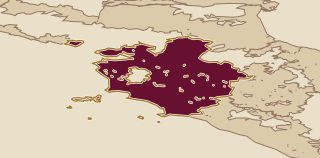
Il Greppo occupies the northeastern part of the appellation, a zone that sits higher and cooler than the south-facing slopes. That cooler position feeds directly into the wine: Brunello grown here tends toward firm acidity, structured tannin, and slower development in bottle. The five vineyard plots at Il Greppo all lie within this northeastern sector. The wines carry the address on the label: Brunello di Montalcino, the DOCG name Ferruccio put there first.
Soil And Site
All five Il Greppo plots sit within the northeastern sector of the Brunello di Montalcino appellation. The northeastern zone rises higher than the southern slopes around Montalcino, and the estate's vineyards benefit from that elevation in the form of cooler nights and a longer ripening arc for Sangiovese Grosso. The specific soil composition of each plot is not publicly detailed by the estate, but the northeastern position is consistent across all plantings.
Story
Clemente Santi made wine at Il Greppo in the mid-nineteenth century. His 1865 harvest produced a wine that he entered into competition, and in 1869 judges recorded it under the name Brunello, the first time a wine from Montalcino received formal recognition under that word. His grandson Ferruccio inherited both the property and the ambition.
Ferruccio went further. In 1888 he named the wine himself, labeling it Brunello di Montalcino, and bottled it under the family name. The category did not officially exist: he created it through the act of labeling. The 1888 bottles survive in the cellar at Il Greppo.
The estate passed through generations. Tancredi followed Ferruccio, and Franco followed Tancredi, beginning a significant expansion of the vineyard holdings in 1988 that brought the estate to its current scale of five plots and 33 hectares. The grape throughout remained Sangiovese Grosso, and the estate has maintained a proprietary selection designated BBS11, developed from the estate's own plant material across those generations of farming.
Vineyards And Cellar
The estate farms Sangiovese Grosso on all five plots, using a specific clonal selection designated BBS11, developed from vines grown at Il Greppo. The grape produces wines with naturally high acidity and substantial tannin, which explains the ageing logic behind both bottles in the range.
Both the Brunello and the Riserva are aged in Slavonian oak before release. Slavonian oak is large-format and slower to impart character than French barriques; it smooths tannin over time without adding strong vanilla or toast notes, keeping the fruit and acidity in the foreground. The Riserva must age for a minimum of six years before release under DOCG rules, a duration that concentrates the fruit and drives the tannin toward the youthful firmness that defines it at the bottle stage. The Brunello di Montalcino follows a shorter ageing path, reaching the market earlier and in a more approachable state, though built on the same high-acidity framework.
Wines
Brunello di Montalcino DOCG is 100 percent Sangiovese Grosso from the five Il Greppo plots, aged in Slavonian oak and released when it has developed enough fruit to be approachable in youth. The acidity is the defining feature: bright and persistent, it carries dried cherry, red plum, and earthy tobacco across the palate and prevents the wine from feeling heavy despite the tannin. It can be opened soon after release, but its acid architecture means it will continue to develop for years in bottle.
Brunello di Montalcino DOCG Riserva is produced only in declared vintages, the years when the grape quality and conditions justify the extended commitment. The minimum six-year ageing period before release produces a wine with more concentrated fruit, firmer tannin at the point of purchase, and a long savory finish that stays on the palate after the wine is gone. The Riserva is not more approachable than the Brunello; it is more demanding. Tannin is prominent and youthful at release, and the wine asks for time.
In The Glass
The Brunello di Montalcino opens with dried cherry and dried rose, with an undercurrent of iron and earth. On the palate the acidity arrives immediately, lifting the fruit forward and keeping the mid-palate alive rather than flat. The tannin is present but not aggressive; it frames the fruit and extends the finish without closing it. The overall impression is of a wine with energy, one that drinks with more life than its reputation for age-worthiness might suggest.
The Riserva is a different register. The concentration runs deeper: darker fruit, more mineral extraction, a denser mid-palate. The tannin at release is firm and youthful, gripping the sides of the mouth and signaling that the wine is not yet fully open. The finish is long and savory, ending on dried herbs and iron rather than fruit. It does not yield easily. The Riserva rewards patience in a way the Brunello does not strictly require.
A Bottle To Understand It
Start with the Brunello di Montalcino DOCG. It is 100 percent Sangiovese Grosso from the Il Greppo estate, aged in Slavonian oak, and built on the bright acidity that defines this estate's approach to the grape. The wine is approachable at release in a way that the Riserva is not, and that approachability makes it the clearer opening argument for what the estate does: how the northeastern plots, the BBS11 clone, and the Slavonian oak combine to produce a Brunello with lift and length rather than weight. Dried cherry, red plum, iron, firm tannin, and a finish that stays. The Brunello costs less, arrives more often, and shows the full character of the place without requiring a decade of patience first.
Anecdote
In 1888, Ferruccio Biondi Santi sat down and wrote a name on a label: Brunello di Montalcino. The wine category did not officially exist. No regulator had defined it, no consortium had formed around it, and no other producer in the zone had put those words together on glass. Ferruccio had his grandfather's recognition from 1869 to build on, the judges' record of a wine called Brunello from the 1865 harvest, but the name on the label was his own act. He applied it to bottles from the 1888 harvest and laid them down in the cellar at Il Greppo. Those bottles are still there. Every producer farming Sangiovese Grosso inside the Brunello di Montalcino appellation today, whether a single-hectare grower or a large estate, works inside a category that Ferruccio named himself and pressed onto glass in 1888.
Final Word
Biondi-Santi produced the first wine to carry the Brunello di Montalcino name. The appellation that now covers hundreds of estates and defines one of Italy's most age-worthy red wines began with a label Ferruccio made in 1888 and original bottles that survive in the cellar at Il Greppo. The estate makes two wines, both from Sangiovese Grosso, both from the same five northeastern plots. Start with the Brunello and understand the place. Move to the Riserva when patience is available.