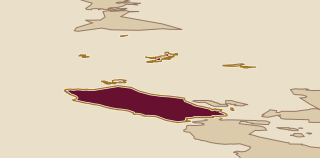
Napa Valley sits north of San Pablo Bay in California, between the Mayacamas Mountains to the west and the Vaca Range to the east. Vineyards spread across the valley floor, climb its slopes and occupy folds in the hills. Warm, dry summers are part of the setting, but marine air, fog and elevation give different vineyards quite different growing conditions.
Cabernet Sauvignon is the red most closely associated with Napa. It grows in central valley-floor areas such as Rutherford and Oakville as well as on mountain sites. A Cabernet comparison can introduce those places, but leave room for a white: Sauvignon Blanc and Chardonnay belong to Napa too, and the southern Carneros area also gives you Pinot Noir and sparkling wine.
Napa Valley includes several different growing landscapes
The broad regional name and smaller named growing areas describe different scales of origin. These examples lead to the geography explanation in this guide.
One regional name, three places to recognise
Napa and its growing areas
Napa Valley is the broad origin. Carneros, Rutherford and Howell Mountain help you locate particular vineyards more closely.
Napa Valley
The valley and surrounding slopes
A Napa Valley-labelled wine can use fruit from one site or several parts of the region.
Look forNapa Valley with the grape and producer
Los Carneros
Near San Pablo Bay, across parts of Napa and Sonoma
Marine wind and fog mark this southern area, where Chardonnay, Pinot Noir and sparkling wines are important.
Look forCarneros or Los Carneros, with the bottle’s fuller origin
Rutherford
In the central part of Napa Valley
Cabernet Sauvignon is prominent here. Frog’s Leap also provides a concrete Sauvignon Blanc example.
Look forRutherford and the named grape
Howell Mountain
The eastern side of the valley, above the usual fog layer
Higher vineyards experience different conditions from sites beneath the fog. Cabernet Sauvignon is among the grapes grown here.
Look forHowell Mountain and the producer’s vineyard description
Compare two Cabernets, then change the grape
A Napa tasting
Use the label to choose a comparison, then notice what is actually in the glass. Two bottles are enough to begin.
Choose your first Cabernet
Read its origin and harvest year. Notice the fruit, body and tannin, the drying grip in your mouth.
Change the growing area
Compare a Rutherford Cabernet with one labelled Howell Mountain or Mount Veeder, from a similar year.
Check what else changed
Read the producer’s account of blending and ageing. Different producers and bottle ages can affect the comparison too.
Explore a Napa white
Try Sauvignon Blanc or Chardonnay next. Notice its acidity and texture, then look for the fruit aromas you recognise.
The place, grape and year each tell you something
Reading a Napa label
Begin with the wine’s origin and grape. Smaller place names and the producer’s description can then make the vineyard and cellar choices more specific.
Napa ValleyPlaceHide explanationRead explanation
A defined American grape-growing origin
The name covers more than the flat valley floor
AVAPlaceHide explanationRead explanation
American Viticultural Area
A named growing area distinguished by geography or climate
RutherfordHowell MountainPlaceSeparate label excerptsHide explanationRead explanation
Smaller AVAs within Napa Valley
Look for the place on the actual bottle, not only the winery’s address
Los CarnerosPlaceHide explanationRead explanation
A growing area shared by Napa and Sonoma
Read the full origin rather than treating every Carneros wine as Napa
Cabernet SauvignonChardonnayGrapeSeparate label excerptsHide explanationRead explanation
Grape names
They describe a different part of the wine’s identity from the AVA
HarvestVintage · Year position shown emptyHide explanationRead explanation
The year the grapes were harvested
Use similar years for a first comparison, then explore bottle age separately
Carneros, Rutherford and the mountains describe different places
Names to know
Start in the south, near San Pablo Bay. Los Carneros receives cool marine breezes and fog, and its vineyards extend across parts of both Napa and Sonoma. Chardonnay and Pinot Noir are prominent here. If a bottle says Carneros, read its complete origin rather than assuming it belongs entirely to Napa.
Rutherford lies farther up the valley, where Cabernet Sauvignon is widely planted. Howell Mountain takes you onto the eastern heights above the usual fog layer. On the opposite side of the valley, Mount Veeder has rugged slopes and mountain vineyards. Elevation changes a vineyard’s exposure to fog and sun, while the direction a slope faces changes when it receives sunlight. A hillside is therefore more useful to understand as a particular site than as one uniform wine style.
These place names are AVAs, American Viticultural Areas: defined grape-growing regions distinguished by geography or climate. Napa Valley is the broad AVA; Rutherford and Howell Mountain identify smaller areas within it. A Napa Valley-labelled wine may combine fruit from several areas or come from a single vineyard. The region on the label describes origin, while Cabernet Sauvignon or Chardonnay names the grape. Dunn Vineyards gives you a concrete example: its 2022 Napa Valley Cabernet came entirely from its Howell Mountain vineyards. The broader name on that bottle does not mean valley-floor fruit.
For a closer comparison, read the producer’s vineyard description alongside the front label. It can explain whether the fruit comes from the valley floor, a slope or several sites. The winery’s postal address is a separate detail: a tasting room in one town does not tell you where the grapes in every bottle grew.
Cabernet is one part of Napa’s range
What changes here
Napa Cabernet Sauvignon often has blackcurrant, cherry or plum flavours, substantial body and noticeable tannin. Tannin is the drying grip you feel against your gums. Oak ageing can add spice notes, but the balance of fruit, tannin and oak changes with the wine. Some bottles feel dense and firm when young; others are more open. The label’s place name gives you a starting point, and the producer’s choices help explain the finished style.
Comparing valley-floor and hillside Cabernets is worthwhile because their vineyards differ in exposure and growing conditions. Taste their acidity, fruit and texture before deciding which feels fuller or firmer. Harvest year, ripeness, blending and time in barrel or bottle can all differ as well. A pair from two producers is a comparison of complete wines, not an experiment isolating altitude.
For a white, Frog’s Leap Sauvignon Blanc offers a specific example from a producer based in Rutherford. Its fruit comes from estate vineyards and long-standing growers centred there. The wine spends time on lees, the yeast sediment left after fermentation, in stainless steel or concrete. It gives you citrus flavours and freshness with texture to compare, rather than moving straight from Cabernet to another red.
Mayacamas makes Chardonnay as well as Cabernet Sauvignon and Merlot on Mount Veeder. A mountain-estate comparison can therefore change the grape while keeping the producer in view. For a southern contrast, look for a Carneros Pinot Noir or Chardonnay; sparkling wines from that area provide another choice when bubbles suit the meal.
Begin with two places and the same grape
First bottle
Choose a Rutherford Cabernet Sauvignon and one from Howell Mountain or Mount Veeder, ideally from a similar harvest year. Read how each producer describes the vineyard and ageing, then taste the wines side by side. Notice the drying grip, the weight in your mouth, the freshness and the kinds of fruit you recognise. A Cabernet with firm tannin and substantial body is worth trying beside a slow-braised lamb dish.
If you want a white instead, start with Frog’s Leap Sauvignon Blanc or a Napa Chardonnay. Sauvignon introduces a different grape and cellar approach; Mayacamas Chardonnay gives you a mountain-estate example. Compare the white wines’ acidity and texture, and read whether they were made in tank or barrel.
Continue through the region
Elsewhere in California · North Coast
- Lake & Inland North1 producerWithin California's North Coast, Lake & Inland North is anchored by Lake County's high elevations, sun, volcanic soils and cold winters. Cabernet Sauvignon and Sauvignon Blanc are associated with its elevated volcanic sites.
- Marin & Solano3 producersMarin & Solano sit within the broad North Coast AVA, alongside Lake, Mendocino, Napa and Sonoma. Geography and climate vary across the appellation, so there is no single regional wine style.
- Mendocino3 producersMendocino moves from coastal Pinot Noir and sparkling wine to inland vineyards with old-vine diversity. Anderson Valley is especially associated with Pinot Noir, as well as Alsace varieties.
- Sonoma15 producersSonoma's 19 AVAs stretch from warmer Cabernet country to cool-climate Riesling, with plenty of Pinot Noir and Chardonnay between. Russian River Valley fog and the bright, moderate style linked to the West Sonoma Coast show the range within the county.
Producers in Napa
Start with these
- Frog's LeapOrganic estate in Rutherford, Napa Valley.
- Mayacamas VineyardsNapa Valley vineyard and winery with dry farmed mature vineyards, old Cabernet vines, classical vinification and old casks.
- Dunn VineyardsAngwin Cabernet producer with shallow Howell Mountain soils, own farmed mountain fruit and caves cut into the hill.
Browse 63 more
- Andremily WinesSmall-production Syrah-dominant Rhône blends from a 39-acre Edna Valley estate, released once a year by a winemaker who spent twelve years at Sine Qua Non.
- Angeline WineryCalifornia Pinot Noir made for more than 30 years, with native yeast, partial whole-cluster fermentation, and minimal cellar handling.
- Apothic WinesCalifornia red blends built for immediate pleasure: dark cherry, chocolate, vanilla and mocha, with a soft finish and no tannic demand.
- Barefoot CellarsCalifornia multi-varietal brand that started in a garage, relaunched in 1986 with a hand-drawn foot logo, and now sells in more than 100 countries under E&J Gallo ownership.
- Bear Creek WineryCalifornia custom crush winery, founded as a 1934 grower cooperative and acquired by the Kautz family in 1997.
- Beaulieu VineyardOne of Napa Valley's oldest continuously operating wineries, founded in 1900 by a French chemist who survived Prohibition on a church contract and shaped California Cabernet by hiring André Tchelistcheff in 1938.
- Beaulieu VineyardsA Rutherford Cabernet estate founded in 1900, where a French winemaker's 1938 arrival created one of California's first named reserve bottlings.
- Beringer VineyardsNapa Valley's oldest continuously operating winery, founded 1876, known for the Knights Valley Cabernet Sauvignon, a Bordeaux blend from Knights Valley.
- Black Stallion Estate WineryNapa Valley estate winery on Silverado Trail, owned by the fourth-generation Indelicato family since 2010, built around Cabernet Sauvignon sourced across seven Napa sub-appellations.
- Bogle Family VineyardsA Sacramento Delta family estate with six generations of farming, barrel-fermented Chardonnay, and a cellar holding more than 95,000 oak barrels.
- Bogle VineyardsSix-generation Delta farming family with estate vineyards in Clarksburg, Lodi, and the Sierra Foothills.
- Bread & Butter WinesCalifornia négociant sourcing Pinot Noir, Cabernet Sauvignon, and Chardonnay from Carneros through northern Napa Valley, led by 2018 Napa Valley Winemaker of the Year Linda Trotta.
- Calera Wine CompanyMountain-grown Pinot Noir and Chardonnay from rare California limestone on the remote slopes of Mt.
- Castle Rock WineryU.S. Pinot Noir producer sourcing from California, Oregon, and Washington, with Central Coast, Mendocino County, Monterey County, and Willamette Valley bottlings.
- Chateau Montelena WineryHistoric Napa estate at the base of Mount Saint Helena, founded 1882 by Gold Rush entrepreneur Alfred Tubbs; Barrett family-owned for fifty years; two wines, a Napa Valley Chardonnay and a Calistoga Estate Cabernet Sauvignon, made to capture each season on site…
- Cline CellarsCalifornia producer with seven vineyards, historic dry farmed vines, and red wines from Zinfandel, Cabernet Sauvignon and Mourvèdre.
- Clos Du ValFamily owned Napa Valley producer focused on Bordeaux varieties, with Yettalil as its rarest estate blend.
- Continuum EstatePritchard Hill estate where Cabernet Sauvignon leads the planting and Novicium provides the younger vine second wine.
- Dark Horse WinesCalifornia value label by E&J Gallo, built on 400-grower sourcing and 100-plus tastings per wine before release.
- Delicato Family VineyardsCalifornia's fifth-largest wine company by volume, founded on dam-labor wages and now producing 16 million cases a year across Bota Box and a portfolio of varietal labels including Clay Creek Pinot Noir from the Clarksburg AVA.
- Duckhorn VineyardsNapa Valley Bordeaux varieties with Merlot at the centre, from Napa Valley blends to Three Palms Vineyard Merlot.
- Eisele VineyardNapa Cabernet estate with a 38 acre vineyard and a wine of cassis, blackberry and mineral finish.
- FaillaFailla makes cool climate California wines from Cazadero estate vineyards and named Sonoma Coast sites.
- Favia WinesFavia Wines joins a historic Coombsville home with selected Vaca Mountains sites and gentle handling across Cabernet Sauvignon led reds.
- Heitz CellarSt.
- Jacuzzi Family VineyardsA Sonoma producer built around California-grown Italian varietals, founded by Fred Cline in 2007 to honour his grandfather Valeriano Jacuzzi, who planted Zinfandel, Carignane, and Mourvèdre on a Contra Costa County farm during the Great Depression.
- Jolie-LaideJolie-Laide is a California producer whose Valdiguié Rosé combines whole-cluster pressing, spontaneous fermentation in mixed vessels, and six months of ageing.
- Joseph Phelps VineyardsThe Napa Valley estate that produced California's first Bordeaux-style proprietary blend.
- Kapcsándy Family WinerySmall Cabernet Sauvignon estate on State Lane in Yountville, Napa Valley, farming 15.5 acres of Bordeaux-clone vines on stressed valley-floor soils once used for Beringer's Private Reserve program.
- Laetitia WineryArroyo Grande Valley estate focused on traditional method sparkling wine, cool climate Pinot Noir, and Chardonnay.
- LangeTwins Family Winery and VineyardsLangeTwins Family Winery and Vineyards traces its Lodi farming roots to German great-grandparents who emigrated there in 1870.
- Ledge VineyardsFamily-owned Willow Creek District estate in Paso Robles, founded by Mark Adams in 2005 and focused on Rhône wines from Adams Ranch Vineyard.
- Long Meadow RanchFamily owned California producer with organic vineyards, Napa Cabernet Sauvignon and Anderson Valley Pinot Noir and Chardonnay.
- Louis M Martini WinerySt.
- Matthiasson Family VineyardsNapa producer with western Oak Knoll vineyards, native yeast, minimal sulfur dioxide, Cabernet Sauvignon and Linda Vista Chardonnay.
- McManis Family VineyardsA family-run California winery with LODI RULES certification, varietal reds and stainless-steel-fermented River Junction Viognier.
- Michael-David WineryLodi winery from the Phillips family, making Chardonnay, Old Vine Zinfandel and Rhone varieties including Ancient Vine Cinsault and Syrah.
- Ojai VineyardCentral Coast wines from Adam Tolmach's Ojai Vineyard, including Clima Frío Chardonnay and Santa Barbara Pinot Noir.
- Opus OneOpus One is a California producer founded through the collaboration of Baron Philippe de Rothschild and Napa Valley vintner Robert Mondavi.
- Peltier WineryAcampo winery with Lodi roots, sustainable vineyard farming under LODI RULES, and American Dream Zinfandel and Cabernet Sauvignon.
- PiedrasassiCentral Coast Syrah shaped by earlier picking, native-yeast fermentation and large-format barrel ageing.
- Pine Ridge WineryNapa Valley Cabernet Sauvignon rooted in a 1978 Stags Leap District planting and estate vineyards across five AVAs.
- QuintessaA Rutherford estate red built from 26 separately handled vineyard blocks and five Bordeaux-associated grape varieties.
- RacinesRacines is a Santa Rita Hills project led by Étienne de Montille, Brian Sieve and Rodolphe Péters, making Pinot Noir, Chardonnay and sparkling wine from cool, maritime-influenced vineyards.
- Robert Mondavi WineryFounded in Oakville in 1966, Robert Mondavi Winery was built around To Kalon Vineyard and its Cabernet Sauvignon and Sauvignon Blanc.
- Robert Sinskey VineyardsCarneros-grown wines shaped by organic farming and a tactile, copper-coloured Pinot Gris.
- Rombauer WineryFounded in 1980, Rombauer has purchased Carneros Chardonnay grapes through a lasting Sangiacomo family partnership since 1990.
- Rutherford Wine CompanyA Zaninovich family-run California producer that brings wines from Napa Valley, Arroyo Seco, Lodi and the Central Coast to its Napa Valley winery for final finishing and bottling.
- Sandhi WinesSmall-production Sta.
- Scheid Family WinesA family-stewarded California wine producer whose 70-mile Monterey County vineyard corridor supplies more than 35 grape varieties from four climate zones.
- Schug Carneros Estate WineryCarneros Pinot Noir and Chardonnay from a windy, rocky Sonoma site, shaped by Walter Schug’s German wine background.
- Screaming EagleOakville estate centred on a Cabernet Sauvignon-based flagship, with a Merlot-led red and Sauvignon Blanc widening the range.
- Shafer VineyardsStags Leap District Cabernet Sauvignon shaped by dry, rugged hillside vineyards and anchored by Hillside Select.
- Snowden VineyardsEstate Cabernet Sauvignon from 23 acres of vines on Napa Valley’s eastern slopes, within a 160-acre ranch largely left to woods and forest.
- SpottswoodeFamily-run St.
- Staglin Family Vineyard EstateA Rutherford Bench estate with organic vines, volcanic alluvial soils and a Cabernet-led Salus matured below ground.
- Starmont Winery & VineyardsStarmont Winery & Vineyards crafts classic single-varietal California wines from select coastal-influenced sites, balancing generous fruit intensity with brightness and precision.
- The Hilt EstateA cool, ocean-influenced Sta.
- The Wine GroupCalifornia wine and beverage company in Livermore, with a portfolio of more than 125 brands and a clear Lodi expression in 7 Deadly Zinfandel.
- Tolchards EstateTolchards Estate is a California producer listed for Buffalo Ridge Chardonnay and Buffalo Ridge Zinfandel, two wines from the 2021 vintage.
- Turley Wine CellarsCalifornia Zinfandel specialist founded in 1993 to preserve historic vineyards, from regional blends to more than 30 vineyard-designated wines.
- Tyler WineryPinot Noir and Chardonnay from Sta.
- Wente Family EstatesFive-generation Livermore Valley family winery whose 1912 Chardonnay cuttings helped shape California Chardonnay.