
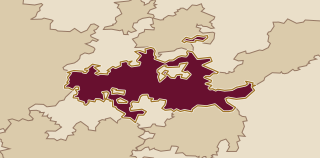
Vineyards rise above the Douro River and spread into its tributary valleys. Some of the same grapes supply both dry Douro reds and sweet Port. The protected name Douro also covers white, rosé and sparkling wines, while Porto identifies Port. The cities of Porto and Vila Nova de Gaia lie downstream from the growing region and are associated with the Port trade and its cellars.
Douro vineyards and Port styles
The vineyard name locates the grapes. On a Port bottle, the style name tells you about fortification and ageing.
The growing areas and the Port cellars
Vineyards and cellars
The first three names divide the Douro vineyards. Porto and Gaia describe the coastal cities associated with the wine trade and maturation.
Baixo Corgo
Western Douro vineyards
The western growing area receives more rain than the far eastern Douro.
Look forDouro · vineyard or estate name
Cima Corgo
Upstream from Baixo Corgo
Vineyards continue upstream along the Douro and its tributaries.
Look forLook for vineyard and estate information
Douro Superior
Eastern Douro vineyards
The growing region continues inland to the Spanish border.
Look forConsider elevation as well as location
Porto and Gaia
Cities near the river mouth
Gaia’s lodges are places of maturation. Port can also mature inland in the Douro.
Look forDistinguish cellar address from grape origin
Fortification comes before the choice of ageing style
Making Port
This sequence describes Port. Dry Douro wine follows a different fermentation and is not fortified in this way.
Grapes and fermentation
Yeast begins converting grape sugar to alcohol. For red Port, skin contact also extracts colour and tannin, which gives a drying grip.
Grape spirit is added
Fortification interrupts fermentation at the intended sweetness, retaining natural grape sugar.
Wines are assessed
The producer selects wines for different styles and decides how they will mature.
Ageing shapes the style
Ruby styles preserve youthful fruit; extended wood ageing develops the character of aged Tawny.
Port names describe style, harvest and maturation
Reading Port
Read the category before interpreting a year or age. The examples below are separate label excerpts.
DouroPortoWine originSeparate label excerptsHide explanationRead explanation
Distinct protected wine names from the Douro region.
Porto identifies the fortified wine; read the full description of a Douro wine.
RubyTawnyPort styleSeparate label excerptsHide explanationRead explanation
Port style families with different colour and maturation characteristics.
These names do not form a dry-to-sweet scale.
VintagePort categoryHide explanationRead explanation
In Port, a single-harvest category bottled earlier than LBV.
The stated year refers to the harvest.
LBVPort categoryHide explanationRead explanation
Late Bottled Vintage: single-harvest Port matured longer before bottling than Vintage.
Check filtered or unfiltered wording and serving guidance.
ColheitaPort categoryHide explanationRead explanation
Single-harvest Port with extended ageing in wood.
Read the harvest and bottling years together.
10 years old20 years oldAge indicationSeparate label excerptsHide explanationRead explanation
Examples of age indications for a blend with the characteristics of the stated age.
An age indication is not a vintage.
The Douro vineyards and Port cellars
Grapes and styles
Baixo Corgo is the western part of the demarcated growing region. Cima Corgo continues upstream, and Douro Superior reaches east to the Spanish border. Rainfall generally falls as you travel inland, although elevation and the direction a slope faces make a difference within each area. A hillside above the river need not grow grapes under the same conditions as the valley floor.
Touriga Franca, Tinta Roriz, Touriga Nacional and Tinta Barroca are important red grapes. White plantings include Rabigato, Malvasia Fina and Viosinho. Blends, combining more than one grape variety or vineyard, are common. In a field blend, the different varieties grow together in the vineyard.
Vila Nova de Gaia lies across the river from Porto. Its Port lodges are cellars where wines mature, although Port may also age inland in the Douro. The address on a bottle may name the cellar rather than the place where its grapes grew.
Dry Douro wine and fortified Port
Everyday bottles
For a dry wine, yeast consumes almost all the grape sugar as fermentation produces alcohol. Port is fortified: the producer adds grape spirit to interrupt fermentation at the intended sweetness. Some natural grape sugar remains, and the addition raises the alcohol level. Sweetness varies between Port styles, particularly among white Ports, so read the style description as well as the name.
Ruby styles are made to retain red colour and youthful fruit. Tawny styles show the effects of maturation in wood, with colour moving towards amber and aromas that can recall dried fruit and nuts. These are families of styles, not opposite ends of a sweetness scale. If you want to understand the difference, compare a Ruby Reserve with a Tawny carrying an age indication and notice fruit, colour and texture separately.
Vintage, LBV, Colheita and age indications
Read the label
Vintage Port comes from one harvest and is bottled earlier than Late Bottled Vintage, usually shortened to LBV. Vintage can develop over a long period in bottle. LBV also comes from one harvest but spends longer maturing before bottling. Check whether an LBV is filtered or unfiltered: unfiltered wines can develop in bottle and form sediment. Follow the producer’s serving guidance for the particular bottle.
Colheita is Port from a single harvest with extended ageing in wood. Look for both the harvest year and the bottling year. An age indication, such as 10 or 20 years old, identifies a blend with the characteristics of that age. It is not a harvest date or a statement that every component has spent exactly that many years in cask.
Choosing Douro wine or Port
First bottle
Choose a dry Douro red for an unfortified wine with a meal. For Port, Ruby Reserve offers youthful fruit, while an aged Tawny has more dried-fruit and nut-like flavours. Check the style description if you prefer white Port, as sweetness varies.
Quinta do Vallado provides an example of the region’s range. Its Reserva Field Blend Douro Red 2022 is a dry red from old mixed plantings, aged in French oak. Its 10 Years Old Tawny Port blends wines aged in wood, with dried-fruit and orange notes in the producer’s description. The red’s year records a harvest; the Tawny’s age indication describes the blend’s character.
3 named areas
Inside the region
Explore the wine-growing areas of Douro / Porto.
- 01Douro26 producersThe Douro's steep, mainly schist terraces produce dry still wines as well as the grapes for Port. Its hot, arid conditions support ripe, powerful wines.
- 02PortoNo producers listed yetPorto and Vila Nova de Gaia are associated with the Port trade and cellars. The grapes grow inland in the Douro.
- 03Távora-Varosa12 producersTávora-Varosa's high-altitude continental vineyards suit fresher, higher-acid sparkling wines. It was Portugal's first region demarcated for DOC sparkling wine, in 1989.
Producer profiles
Producer profiles
Every producer profiled in Douro / Porto so far.
- Adega Cooperativa de FavaiosA cooperative producer in the Douro, presented here through its place and connections to the wider region.
- Adega Macanita VinhosOld-vine Douro sibling estate built on a single disagreement with regional convention: that freshness, not extraction, is what Cima Corgo schist and ninety-year-old field blends actually want to produce.
- CARM - Casa Agrícola Roboredo MadeiraUpper Douro family producer using estate grapes, parcel vinification and traditional vats, with Grande Reserva and Touriga Nacional wines.
- Caves da Raposeira S.A.Lamego producer of Portuguese sparkling wine using the traditional method and extended cellar ageing.
- Companhia de Vinhos Invencível ldaA Cima Corgo Douro joint venture from Rita Marques and Marc Kent, making small-quantity old-vine wines led by the six-grape Invincible Red Number Two 2021.
- Conceito Vinhos LdaDouro Superior producer in Cedovim, with Teja Valley vineyards at high elevation and red, white and Port wines.
Browse 24 more
- Duorum VinhosDouro project from two oenologists, with Upper Douro slopes, indigenous grapes, table wine and Port.
- Kranemann Estates Lda.Tabuaço estate with schist and granite vineyards, varietal Ponte do Fumo wines, and DOC Douro and Port ambitions.
- Luis Seabra VinhosLuis Seabra Vinhos works across the Douro, Vinho Verde and Dão, with soil focused wines including Xisto Ilimitado Branco.
- MDL- Vinhos Unipessoal LdaMDL- Vinhos Unipessoal Lda produces Vinha da Peijona, a red Douro wine from Portugal.
- MurganheiraA Varosa Valley sparkling-wine house turning Portuguese grapes, including Touriga Nacional, into dry, fine-bubbled wines.
- NiepoortNiepoort links a family Port trade with Douro table wines from Quinta de Nápoles, including Redoma Tinto and Vintage Port.
- Quinta and Vineyard BottlersPortuguese wine company linked to Krohn Colheita Port 2003, a Douro single-harvest Port with ripe cherry, lively acidity and a long finish of spice, tobacco and cocoa.
- Quinta and Vineyard Bottlers Vinhos SAPortuguese Port producer identified on Ruby and Late Bottled Vintage bottlings, with two grape compositions and distinct tasting profiles.
- Quinta da Fonte BelaCartaxo estate with red and white grape plantings, Eiffel atelier architecture and wine production on the property.
- Quinta da GaivosaA five-generation Douro family project, Quinta da Gaivosa brings fruit from six estate vineyards into one winery for dry wines and Ports with distinct roles.
- Quinta de la RosaA Bergqvist family Douro estate relaunched in 1988, with Jorge Moreira focusing on individual vineyards and fresh, mineral Port.
- Quinta de PachecaDouro estate in Cambres with approximately 75 hectares, granite tanks, Douro DOC wines, Port and Pacheca Pink Port.
- Quinta de PorraisDouro estate in Candedo with 35 hectares of vineyard, white and red varieties, and a 2017 estate red.
- Quinta do CrastoCima Corgo estate with schist terraces, old mixed plantings, Douro reds and Vintage Porto.
- Quinta do InfantadoRoseira-family Douro estate near Pinhão, bottling Port and native-variety red wine under its own name since 1979.
- Quinta do NovalA Douro estate at Vale Mendiz making Port and dry wines.
- Quinta do PégoQuinta do Pégo is a 30-hectare Douro estate near Pinhão, where a documented wine history reaching to 1548 meets Vintage Port and dry red wines.
- Quinta do PopaA small Cima Corgo family estate making schist-grown Douro whites, from a six-variety blend to a limited amphora wine.
- Quinta do PortalDouro producer with three vineyards, Port wines, and Mural Quinta do Portal 2023, a red blend of three Douro grapes.
- Quinta do TedoAn 18th-century Single Quinta estate at the confluence of the Douro and Tedo rivers, with estate-grown Port, red Douro wine and mixed old-vine plantings farmed organically.
- Quinta do ValladoA Ferreira-family Douro estate near Peso da Régua, bottling its own dry wines and Ports since 1993.
- Quinta Vale D. Maria, Vinhos S.A.Quinta Vale D.
- Vieira de SousaA fifth-generation Douro family making Port and DOC wines from five Cima-Corgo quintas.
- Wine & SoulA Douro house built around Pintas, a 1.5-hectare old-vine field blend of roughly 40 varieties, with reds, whites and Port shaped by hand work on steep terraces.