
Who makes it
Around Almendra, the family operation combines vineyards, olive groves and almonds. CARM remains entirely owned by the family that began its activity, with records dating to the mid 17th century. Filipe Roboredo Madeira manages the company and is responsible for winemaking, marketing and sales. António Magalhães Ribeiro has been responsible for production, winemaking and winegrowing at CARM since 2002.
Winegrowing around Almendra has been part of the family business since the end of the 19th century. In 1995, Celso Madeira converted the agricultural holdings to organic production methods, with SATIVA controlling the operation. The change covered vineyards, olive groves and almond holdings around the village. Organic methods then applied to the vines that supply CARM's wines as well as to the other crops.
Where it grows
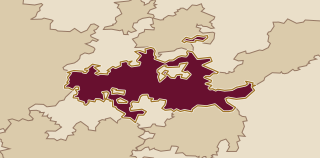
Where the Douro begins its course exclusively through Portuguese territory, CARM farms estates around Almendra in the Upper Douro. Grapes from these estates go into CARM's wines, so the Upper Douro location is also the source of the fruit. Olive groves and almond trees occupy the same agricultural holdings, placing grape growing within the wider work of the family operation.
At Quinta do Bispado, approximately 45 hectares of schist face south and east, at elevations between 125 and 170 metres. Schist is fractured rock, so water moves through its gaps; south and east exposure changes the sunlight the vines receive, while altitude changes the temperature of the growing season. Those conditions affect ripeness. Quinta da Urze's vineyards average 320 metres and face east; this exposure shields them from the region's climatic extremes. The two estates leave CARM's vines with different ripening conditions before the grapes enter fermentation.
How it is made
The cellar
At CARM, each vineyard parcel is vinified, aged and bottled in the company's own cellars. Traditional vats are used for fermentation. Separate parcel handling can preserve differences in fruit, tannin and finish between vineyards, so a vineyard parcel can remain distinct in the bottle.
What they make
CARM Grande Reserva Red 2022 occupies the flagship red position. CARM Touriga Nacional 2021 is the varietal bottling, with Touriga Nacional named in the title. One label foregrounds the reserve tier; the other foregrounds the grape variety.
Grande Reserva opens with a fresh, intense nose of wild black fruit and black cherry balanced by licorice. On the palate it is concentrated, warm and smooth, with firm tannins. Its finish is very intense and persistent, showing the intensity associated with Douro Superior. Touriga Nacional brings black and wild fruit with strongly marked floral and fresh notes. It is concentrated and warm in the mouth, with firm tannins, followed by an intense and persistent finish.