
NoleaWorld of Wine

Douro / Porto · Portugal

Producer profile

Adega Macanita Vinhos

Old-vine Douro sibling estate built on a single disagreement with regional convention: that freshness, not extraction, is what Cima Corgo schist and ninety-year-old field blends actually want to produce.

Place
Portugal
Known for
Old-vine Cima Corgo field blends; fresh, lower-alcohol Douro reds from schist parcels exceeding ninety years
Wine context
Madeira · Touriga Nacional
Editorial basis
World of Wine editorial profile · 4 sources

World of Wine editorial profile · Source list ↓

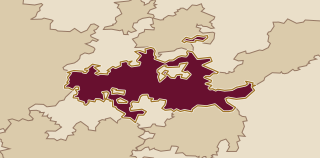
Atlas locationDouro / Porto · Portugal41.16° N · 7.61° W

At A Glance

Producer: Adega Macanita Vinhos Region: Douro, Portugal Sub-region: Cima Corgo (primary), Baixo Corgo Village / Estate: Quinta Senhora do Carmo, Covas do Douro Founded: 2011 Founders: Joana and António Maçanita Style: Fresh, lower-alcohol, food-driven red and white wines from old-vine field-blend parcels on schist

The Producer

When Joana and António Maçanita founded Adega Macanita Vinhos in 2011, they arrived with a question the Douro rarely asked of itself: which assumptions about vine age, vineyard hierarchy and grape grades were actually correct, and which were received wisdom nobody had tested? António is a practising oenologist, and the estate at Quinta Senhora do Carmo in Covas do Douro became the ground for working those questions out through farming and cellar decisions rather than through received convention.

The winery sits in the Cima Corgo, the middle Douro sub-region above Régua that produces some of the valley's most concentrated old-vine material. The Maçanitas draw from parcels in both Cima Corgo and Baixo Corgo, and the work in the vineyard starts earlier and more deliberately than much of the region: careful pruning and selective harvest are the two quality controls they name first, before the grapes reach the cellar.

The range sits toward the fresher, lighter end of what the Douro produces. These are wines built around old-vine character rather than extraction, lower in alcohol than the valley's extracted mainstream, and shaped around food.

Place

Covas do Douro is a village in the Cima Corgo, the middle of the Douro's three sub-regions running upstream from the Spanish border. The Cima Corgo occupies a geographical sweet spot between the lower Baixo Corgo, where rainfall is slightly higher and the wines tend to be lighter, and the Douro Superior further east, where the continental climate pushes ripeness and alcohol higher. Cima Corgo schist holds heat but drains fast, forcing vine roots deep and reducing yields naturally.

For a producer focused on freshness, the Cima Corgo address is a deliberate choice. The sub-region's altitude variation and its mix of schist and granite give growers more options to balance ripeness against acidity than the hotter upper valley allows. The Adega Macanita vineyards include Baixo Corgo parcels as well, which add a slightly cooler, Atlantic-influenced note to the blend palette.

Labels from this estate carry the broad Douro appellation rather than a sub-regional designation, which reflects the cross-sub-region sourcing and places the wine within the category of still Douro table wine rather than Port or any classified sub-zone.

Soil And Site

The Douro's schist is the geological constant across both the Cima Corgo and Baixo Corgo parcels. Schist shatters along its bedding planes, giving vine roots a route downward but little surface water to hold. In dry years, the depth of the root system matters more than any other factor. Granite outcrops appear in certain Cima Corgo parcels, adding a different texture to the soil profile and a slightly more mineral character to white wines grown on them.

The old-vine material confirmed in the Cima Corgo parcels goes back more than ninety years in some plots. Vines of that age in the Douro are almost always field blends: rows of Touriga Nacional, Touriga Franca, Tinta Roriz, Tinta Barroca and Tinto Cão, and often lesser-known varieties the grower may no longer be able to name, planted together and harvested together. That co-planting produces a natural complexity in the fruit that no single-variety parcel can fully replicate.

Story

The Douro in 2011 was a valley in the middle of a long argument about what its wines should be. Port was declining as a category. Investors and large quintas had spent two decades building a case for powerful, extracted Douro reds aged in new French oak, with the international market as the destination. The wine press rewarded concentration and colour. Old-vine field blends, lower alcohol, and food-friendly styles were not the direction most serious money was moving.

Joana and António Maçanita set up against that direction. António's work as an oenologist had shown him that the valley's best old-vine material was often being processed in ways that obscured rather than expressed its character: high extraction, heavy oak, and alcohol levels that flattened the fresh fruit and acidity the vines could deliver. The founding question at Adega Macanita Vinhos was whether a lighter touch in both vineyard and cellar would produce wines that were more interesting to drink and more accurate representations of where and how the grapes were grown.

That question shaped every practical decision: where to source parcels, when to pick, how much to intervene in the cellar. The commitment to pruning and selective harvest as the primary quality tools places the wine's logic in the vineyard rather than in the cellar, which is a different position from the extraction-led model that dominated the valley when the estate began.

Vineyards And Cellar

Pruning is the first decision at Adega Macanita Vinhos, and the one that carries the most weight. In the Douro, where summer heat and low rainfall can push sugar accumulation fast, the number of buds left on the vine after winter pruning determines the potential crop load, the rate at which the fruit develops, and whether the harvest can be timed to achieve ripeness with acidity still in balance. A vine left with too many buds in the Cima Corgo will ripen quickly and unevenly; a vine pruned hard will develop more slowly and give the farmer more control over pick timing.

Selective harvest follows from that discipline. Rather than stripping the vine in one pass, selective picking allows each parcel to be harvested at the point that suits its exposure, aspect, and vine age. For old vines on schist, where different varieties within a field blend ripen at different rates, that flexibility changes what arrives in the cellar.

The cellar approach for the estate's still wines is not fully documented in available sources, and specific vessel types and ageing lengths for the Douro range are not confirmed. What is clear is that the winemaking philosophy follows the vineyard logic: the goal is to arrive at the cellar with fruit that needs less intervention, and then to work with rather than against the character the old vines have produced.

Wines

Adega Macanita Vinhos produces still red and white wines from Cima Corgo and Baixo Corgo parcels under the Douro appellation. The red wines draw on old-vine field blends: Touriga Nacional, Touriga Franca, Tinta Roriz, Tinta Barroca, and Tinto Cão are the confirmed varieties of the Cima Corgo's pre-war plantings, with additional varieties typical of the valley's mixed plots. White wines from the region draw on Viosinho, Rabigato, Moscatel Galego and Gouveio, the standard upper-valley white varieties that contribute different aromatic registers and levels of acidity.

The range positions the wines toward freshness rather than power: lower alcohol than much of the valley, with fruit character shaped by old-vine root depth rather than ripeness-led winemaking. The red wines carry the weight and dark fruit typical of Cima Corgo schist plots, but with acidity and grip that keeps them at the table rather than overwhelming it. The whites, grown on schist and granite, tend toward dry, aromatic styles with enough texture to carry food.

Specific cuvée names and range levels for the Douro estate have not been confirmed in available sources. What defines the range as a whole is the sourcing logic: old parcels, selective picking, lower intervention, and a style that places the Douro's natural character above extracted power.

In The Glass

The reds from Adega Macanita Vinhos open with the dark fruit and mineral edge that old-vine Cima Corgo schist typically delivers: dried blackberry, some violet, a flinty thread from the rock below. The mid-palate carries grip from Touriga Franca tannin and the structural acidity that selective harvest preserves in the grapes. Where the extraction-heavy Douro mainstream can flatten on a warm afternoon, these wines hold their line: the tannins are present but not coarse, and the finish stays fresh rather than falling into the sweetness of over-ripe fruit.

The whites show the aromatic lift of Viosinho and the herbal sharpness of Rabigato, with a dry, textured palate that comes from schist and granite growing conditions rather than oak or extended lees work. The acidity is the organising fact in both colours: it is what makes the wines work alongside food and what separates them from the richer, heavier style the valley more commonly produces.

Alcohol sits below the regional norm across the range, a direct consequence of the pruning and selective harvest philosophy. Lower alcohol here is not dilution; it is the result of picking earlier and with more discrimination.

A Bottle To Understand It

The old-vine Cima Corgo red is the wine that explains what Adega Macanita Vinhos is trying to do. It is a field-blend Douro red from parcels with vines over ninety years old on schist, carrying Touriga Nacional, Touriga Franca, Tinta Roriz, and Tinta Barroca together. The nose is dark and mineral, the palate firm with natural tannin and a bright acid line, giving the wine more energy than its body weight suggests. It is a food wine: structured enough to stand against lamb or game, but fresh enough to work alongside roast fish or something braised. Start here to understand why the schist, the vine age, and the decision to pick before the fruit loses its acidity are the three things that define the producer.

Anecdote

António Maçanita runs multiple operations under the same family umbrella, and one of them takes Tinta Negra from Madeira and bottles it as a still red wine at 12% alcohol. Tinta Negra is historically significant in Madeira and appears under different names across Atlantic islands. The Dos Villões project, which is a separate Madeira operation entirely distinct from the Douro estate, vinifies it with a forty-day maceration and splits the ageing between oak and vat, producing something light enough to pour alongside complex fish. The wine is made from Tinta Negra as a still red. Tinta Negra, elsewhere in the Atlantic, is often called Tinta Francesa or Jacquet: the same variety, scattered across islands, going by different names depending on who planted it and when. Maçanita made it legible as a still table wine. That interest in questioning what a variety or vineyard is actually capable of, separate from its received status, is the same logic that drives the Douro estate.

Final Word

Adega Macanita Vinhos is a small Douro producer founded on a specific disagreement with how the valley's old-vine material was being used. The wines are lighter, fresher, and more food-centred than the Douro mainstream, and they are built from parcels with ninety-year-old vines on Cima Corgo schist that could easily produce the concentrated, extracted style the market spent two decades rewarding. The choice not to go that way is the defining fact about the estate.

Sources

Keep following the thread

Where to go next

mapFind Adega Macanita Vinhos on the mapKeep the producer, its region and nearby places together.learningHow place shapes wineSee how climate, landscape and local choices become part of a wine.