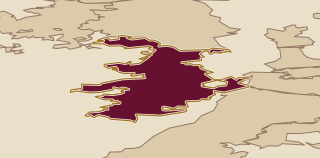
The vineyards begin south of Worms and continue for roughly 85 kilometres to the French border, where the hills meet Alsace. Around 130 wine villages sit along this north-south corridor, Germany's second-largest wine-growing region. The mountains and forest shelter much of it from rain, while warm air reaches the plain from the south. More than 30 per cent of the vines are red grapes.
Dry Riesling and other white grapes
Grapes and styles
Pfalz Riesling is commonly made dry. The warm, sunny conditions allow the grapes to ripen fully. The wines can have more body, or weight in the mouth, than many lighter German Riesling wines while keeping the grape's mouth-watering acidity. Around Bad Dürkheim, Wachenheim, Forst, Deidesheim and Neustadt, producers bottle Riesling with regional, village and single-vineyard origins. Soils vary through sandstone, limestone, clay and basaltic material.
Pinot Blanc and Pinot Gris are widely planted and make dry whites that tend to feel broader and less acidic than Riesling. Chardonnay and Sauvignon Blanc have also become important. Gewürztraminer and Scheurebe are alternatives if you enjoy pronounced aromas.
Mittelhaardt and the Southern Wine Route
Background
The official region has two broad areas. Mittelhaardt-Deutsche Weinstraße covers the north and includes the best-known run of Riesling villages around Bad Dürkheim and Neustadt. The Haardt foothills give many vineyards an easterly or southeasterly exposure above the plain. The German Wine Route follows this line of towns.
Südliche Weinstraße continues from Neustadt to the French border. Riesling remains important, alongside a greater proportion of Pinot grapes, other whites and reds. The border does not create a sudden change in landscape: the Haardt continues the same mountain line as the Vosges in Alsace. National and regional rules differ, but both sides work in a warm, relatively dry corridor sheltered by hills to the west.
Dry whites and reds for drinking young
Everyday bottles
A regional Pfalz Riesling trocken, or dry Riesling, usually costs less than a wine named for a village or individual vineyard. Pinot Blanc, labelled Weissburgunder, and Pinot Gris, labelled Grauburgunder, are other dry whites to look for. Many are made to drink young.
For red wine, Spätburgunder means Pinot Noir. Pfalz examples range from light, fresh wines to firmer bottles aged in oak. Dornfelder and Portugieser often make softer, fruity reds. Cabernet Sauvignon, Merlot and Syrah also grow here; check the producer's description for the style of a particular bottle.
Grape names, places and sweetness
Read the label
Pfalz is the regional name. A village such as Forst, Deidesheim, Wachenheim or Kallstadt gives a more precise origin, and an individual vineyard name narrows it again. The Prädikat terms Kabinett, Spätlese and Auslese refer to grape ripeness and production rules. Read the sweetness wording separately: trocken tells you the wine is dry.
A dry wine from a top classified vineyard may carry GG if the producer belongs to the relevant growers' association. The producer, village and vineyard names identify who made the wine and where the grapes grew.
Riesling, Pinot whites or a red
First bottle
Try a Pfalz Riesling trocken from Mittelhaardt if you enjoy ripe fruit and noticeable acidity. If you prefer a broader white with softer acidity, try Weissburgunder or Grauburgunder. For red wine, choose Spätburgunder from Südliche Weinstraße or the northern Pfalz.
Riesling and a Pinot white at a similar price make a good comparison of the grapes' aromas, acidity and weight in the mouth. Choose wines from the same producer if possible, while allowing for differences in vineyard and winemaking.
1 named area
Inside the region
Explore the wine-growing areas of Pfalz.
Producer profiles
Start with these
Meet 5 producers from across Pfalz.
- Dr. Bürklin-WolfDr.
- Weingut ChristmannA Gimmeldingen family estate in the Pfalz, where Riesling and Spätburgunder are organised through named vineyards and VDP classifications.
- Weingut von WinningA Deidesheim, Pfalz estate centred on Riesling from named sites in Deidesheim and Forst, with spontaneous fermentation in wooden barrels since 2008.
- Weingut Friedrich W. BeckerA Schweigen estate with vineyards in Pfalz and across the French border, focused on Pinot varieties and open-vat red winemaking.
- Weingut RingsA family-run Pfalz estate in Freinsheim, Rings turns limestone sites into dry Riesling and structured Spätburgunder.
Browse 29 more
- Geheimer Rat Dr. von Bassermann-JordanFounded in 1718 by a Savoyard emigrant, Bassermann-Jordan farms 21 hectares of vineyard across the Mittelhaardt villages of Forst, Deidesheim, and Ruppertsberg.
- GP WineryGP Winery comes from Pfalz, Germany.
- Lichti & AstrohPfalz project by Freya Lichti and Alexander Strohschneider, farming named sites across Leistadt, Großkarlbach and Laumersheim.
- Motzenbäcker by Marie Menger-KrugDeidesheim producer of Méthode Rurale sparkling wines and organically cultivated still wines, with particular emphasis on Riesling.
- Ruppertsberger Weinkeller HoheburgA Pfalz cooperative with Riesling on more than 45 percent of its cultivated area, spanning fresh, off-dry and slightly sweet styles.
- Vier Jahreszeiten WinzerA Bad Dürkheim cooperative founded by 75 winegrowing families in 1900, Vier Jahreszeiten Winzer turns a broad Mittelhaardt grower network into wines ranging from dry Pfalz Grauburgunder to site-named Riesling.
- Villa WolfA Wachenheim estate with a 250-year history, now farmed organically and run by a winemaker trained at Dr.
- Weingut AllendorfA Rheingau estate pairing named-site Rieslings with a citrusy, yeasty 2022 Riesling VDP.
- Weingut AndresA Mittelhaardt estate led by brothers Michael and Thomas Andres, working organically across sandstone and calcareous-marl parcels with Riesling and site-focused Spätburgunder at its core.
- Weingut BernhartA fourth-generation Pfalz estate in Schweigen, where organically farmed vineyards cross into Alsace and dry Burgundian varieties lead the range.
- Weingut EymannA biodynamic Gönnheim estate making place-led Riesling, Spätburgunder and traditional bottle-fermented sparkling wine across just under 18 hectares in the Pfalz.
- Weingut IsegrimA Wolf-family estate in Ungstein, Pfalz, making Riesling, Auxerrois and bottle-fermented Riesling Sekt from Bioland-certified vineyards.
- Weingut JülgCross-border Pfalz wines: saline Riesling from limestone and structured Spätburgunder from Burgundy-selected clones.
- Weingut Karl PfaffmannA third-generation Walsheim estate making grape-led Pfalz wines from loess soils over deeper limestone.
- Weingut Karl WegnerA family estate in Bad Dürkheim, Pfalz, where Joachim Wegner pairs Riesling and white-wine lees ageing with a long-aged red-wine programme.
- Weingut KnipserA family estate in Laumersheim, Pfalz, making predominantly dry wines, from high-acid Riesling to barrel- and lees-aged Chardonnay.
- Weingut KrebsAn organic Freinsheim estate in the Pfalz, built around Riesling and Spätburgunder, with family bottling at its core since 1989.
- Weingut LebenshilfeA manually worked Pfalz estate around Bad Dürkheim, where an inclusive team makes Riesling-led wines from steel-tank litre bottles to wood-aged site wines.
- Weingut Müller-CatoirA ninth-generation Haardt estate making dry Pfalz Riesling, from bright estate bottlings to a single-site Grosses Gewächs.
- Weingut MusslerA Bissersheim, Pfalz, family estate dating to 1831, with labels that move from litre bottles to regional, village and single-vineyard wines.
- Weingut Philipp KuhnA Laumersheim estate making dry, site-named Pfalz Riesling and barrel-aged Pinot Noir.
- Weingut ReiboldA Freinsheim family winery making fresh rosé, a barrel-aged red blend and a Musikantenbuckel Pinot Noir with earth, tobacco and ripe tannin.
- Weingut Sankt AnnabergA Burrweiler Riesling estate where terraced vineyards below St.
- Weingut Schenk SiebertA family estate in Grünstadt-Sausenheim, northern Pfalz, where a winegrowing history traced to 1675 meets dry Riesling, Chardonnay and Cabernet–Madeleine Noir.
- Weingut ScheuermannA Niederkirchen family estate in Pfalz, run by brothers Gabriel and Simon Scheuermann, making dry, wood-aged Chardonnay with spontaneous fermentation and lees-grown texture.
- Weingut SchwedhelmA Zellertal, Pfalz estate making dry Riesling shaped by cool conditions, limestone-rich soils and measured cellar work.
- Weingut SeckingerDry, textured Pfalz Riesling from three brothers working Mittelhaardt sandstone, chalk and loess.
- Weingut Stefan MeyerA family estate in Rhodt, Pfalz, where small parcels below the Palatinate forest feed a site-named Syrah with dark fruit, pepper and fine-grained tannin.
- Winzerverein DeidesheimPfalz cooperative in Deidesheim with member vineyards around Ruppertsberg and Forst, plus Dornfelder Regent rosé and sweet Riesling Spätlese.