Who makes it
The Kuhn family has lived in Laumersheim since the 17th century, while the present wine direction belongs squarely to Philipp Kuhn. He joined the VDP in 2008 and runs both vineyard and cellar, so a Steinbuckel Riesling Grosses Gewächs and a Kirschgarten Pinot Noir carry one producer’s decisions from picking through ageing: dry Riesling shaped in steel, red wine given time in wood.
In 1992, aged 20, Philipp Kuhn took full responsibility for an eight-hectare winery focused on semi-dry red and white wines. He then increased the share of red varieties, dry wines and international grapes. The change is visible in today’s bottles: Riesling remains central, but the estate also gives Pinot Noir a substantial role, and nearly all production is fermented dry rather than left with noticeable sweetness.
Where it grows
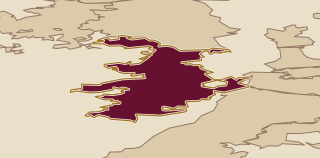
Laumersheim is the estate’s base, with further holdings in Großkarlbach and Dirmstein. Those separate addresses appear on the labels because Kuhn makes wines by named place: Steinbuckel, Kapellenberg and Burgweg are all Riesling bottlings, while Kirschgarten carries Pinot Noir. The result is a range where grape and vineyard name matter together, rather than one house blend covering every parcel.
Massive limestone rock, loess and quartz sand are the principal geological materials across Kuhn’s holdings. The estate keeps its site wines separate, allowing a Riesling from Steinbuckel to remain a named vineyard wine rather than disappearing into a regional blend. Steinbuckel is principally planted with Riesling, and the producer considers wines from the site capable of long ageing.
How it is made
The cellar
Fruit is hand-harvested at low yields, with organic compost and winter cover crops in the vineyards; the estate avoids insecticides and herbicides. In the cellar, white wines are made chiefly in stainless steel or old wooden barrels under reductive conditions, preserving fruit and acidity. Red wines undergo traditional mash fermentation before 16 to 20 months in wooden barrels, a longer route that builds texture and tannin in Pinot Noir.
What they make
Riesling supplies the site ladder: Steinbuckel Riesling Grosses Gewächs, Kapellenberg Riesling and Grosskarlbacher Burgweg Riesling Erste Lage sit alongside Philippsbrunnen and Saumagen Riesling Grosses Gewächs. Steinbuckel is fermented spontaneously in stainless steel and kept on lees for several months, bringing citrus acidity, mineral character and a creamy edge to a dry wine. Burgweg comes from younger vines in the Burgweg Grosses Gewächs vineyard and spends six to seven months in sealed stainless steel before at least a year in bottle, keeping its body slender and its acidity high.
Pinot Noir provides the red counterweight. Kirschgarten Grosses Gewächs Pinot Noir is the named red wine in a programme built through mash fermentation and barrel ageing, so the range moves from Riesling’s lime, peach and saline mineral notes to a red grape with more tannin, weight and wood-derived texture.
Wines to try
First bottle
Start with the 2023 Steinbuckel Riesling Grosses Gewächs. It joins Kuhn’s principal grape to a named Riesling site and a focused white-wine method: natural-yeast fermentation in stainless steel, followed by several months on lees. Expect blood orange and lemon balm over melon and hayflower, then crisp acidity, mineral weight and a long saline finish with a gentle creamy feel. It shows why this dry, site-led Riesling programme is the centre of the estate.