Who makes it
Weingut Friedrich W. Becker is a seventh-generation family estate in Schweigen, at the southern edge of Pfalz. Friedrich Wilhelm Becker combines the roles of owner and cellarmaster, so the decisions around Pinot fruit, open-vat reds and barrel ageing sit under one roof. The estate’s two Pinot Noir monopole vineyards—sites held by a single estate—put particular weight on where a wine is grown, rather than treating Pinot Noir as one uniform regional style.
The Becker property did not begin as a wine-only estate. It practised mixed agriculture until Friedrich Fritz Becker Senior shifted the work entirely toward wine. That decision led to commercial estate releases in 1973 and to a cellar built around separate handling of varieties and sites. Later, the estate’s VDP membership, begun in 2000, placed its classified vineyards and delayed release of top reds within a formal German quality framework; those wines are generally held back for four years after harvest before sale.
Where it grows
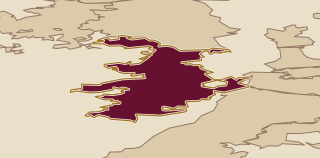
Schweigen sits close to the French border, and Becker’s vineyards extend from Pfalz into France. That geography puts one estate across two wine landscapes while keeping the bottles rooted in a German address. Pinot varieties are the focus, and the range carries that border position through still reds and whites, bottle-fermented sparkling wines and brandies rather than through a single appellation or one vineyard name.
Kammerberg, near Wissembourg, is a steep single vineyard with deep marl and limestone. Fritz Becker Senior recovered the site in 1967. The slope and layered ground give Kammerberg a concrete place within the cross-border holdings, while the estate’s Pinot focus keeps attention on the vineyard work behind its red wines rather than on a broad Pfalz label alone.
How it is made
The cellar
For reds, Becker uses open-mash fermentation: crushed Pinot Noir ferments in open vessels with its skins, drawing colour, tannin and aromatic material into the wine. Maturation is then separated by variety and location, in stainless steel or oak according to the wine. Particularly rich whites and reds go into French barriques, so oak can add spice and a broader texture where the fruit can carry it. The estate describes its approach as minimal intervention in vineyard and cellar, while the later release of top reds allows tannin, fruit and barrel notes more time to settle before the bottles leave Schweigen.
What they make
The range is Pinot-led but not limited to one red-wine lane: it includes red and white wines, bottle-fermented sparkling wines and noble brandies. The still wines are shaped by the division between site and variety, with stainless steel preserving a direct fruit profile in some lots and oak bringing spice, smoke or extra weight in others. For red wines, open-mash fermentation gives the cellar a route to fine tannin and savoury skin-derived detail; French barriques are reserved for wines with enough concentration to take that wood without burying the fruit.
Wines to try
First bottle
Start with Family Becker Pinot Noir 2023. It is 100% Pinot Noir from vines aged 10 to 40 years, destemmed and gently pressed before spontaneous fermentation and maceration in large open oak vats. Systembolaget reports a year in mixed-size French oak barrels and no filtration. The result is a dry Pinot with medium body, lively acidity, fine tannin, red and dark berry fruit, herbs, earth and measured oak. It is a useful first bottle because its open-vat fermentation, French-oak maturation and unfiltered finish show the practical choices behind Becker’s Pinot Noir without claiming a particular vineyard or quality rank for the wine.