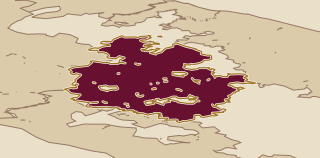
Torgiano received Umbria's first DOC designation in 1968 and its first DOCG in 1990. The region's two DOCG appellations are Torgiano Rosso Riserva and Sagrantino di Montefalco. Sagrantino is a native red grape with high acidity and plenty of drying tannin. Its wines can have red and black cherry, orange, black pepper and tobacco notes. Around Montefalco, conditions are warm and relatively dry, and the wines can develop with age. Lake Trasimeno grows the white grape Grechetto and the red Merlot. Todi Grechetto whites can be fuller-bodied and velvety, with fruit and a slightly bitter finish. Orvieto is a white-wine DOC covering parts of Terni and Viterbo, while Amelia is associated with the sweet wine Vin Santo. In Colli Altotiberini, traditional Umbrian grapes grow alongside Cabernet Sauvignon and Merlot.
7 named areas
Inside the region
Explore the wine-growing areas of Umbria.
- 01Colli Altotiberini2 producersColli Altotiberini pairs traditional Umbrian grapes with wines from Cabernet Sauvignon and Merlot.
- 02Colli del Trasimeno1 producerColli del Trasimeno surrounds Lake Trasimeno, with gentle hills and a small lowland area. Grechetto makes fresh, savoury whites; Merlot makes reds.
- 03Colli Martani & TodiNo producers listed yetColli Martani and Todi are the appellations in this area. Todi Grechetto is full-bodied and velvety, with fruit and a lightly bitter finish.
- 04Montefalco & Spoleto4 producersMontefalco and Spoleto are wine areas in Umbria. Warm, relatively dry Montefalco grows Sagrantino for reds with pronounced tannin and the capacity to age.
- 05Orvieto & Lago di Corbara3 producersOrvieto, Rosso Orvietano and Lago di Corbara are the appellations in this area. Orvieto is a DOC white produced in Terni and Viterbo.
- 06Terni & Amelia1 producerThe Amelia appellation sits within this area. Amelia is especially associated with Vin Santo, alongside Grechetto, Malvasia, Ciliegiolo and Sangiovese.
- 07Torgiano, Assisi & Perugia Hills3 producersThe hills around Torgiano, Assisi and Perugia contain several wine appellations. Grapes for Torgiano Rosso Riserva grow away from the rivers' alluvial soils; the wines tend to have more structure.
Producer profiles
Producer profiles
Every producer profiled in Umbria so far.
- Adanti Azienda AgricolaMontefalco estate run by Daniela Adanti and her daughter Stella, with a Montefalco Rosso, a Sagrantino Passito and the long-aged Il Domenico Sagrantino.
- AZIENDA AGRICOLA BOCALESmall Montefalco family estate making Sagrantino, Montefalco Rosso, and Trebbiano Spoletino without filtration, stabilization, or synthetic inputs.
- BarberaniA family estate on the Lake Corbara hills near Orvieto, farming without herbicides or pesticides and building the red range around Sangiovese grown with thirty years of yield reduction.
- Cantina Fratelli PardiCantina Fratelli Pardi is a Montefalco winery shaped by family knowledge, four selected vineyard microzones, and fully manual cultivation.
Browse 8 more
- Castello di CorbaraA 1,000-hectare Umbrian estate in the hills between Orvieto and Todi, making Orvieto Classico whites from its own Grechetto biotype and Lago di Corbara reds from a locally documented Sangiovese biotype.
- Decugnano dei BarbiA family estate in Umbria's Orvieto Classico zone, farming sustainably over ancient seabed soils that still carry fossil shells.
- Fattoria Mani di LunaTorgiano estate with organic and biodynamic vineyards, Grechetto white Ametistas, and Sangiovese reds Sanjolais and La Cupa.
- La PalèrnaSmall Umbrian estate on the Tuscan border, established 2002, making Merlot-led I.G.T. reds from hand-harvested vineyards at 550 to 600 metres.
- LungarottiLungarotti established Torgiano as an appellation and remains its defining producer.
- società agricola Leonardo BussolettiAn organic estate in Terni province, southern Umbria, built around the revival of Ciliegiolo, a red grape that had largely disappeared from the region.
- Tenuta AlzaturaThe Cecchi family's first move outside Tuscany: a 30-hectare Sagrantino estate in Montefalco, farming three named vineyard sites organically since 1998.
- Tenute Baldo AgricolaUmbrian estate farming 60 hectares across two appellations, producing Sagrantino at Montefalco and Sangiovese-led blends at Torgiano, with a flagship Torgiano Rosso Riserva DOCG aged 24 months in French oak.