
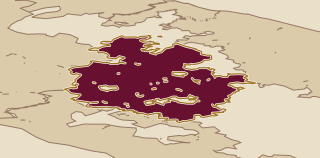
At A Glance
- **Country:** Italy
- **Region:** Umbria
- **Appellations:** Montefalco DOC, Torgiano DOC, Torgiano Rosso Riserva DOCG
- **Key Grapes:** Sagrantino (Montefalco), Sangiovese, Merlot, Cabernet Sauvignon (Torgiano)
- **Estate Size:** 60 hectares
- **Listed wine:** Spirito della Vite, Torgiano Rosso Riserva DOCG
- **Tasting Room:** Bevagna
The Producer
Tenute Baldo Agricola is an Umbrian estate built around a deliberate split: 20 hectares at Montefalco, planted primarily to Sagrantino in the rolling hills south of Assisi, and 40 hectares at Torgiano on the gentler slopes to the north, producing both DOC and DOCG wines. The estate describes these two territories as twin centres, two souls of the same land. That framing is not merely rhetorical. Sagrantino and Sangiovese pull in different directions as grapes, and farming them separately under one project demands a cellar that can shift its approach depending on which fruit comes through the door.
The family team is Matteo as owner, Luca as oenologist, and Andrea as marketing lead. The tasting room sits in Bevagna, a medieval walled town positioned between the two vineyard zones, which makes it a natural meeting point for a project that spans both halves of the estate.
Place
Umbria is landlocked and hilly, and its two red-wine appellations sit at different latitudes and elevations. Montefalco occupies higher, rougher ground south of Assisi, where Sagrantino, one of Italy's most tannic and extracted red grapes, reaches the phenolic ripeness it requires. The DOCG designation at Montefalco is built almost entirely around Sagrantino, and wines from this zone demand time in both barrel and bottle before the tannin softens enough to let fruit through.
Torgiano is lower and softer, its slopes gentler, its blending rules more flexible. The Torgiano Rosso Riserva DOCG allows Sangiovese as the dominant grape alongside Cabernet Sauvignon and Merlot, giving the winemaker more compositional latitude than Sagrantino permits. Bottles from Torgiano can carry weight and oak character while remaining more approachable at younger ages than a Montefalco Sagrantino. The appellation level matters on the label: the basic Torgiano DOC designation covers more immediate, lighter-bodied reds, while the Riserva DOCG requires extended ageing.
Soil And Site
Verified site data for Tenute Baldo Agricola is limited. The estate's Montefalco parcels sit in the characteristic terrain of that appellation, hilly and internally varied, where Sagrantino has been grown for centuries. The Torgiano zone spreads across gentler slopes to the north. Vineyard elevations, soil types, vine ages, and planting densities were not confirmed in accessible sources; they are not asserted here.
Story
The shaping decision at Tenute Baldo Agricola was the choice to work across two separate appellations rather than consolidating production in one. Most Umbrian estates of this scale anchor themselves in either Montefalco or Torgiano. Baldo spans both, which means carrying the obligations of two distinct regulatory frameworks, two contrasting grape profiles, and two different production logics simultaneously.
Sustainable agriculture and the use of renewable energy are stated commitments of the current generation running the estate. These are not casual additions to the estate's language. The estate frames them as responsibilities tied to the land itself, part of what distinguishes the project as a new-generation undertaking. The cellar work reflects a similar discipline: wood ageing is calibrated so that oak does not dominate fruit or varietal character, and reds mature on fine lees before bottle rest, a sequence designed to soften edges without erasing what the grape contributed in the vineyard.
Vineyards And Cellar
At Montefalco, Sagrantino is the primary variety. The grape requires extended hang time to achieve ripeness, and its naturally high tannin means cellar decisions around maceration length and wood format are consequential for whether the finished wine is drinkable within a reasonable window or locked up for years.
At Torgiano, the cellar divides production by appellation level. For Spirito della Vite, the Riserva DOCG, grapes undergo spontaneous fermentation without added commercial yeast, then macerate for 25 days at temperatures managed for the oenological objective. Malolactic fermentation completes in steel. The wine then spends 24 months in French barriques on fine lees, and a further 12 months in bottle before release. The long oak period is deliberate, and the estate's stated principle, that wood must not override fruit, means the target is integration rather than imposition.
For Auravitae, the DOC red, maceration is shorter at 15 days, fermentation is also spontaneous, and the overall élevage is lighter. Auravitae spends six months in French barriques, is refined in steel on fine lees, and ages three months in bottle before release.
White-wine production uses dry ice at reception to protect aromatic freshness, ferments at low temperatures to preserve flavour compounds, clarifies the must before fermentation, then ages the finished wine on lees with regular bâtonnage. The combination of cold fermentation and lees contact pulls the wine toward roundness and savoury depth while keeping freshness intact.
Wines
The range runs across two appellations and two appellation levels.
At Torgiano, Spirito della Vite (Torgiano Rosso Riserva DOCG) is the estate's Torgiano Rosso Riserva DOCG. Sangiovese leads the blend, with Merlot and Cabernet Sauvignon completing it. Twenty-five days of skin contact extracts colour, tannin, and fruit concentration. Two years in French oak builds texture and complexity; fine lees contact during that period softens the wine's edges. Twelve months in bottle before release means it arrives with some integration already in place, though the oak and tannin weight suggest further cellaring rewards it.
Auravitae (Rosso di Torgiano DOC) draws on the same grape trio, Sangiovese, Cabernet Sauvignon, Merlot, but with 15 days of maceration and a lighter élevage. It sits at the more accessible end of the Torgiano range: darker-fruited, with moderate tannin, and built for the table rather than the cellar.
At Montefalco, Sagrantino is the principal variety. Sagrantino is Umbria's most powerful indigenous red grape, high in tannin and extract, typically needing years to open. The estate's Montefalco wines are not detailed by label name in verified sources, but the grape's demands mean any wine from these 20 hectares will carry the character of extended ageing.
Whites from the estate have not been confirmed by name in verified sources, but the cellar's white-wine technique, cold fermentation, must clarification, and lees ageing with bâtonnage, points toward varieties that retain freshness while building a rounder, more savoury mid-palate over time.
In The Glass
Spirito della Vite undergoes spontaneous fermentation, 25 days of maceration, 24 months in French barriques on fine lees, final ageing in steel, and 12 months in bottle before release. In the mouth, the wine has weight. The Sangiovese core gives acidity and a firm grain of tannin; Merlot softens the mid-palate; Cabernet Sauvignon adds tannin in the finish. After 36 months total of ageing between barrel and bottle, the oak is present but not raw. The finish is long, with the tannin grip of a wine that has more to give with time.
Auravitae is darker-fruited on the nose and more direct: plum and black cherry, with less oak influence and a mid-palate that is broader and softer than Spirito della Vite. The tannin is present but moderate. It finishes without the weight of the Riserva, which is its point.
Whites, fermented cold and aged on lees, tend toward a creamy texture with retained freshness, where the bâtonnage builds body without sacrificing the aromatic lift that cold fermentation preserves.
A Bottle To Understand It
Start with Spirito della Vite, Torgiano Rosso Riserva DOCG. It undergoes spontaneous fermentation, 25 days of maceration, 24 months in French barriques on fine lees, and 12 months in bottle before release. The grape base is Sangiovese with Merlot and Cabernet Sauvignon. In the glass, it is an oak-integrated red with dark fruit, firm acidity, and a long finish with tannin that asks for food or time. It is not a light wine, but the cellar's discipline around wood means the oak supports rather than dominates. Open it with lamb or hard aged cheese, or set a bottle aside for two to three years.
Anecdote
In September 2024, the Swedish wine importer Umbri drove directly from the airport to Tenute Baldo's tasting room in Bevagna. The tasting room is sleek and modern, which surprised them. Bevagna is a medieval walled town, its stones worn and narrow, and the estate had built something that looked entirely unlike its surroundings. Matteo, Luca, and Andrea were there to receive them. The tasting that followed was the importer's first encounter with the estate's wines. They left with a listing. The tasting room, built between two vineyard zones that sit 20 kilometres apart, is where the estate's two halves meet: Sagrantino country to the south, Torgiano slopes to the north, and a table in the middle where the bottles from both territories are opened together.
Final Word
Tenute Baldo Agricola is an Umbrian estate that works harder than most by choice. Farming Sagrantino at Montefalco and Sangiovese-led blends at Torgiano under one project means the cellar never settles into a single routine. The flagship Torgiano Rosso Riserva DOCG is the clearest window into the estate's ambitions: long maceration, extended oak, fine lees, and a commitment to wood that supports rather than supplants the fruit. For a buyer new to Umbria, it is an honest introduction to what the region's two best-known appellations taste like when farmed with care.
Sources
- www.tenutebaldo.com/en/about-us
- www.tenutebaldo.com/en/wineries
- www.umbri.se/producers/tenute-baldo
- www.stradadeivinidelcantico.it/soci.asp?id=63
- www.tenutebaldo.com/en/product/spirito-della-vite-torgiano-rosso-riserva-docg
- www.tenutebaldo.com/en/product/auravitae-rosso-di-torgiano-doc
- www.systembolaget.se/produkt/vin/7820801