
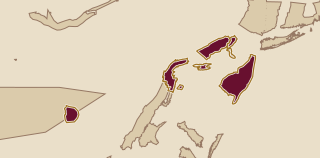
West Virginia growers work with European, American and hybrid grapes. French hybrids offer one way to adapt to local conditions, while European grapes need long, warm summers and can suffer cold injury. Productive sites need deep, well-drained soils and 155 to 160 frost-free days. North-facing sites can delay soil warming and vine growth, reducing exposure to late spring frost. Greenbrier Valley is identified as an area suited to ripening European wine grapes. Kanawha River Valley is the appellation within West Virginia.
Continue through the region
Elsewhere in Mid-Atlantic
- MarylandNo producers listed yetWestern Maryland's mountain sites favour grapes suited to cooler conditions. Marquette is a cold-hardy red grape that ripens very early, while Valvin Muscat and Vignoles give the west a different white-grape focus from the east.
- New JerseyNo producers listed yetNew Jersey has four AVAs, including Central Delaware Valley, which crosses the Delaware River into southeastern Pennsylvania. Its vineyards grow vinifera and hybrid grapes, with Pinot Noir and Riesling in the north and Sangiovese and Barbera further south.
- PennsylvaniaNo producers listed yetPennsylvania includes Lehigh Valley and Lancaster Valley, where hybrids and vinifera grow side by side. Lancaster Valley's limestone and clay soils help vines maintain ripeness, while Central Delaware Valley follows the Delaware River into southeastern Pennsylvania.