
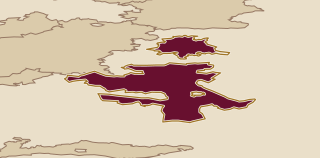
The Alentejo PDO, or protected designation of origin, has eight subregions: Portalegre, Borba, Redondo, Évora, Reguengos, Granja-Amareleja, Vidigueira and Moura. A PDO label may name the specific area. Red, rosé and white wines are made here. A style emphasising fruit developed in the 1990s, and red blends may include the grapes Syrah, Cabernet Sauvignon, Touriga Nacional and Touriga Franca. For whites, Antão Vaz and Roupeiro are often joined by Arinto, which contributes acidity. Antão Vaz can have ripe tropical fruit and tangerine-peel flavours. Portalegre has higher, cooler vineyards and is associated with fresher wines. Vidigueira, the southernmost area, has a mild climate and a longstanding white-wine tradition. Reguengos has poor, stony schist soils and a continental climate; its wines can be powerful and suited to ageing.
1 named area
Inside the region
Explore the wine-growing areas of Alentejo.
Producer profiles
Producer profiles
Every producer profiled in Alentejo so far.
- Adega CartuxaFundação Eugénio de Almeida's Alentejo estate near Évora, producing the revived nineteenth-century Pêra-Manca alongside its Cartuxa and Foral de Évora ranges.
- Adega Cooperativa de Borba C.R.L.Alentejo's first cooperative, founded in Borba in 1955, with 270 member growers farming 2,200 hectares and a winemaker who revived clay-vessel talha production inside early-14th-century fortified walls.
- ADEGA MAYORCampo Maior estate with 65 hectares of Alentejo vine and Portugal's first adega de autor, designed by Álvaro Siza Vieira.
- Casa Agrícola HMRA Vidigueira estate with Serra do Mendro shelter, vineyards weighted toward red varieties and a gravity flow winery.
Browse 10 more
- Casa RelvasAlentejo producer with Herdade de São Miguel, Touriga Nacional, an organically certified field blend, and red and rosé wines.
- FitapretaFitapreta makes Alentejo wines with whole bunch white pressing, gravity red handling, Touriga Nacional and amphora aged whites.
- Herdade da MingorraA 175-hectare family estate in Alentejo producing exclusively from its own vines since 2004, with the four-variety Vinhas da Ira blend at the centre of the range.
- Herdade de MedeirosFamily estate in Moura, Baixo Alentejo, with wine heritage documented from 1795.
- Herdade do Monte da RibeiraRed wines from 43 hectares near Marmelar village in Vidigueira, built around single-variety Alicante Bouschet from a gravity-designed winery restructured in 2011.
- Herdade do SobrosoHerdade do Sobroso farms 1,600 hectares in Vidigueira, southern Alentejo, working indigenous Portuguese grapes with sheep and cow manure, minimum pesticides, and 600,000 cork oak trees planted across the estate over fifteen years.
- Herdade dos LagosLower Alentejo estate with organic vineyards, olive groves, and the red Herdade dos Lagos Carapeto.
- João Portugal RamosJoão Portugal Ramos farms 500 hectares near Estremoz in the Alentejo, producing structured reds from Aragonez, Trincadeira, and Alicante Bouschet across four range levels, with a 40-hectare certified organic estate at Quinta da Viçosa.
- Quinta do ParalVidigueira family business making native variety wines, olive oil and a fresh 2024 Classic White.
- Segur EstatesSegur Estates has Redondo vineyards on Serra d'Ossa's southern slope, a wine with oenology by Joana Roque do Vale, and a three-grape blend.