
Who makes it
Fitapreta works with selected vineyards across Alentejo, managed by its own viticulture team. António Maçanita and Sandra Sárria lead the winery today, with Sárria serving as production director.
The wines come from a cellar that treats white and red fruit differently. White grapes are pressed as whole bunches, while crushed red grape material moves by gravity. The range includes Touriga Nacional, talha wines and field blends of traditional Alentejo varieties.
Where it grows
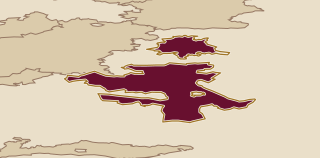
The winery is based at Paço do Morgado de Oliveira in Nossa Senhora da Graça do Divor, Évora. The property includes a medieval paço founded in 1306, a winery built with cork and part of Fitapreta's vineyards.
Fruit also comes from selected vineyards across Alentejo. The Évora cellar therefore works with grapes gathered from several parts of the region, alongside the vineyards at the property.
How it is made
The cellar
At Graça do Divor, the planted varieties include Arinto, Perrum, Folgazão, Baga, Tinta Miúda, Tinta Grossa, Aragonês, Alicante Bouchet and Touriga Nacional. The list brings white and red varieties into the same property, allowing Fitapreta to work across a broad Alentejo palette.
White wines are always pressed as whole bunches to obtain cleaner, purer juice. Most whites ferment and age in neutral French oak, while some use stainless steel or amphora. For reds, crushed grape material moves by gravity, avoiding pumps that could bruise or tear the skins.
What they make
Touriga Vai Nua 2024 is a red made entirely from Touriga Nacional. It undergoes a 30 day maceration with spontaneous wild yeast fermentation, then spends three months in stainless steel before being bottled unfined and unfiltered.
Branco de Talha belongs to Fitapreta's experimental Signature Series. Ancestral Branco is a field blend of five traditional white varieties, Roupeiro, Rabo de Ovelha, Arinto, Tamarez and Alicante Branco. The range moves from a single variety red to amphora aged white and field blend white.