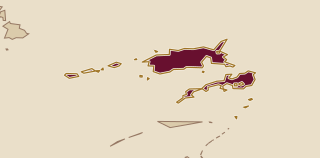
The Wairau River runs towards Cloudy Bay through a broad valley of vineyards, with smaller valleys opening into hills to the south. Beyond them, the Awatere stretches inland from the Pacific coast. A bottle labelled Marlborough may bring fruit from several of these places together, or come from a single site.
Marlborough and its valleys
Wairau, the Southern Valleys and Awatere are smaller growing areas within Marlborough. Look for their names on the label or in the producer’s vineyard description.
The region on the label, and three areas within it
Marlborough and its valleys
A regional label may describe wine from one site or several. A valley name gives a more specific location.
Marlborough on the label
The whole wine region in the northern South Island
The name establishes regional origin. It does not tell you whether the wine comes from one site or a blend of sites.
Look forMarlborough, then the grape and any smaller place named
Wairau Valley
Along the Wairau River towards Cloudy Bay
Inland, central and coastal vineyards give this large valley considerable variety. Sauvignon Blanc is only part of its range.
Look forWairau Valley and the producer’s vineyard description
Southern Valleys
The valleys south of the Wairau plains
Brancott, Omaka, Fairhall and neighbouring valleys grow Sauvignon Blanc, Pinot Noir and other whites.
Look forSouthern Valleys or a named valley or vineyard
Awatere Valley
South of Wairau, stretching inland from the coast
Generally cooler, drier and windier, with Sauvignon Blanc often tending towards herbal aromas. Individual sites and wines vary.
Look forAwatere Valley; distinguish it from the wider southern coast
Comparing Marlborough wines
Two bottles to compare
A pair of dry Sauvignon Blancs can introduce different growing areas or different winemaking choices. Choose the comparison that interests you.
Begin with a tank-made Sauvignon
Notice the fruit aromas, mouth-watering acidity and how much weight the wine has in your mouth.
For place, keep the method similar
Compare bottles from two named areas with a similar harvest year and winemaking approach. The producer’s description can help you choose.
For texture, try a barrel-made wine
Compare a Sauvignon fermented or aged in oak. Check its age and vineyard too: more than the barrel may have changed.
For another grape, try Pinot Noir
A Marlborough Pinot Noir gives you a medium-bodied red. Notice its fruit and tannin, the drying grip you feel in your mouth.
Place, grape and winemaking terms
Reading a Marlborough bottle
The front label may name only the region and grape. Turn the bottle over or read the producer’s description for the vineyard and winemaking.
MarlboroughPlaceHide explanationRead explanation
The regional origin
It can describe a wine from one site or several; it is not a valley name
WairauSouthern ValleysAwaterePlaceSeparate label excerptsHide explanationRead explanation
Smaller areas within the region
Look for the valley or vineyard named on the bottle or in the producer’s description
Sauvignon BlancPinot NoirChardonnayGrapeSeparate label excerptsHide explanationRead explanation
The grape named on the bottle
Grape and place are separate pieces of information
HarvestVintage · Year position shown emptyHide explanationRead explanation
The year the grapes were harvested
A similar year helps when comparing bottles, but does not make them identical
Barrel-fermentedMakingHide explanationRead explanation
Fermentation in oak barrels
Check the producer’s description; oak need not mean a strong woody flavour
Lees-agedMakingHide explanationRead explanation
Time resting on yeast sediment after fermentation
A cellar choice that can affect texture, not a separate grape or place
Sauvignon Blanc in tanks and barrels
Grapes and styles
A dry Marlborough Sauvignon Blanc can smell of gooseberry, citrus, passionfruit or fresh herbs. Ripe fruit aromas do not by themselves mean a wine tastes sweet. Notice its acidity too: that mouth-watering sensation is part of what makes the wine feel fresh.
Many producers ferment Sauvignon Blanc in stainless steel tanks. Others ferment or mature some wines in oak, or leave them resting on lees, the yeast sediment left after fermentation. These choices can change texture and the balance of fruit and savoury flavours. A barrel-made Sauvignon can still have plenty of acidity, and an older barrel need not make it taste strongly of new wood.
For example, Dog Point’s Sauvignon Blanc uses stainless steel, while its Section 94 is fermented and aged in older oak barrels. The wines also differ in vineyard selection and may be sold at different ages, so a comparison includes more than the effect of oak.
Wairau, the Southern Valleys and Awatere
What sets it apart
Wairau Valley follows the river from inland sites towards the coast. The central valley includes stony river terraces, while the lower valley has more coastal influence. Sauvignon Blanc from Wairau is often described through ripe tropical fruit, but the valley is too varied to give every bottle the same taste.
The Southern Valleys spread south from the Wairau plains. Brancott, Omaka, Fairhall and Waihopai are among the names you may see. Their soils generally contain more clay than the valley floor, and the area grows Pinot Noir as well as Sauvignon Blanc and other whites.
Awatere lies farther south, running inland from the sea towards the mountains. It is generally cooler, drier and windier than Wairau, and its Sauvignon Blanc often has a more herbal character. The wider southern coast also has vineyards; regional descriptions sometimes group them with Awatere as South Marlborough. Check the valley or vineyard name for a more specific origin.
Pinot Noir, Chardonnay and sparkling wine
Everyday bottles
For a red, try Marlborough Pinot Noir. It commonly has cherry and plum flavours, moderate weight and fine tannins, the drying grip you feel in your mouth. Chardonnay offers a different white-wine comparison, with citrus and stone-fruit flavours and both unoaked and barrel-influenced styles. Marlborough also makes traditional-method sparkling wine, whose bubbles come from a second fermentation in the bottle. Riesling and Pinot Gris are also made here; check the bottle’s sweetness description rather than assuming either grape is always dry.
With a dry Sauvignon Blanc, try fish with lemon and herbs, or a salad with a tangy dressing. If you prefer a fuller white beside pasta in a creamy sauce, compare a barrel-made Sauvignon or Chardonnay.
Marlborough tells you an origin, not a winemaking method
Read the label
Under New Zealand’s labelling rules, a label reading “2025 Marlborough Sauvignon Blanc” means at least 85 per cent of the wine must be Sauvignon Blanc from Marlborough harvested in 2025. The grape, origin and year must meet that proportion together. It does not promise that every drop came from one valley or vineyard.
A smaller place name can make the origin more specific. A producer may also describe the sites used without putting every name on the front label. Look separately for barrel fermentation, time on lees and sweetness. A wine labelled simply Marlborough can come from one vineyard or several.
Choosing a Marlborough wine
First bottle
For a dry white with bright fruit and acidity, try a Sauvignon Blanc made in stainless steel tanks. A Sauvignon fermented or aged in barrels offers a different texture. Marlborough Pinot Noir is an option if you prefer red wine.
If you want to compare growing areas, choose two Sauvignon Blanc wines naming different valleys, with a similar harvest year and winemaking approach. Check the vineyard and cellar descriptions too, since the place is only one of the differences between two bottles.
1 named area
Inside the region
Explore the wine-growing areas of Marlborough.
Producer profiles
Producer profiles
Every producer profiled in Marlborough so far.
- Clos HenriFamily-owned Marlborough estate established in 2000 by the Henri Bourgeois winegrowing family of Sancerre, producing organic estate-grown Sauvignon Blanc and Pinot Noir from one Wairau Valley property.
- Cloudy BayMarlborough's founding Sauvignon Blanc estate, built in 1985 by David Hohnen in the Wairau Valley.
- Dog Point VineyardsDog Point Vineyards is a family estate in the Wairau Valley, Marlborough, founded by the former viticulturalist and winemaker of Cloudy Bay.
- Goldschmidt VineyardsGoldschmidt Vineyards makes Boulder Bank Sauvignon Blanc in Marlborough, alongside a separate Forefathers bottling.
- Greywacke VineyardsSmall Marlborough producer built by Kevin Judd after 25 vintages at Cloudy Bay, using wild yeast fermentation and Sutherland family fruit to make a savoury, textured range of seven wines.
- Hunter's WinesMarlborough's founding family winery, known for Sauvignon Blanc that helped define New Zealand's signature white wine style.
Browse 9 more
- Lake Chalice WinesMarlborough producer making parcel focused Sauvignon Blanc, Pinot Noir and Chardonnay.
- Nautilus EstateA family-owned Marlborough winery making dry, food-friendly wines from selected parcels across the region’s cool valleys.
- Rose Family EstateA family-run Marlborough producer behind Wairau River, with a broad vineyard base and a documented Reserve Pinot Noir from Home-vineyard fruit.
- Saint Clair Family EstateMarlborough family estate founded in 1994, drawing on vineyard work by Neal and Judy Ibbotson that began in 1978.
- Stoneleigh VineyardsMarlborough wines shaped by Rapaura’s ancient riverbed, where sun-warmed stones support ripe, fresh fruit.
- The Delta Wine Company LtdMarlborough’s Delta began with Southern Valleys Pinot Noir and now follows site character from Dillon’s Point Sauvignon Blanc to Hawke’s Bay Merlot.
- Villa Maria EstateMarlborough producer founded by Sir George Fistonich in 1961, first winery in the world to adopt 100% screw cap closures in 2001; range runs from blended Sauvignon Blanc through library-aged and single-vineyard Pinot Noir.
- VinultraSingle-vineyard estate in the Waihopai Valley, Marlborough's Southern Valleys subregion.
- Yealands WinesMarlborough Sauvignon Blanc producer with Awatere, Wairau Valley and selected Seaview Vineyard fruit.