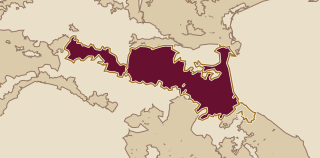
Emilia-Romagna has six sub-regions and 19 named appellations. In Colli Piacentini, the white grape Ortrugo was once used for blending; wines made from it alone emerged in the 1970s. Still and sparkling versions are usually light and dry, with a slightly bitter finish. Colli Bolognesi Pignoletto wines may be fresh and sparkling or still. Colli di Parma grows the red grapes Barbera and Bonarda alongside white varieties including Malvasia di Candia, Sauvignon and Chardonnay. Malvasia di Candia Aromatica makes particularly perfumed wines. Romagna Sangiovese reds from clay-limestone areas can have lively fruit and firm, drying tannin. At Bosco Eliceo, vineyards grow on sandy coastal ground, and the wines can taste salty and savoury.
6 named areas
Inside the region
Explore the wine-growing areas of Emilia-Romagna.
- 01Colli Bolognesi (Bologna)2 producersColli Bolognesi includes Colli Bolognesi Classico Pignoletto, Colli Bolognesi and Reno. Pignoletto may be fresh and sparkling, or a still wine whose structure develops through long ageing.
- 02Colli di Parma & Reggiano4 producersColli di Parma & Reggiano includes Colli di Parma, Colli di Scandiano e di Canossa and Reggiano. Colli di Parma combines red Barbera and Bonarda with several white grapes, especially perfumed, versatile Malvasia di Candia Aromatica.
- 03Colli Piacentini (Piacenza)4 producersColli Piacentini includes the Colli Piacentini, Gutturnio and Ortrugo dei Colli Piacentini appellations. Its Ortrugo comes in still and sparkling versions, typically light and dry with a slightly bitter finish.
- 04Ferrara & Adriatic Plain2 producersFerrara & Adriatic Plain includes the Bosco Eliceo appellation, with vineyards on sandy coastal ground.
- 05Lambrusco Country (Modena & surrounds)5 producersLambrusco Country (Modena & surrounds) is a wine area within Emilia-Romagna. Its four listed appellations are Lambrusco di Sorbara, Lambrusco Grasparossa di Castelvetro, Lambrusco Salamino di Santa Croce and Modena.
- 06Romagna Hills (Forlì-Cesena, Ravenna, Rimini)7 producersThe Romagna hills include Romagna Albana, Colli d'Imola, Colli di Faenza, Colli Romagna centrale and Romagna. On clay-limestone soils, Romagna Sangiovese can have lively fruit and firm, balanced tannins.
Producer profiles
Producer profiles
Every producer profiled in Emilia-Romagna so far.
- Azienda Acricola Il MaioloFamily estate in the Val Nure hills of Piacenza, farming ten hectares without synthetic inputs since the mid-1970s and producing long-aged reds from Barbera, Bonarda, and a five-variety white from a high-altitude Travo parcel.
- Azienda Agricola Il PoggiarelloOrganic family estate in Val Trebbia, Piacenza, farming native varieties and making still and sparkling wine across five generations of the Ferrari-Perini family.
- Azienda Agricola Sartori LucianoMonterosso Val d'Arda producer making white and sparkling wines with spontaneous fermentation in steel and the Martinotti method.
- Cantine CECI S.P.ACantine CECI grew from a Bassa Parmense trattoria into a dedicated winery, with Otello Nero di Lambrusco as its flagship red.
- Cantine Lombardini S.r.lCantine Lombardini makes Il Campanone, a Reggiano DOC Lambrusco Rosso frizzante from Novellara in Emilia-Romagna: dark ruby, berry-driven, Charmat-method sparkling red at 11% alcohol with fine, well-integrated bubbles.
Browse 13 more
- Cantine Riunite & CIV - Soc. Coop. Agr.A Reggio Emilia cooperative founded in 1950 by nine grape farmers, now representing more than 1,400 growers across two provinces and distributing Lambrusco to over 100 countries.
- Chiara CondelloChiara Condello farms 4.8 hectares of Sangiovese in Predappio, a hillside DOC in Emilia-Romagna, making two unfiltered reds from organically certified calcareous-clay parcels between 150 and 300 metres above sea level.
- Cleto Chiarli Società AgricolaLambrusco estate in Modena province, founded in 1860, making estate-grown Grasparossa and Sorbara from the converted Villa Cialdini and VIVA-certified vineyards across three Modena sites.
- Condé Azienda VitivinicolaSingle-variety estate in Fiumana di Predappio, Emilia-Romagna, making Sangiovese Piccolo from two hillside expressions and releasing wines only when the tannins have reached elegance in bottle.
- Fattoria MorettoA third-generation Castelvetro estate farming Grasparossa exclusively on the Monte Barello hillside, making dry organic Lambrusco with firm tannin and dark fruit.
- Fattoria Nicolucci di Nicolucci AlessandroOld-vine Sangiovese from a clifftop village in Romagna's hills, farmed by one family since 1885 on dry, mineral, clay-heavy soils.
- Mirco MariottiNatural wine estate in Bosco Eliceo, 300 metres from the Adriatic, farming ungrafted century-old vines in coastal sand and making ancestral-method sparkling wine from Fortana, Trebbiano Romagnolo, and Malvasia di Candia Aromatica.
- Poderi dal NespoliPoderi dal Nespoli makes Romagna wines in Nespoli, from Nespolino blends to Il Nespoli Sangiovese Riserva.
- Poderi Fiorini Soc. Agric. S.s.Modena family estate founded in 1919, farming organically across three vineyard holdings to produce Lambrusco di Sorbara, Grasparossa, and Colli Bolognesi still wines.
- Società Agricola Cantina del FrignanoA small organic estate in the Apennine foothills above Modena, making ancestral and classic-method sparkling wines from native Grasparossa and Malbo Gentile at 450 to 550 metres.
- Societa Agricola Fondo San GiuseppeOrganic Albana estate at 400 metres in the Brisighella hills of Romagna, making minimal-intervention dry white wine from a single hectare of forty-year-old vines.
- Umberto CesariFamily estate founded in 1964 in Emilia-Romagna, covering 355 hectares across eight holdings and producing over 3.5 million bottles each year from Sangiovese, Pignoletto, and international varieties.
- Zanasi Società Agricola S.S.Four-generation Modena hill estate farming clay-and-sand Apennine foothills since 1900, making Lambrusco di Sorbara from estate fruit with fresh cherry character and lively acidity.